What This Document Is
This is an advanced lecture resource focusing on the processing of visual information, specifically building upon foundational neurobiology concepts. It delves into the complexities of how the brain interprets what we see, moving beyond basic sensory input to explore higher-level visual areas and pathways. This material is designed for students engaged in a rigorous study of the nervous system and its functions.
Why This Document Matters
This resource is ideal for students in neurobiology, cognitive science, or related fields who are seeking a deeper understanding of visual perception. It’s particularly valuable when studying the organization of the visual cortex and the neural mechanisms underlying our ability to perceive form, color, motion, and depth. Use this as a supplement to lectures and textbook readings to solidify your grasp of these intricate processes and prepare for more advanced coursework.
Topics Covered
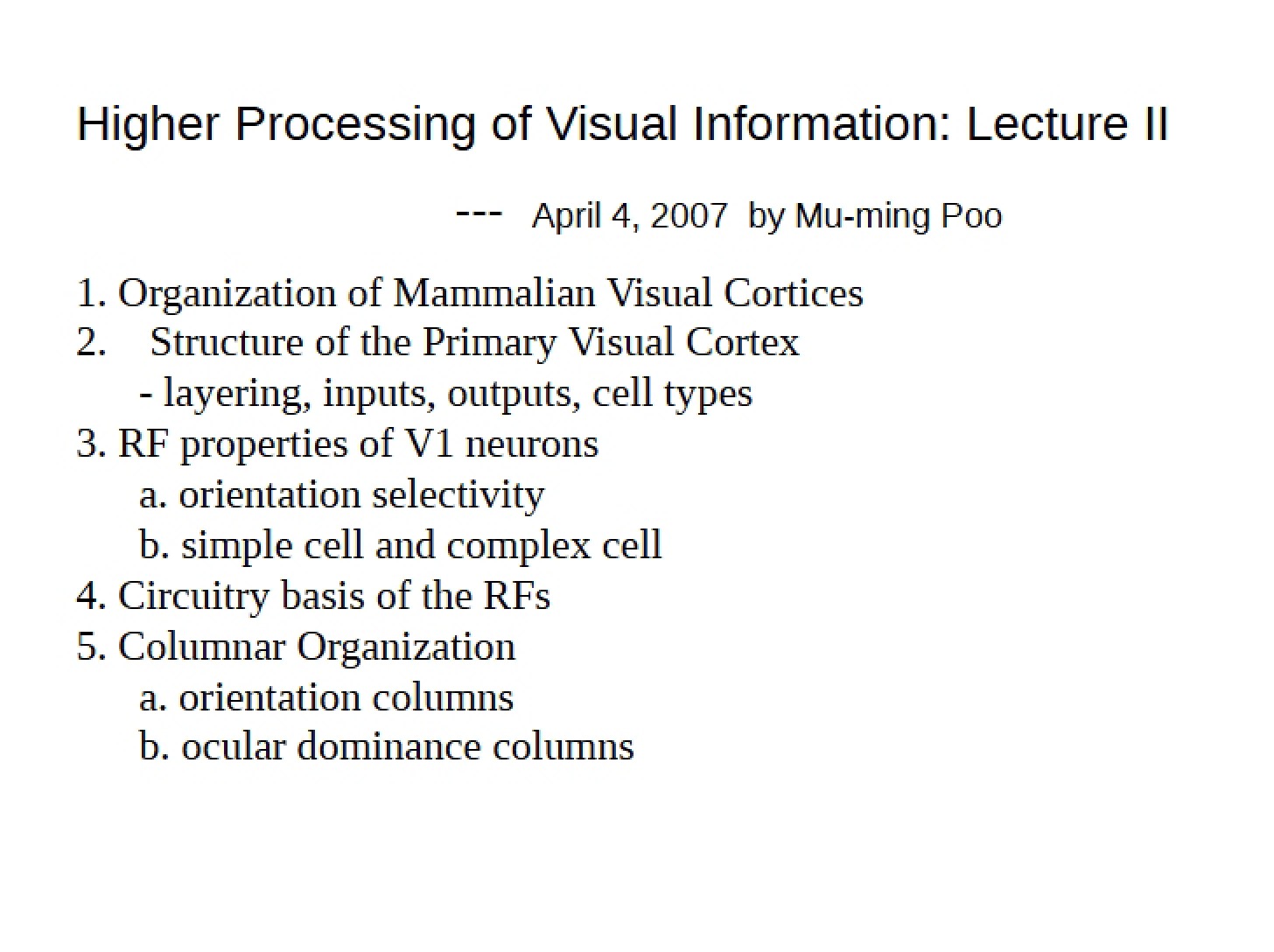
* Columnar organization within the visual cortex (orientation and ocular dominance)
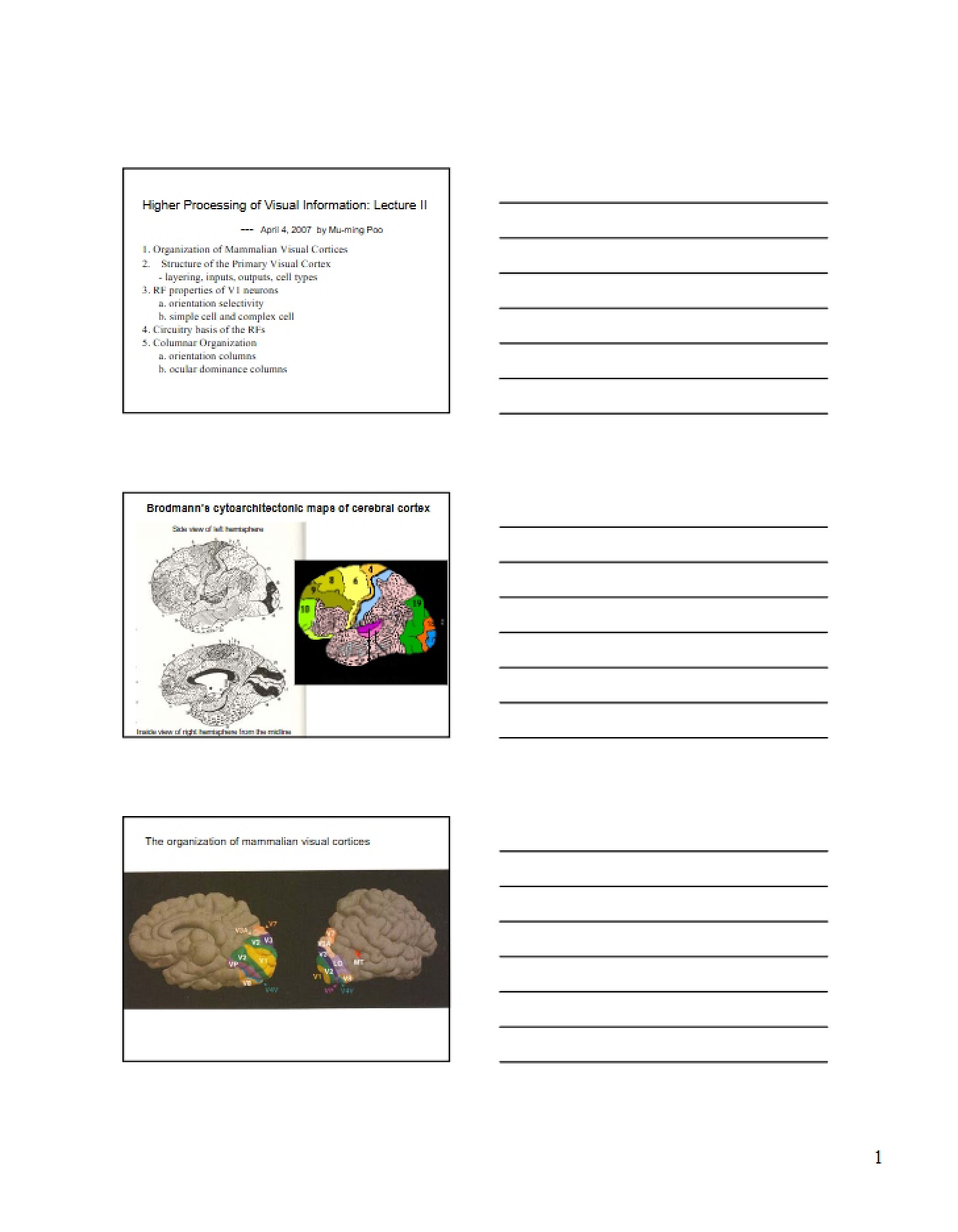
* Anatomy of higher visual areas and their specialized functions
* The “What” and “Where” pathways of visual processing
* The challenges of neural integration and the “binding problem”
* Detailed exploration of areas V1, V2, V3, V4, and V5/MT
* Mechanisms of motion perception and the aperture problem
* Illusory contour processing
What This Document Provides
* A detailed overview of the functional organization of the visual system.
* Insights into the specialized roles of different cortical areas in visual processing.
* An examination of the parallel pathways involved in form, color, and motion analysis.
* Illustrative descriptions of columnar structures and their significance.
* A foundation for understanding complex visual phenomena and neurological conditions affecting perception.