What This Document Is
These are Professor’s Notes from ELENG 100: Electronic Techniques for Engineering at UC Berkeley. This resource offers a detailed exploration of fundamental circuit analysis techniques, forming a core component of understanding electrical engineering principles. It appears to be a lecture-based compilation, likely transcribed directly from classroom instruction, providing a focused and in-depth look at key concepts.
Why This Document Matters
This material is essential for students currently enrolled in ELENG 100, or those reviewing foundational circuit analysis. It’s particularly valuable when working through problem sets, preparing for exams, or seeking a deeper understanding of the theoretical underpinnings of electrical circuits. Students who benefit most will be those looking for a comprehensive, lecture-style presentation of these concepts, supplementing textbook readings and lab work. Access to these notes can significantly enhance comprehension and improve performance in the course.
Topics Covered
* Node-Voltage Analysis – including advanced considerations
* Mesh Analysis – presented as a related, optional technique
* Superposition Theorem – for analyzing circuits with multiple sources
* Thevenin’s Theorem – for simplifying complex networks
* Linear Circuit Theory – foundational principles
* Circuit Simplification Techniques – including open and short circuit analysis
* Application of KCL (Kirchhoff’s Current Law)
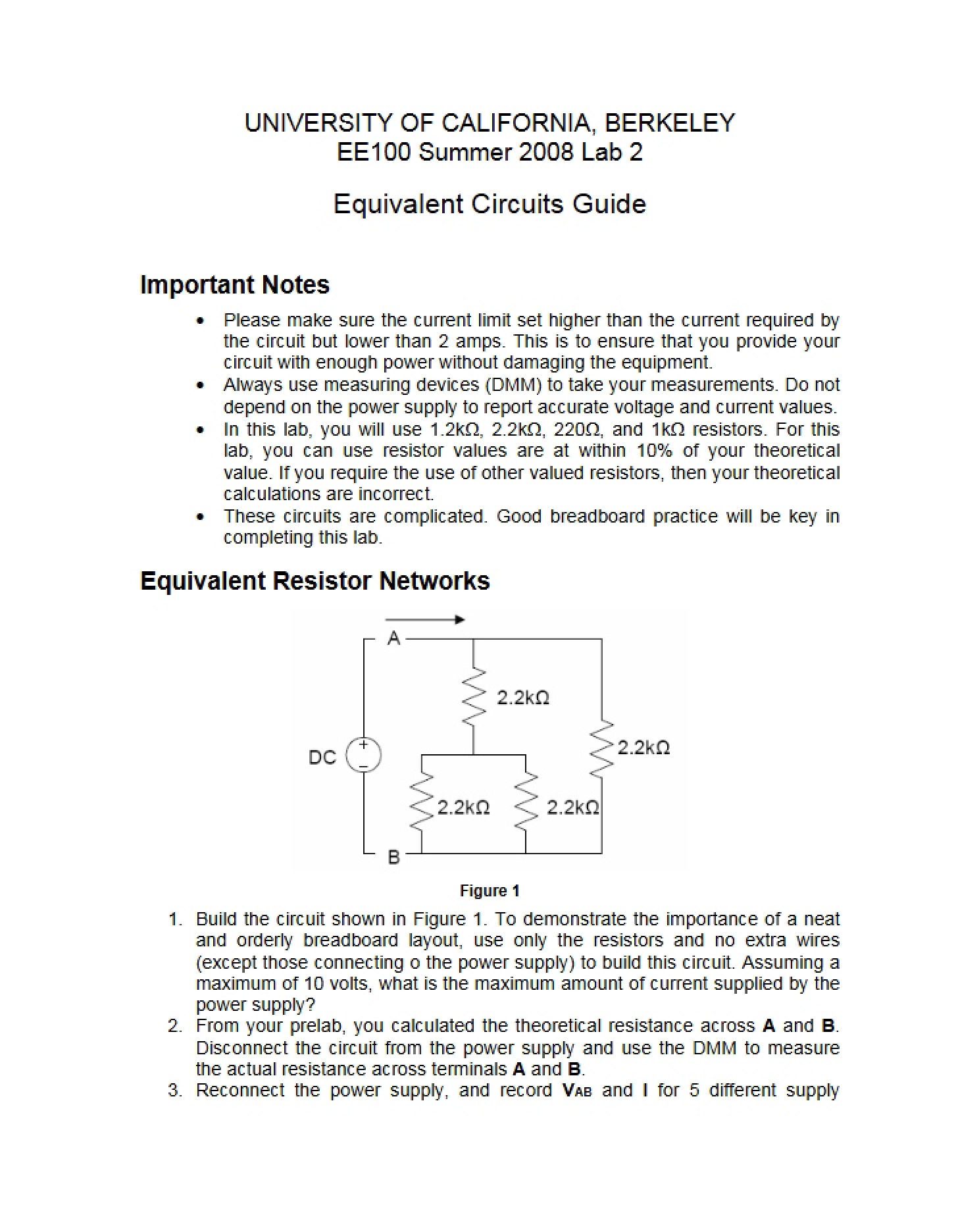
* Equivalent Circuit Concepts
What This Document Provides
* A structured outline of lecture material, indicating the flow of topics.
* Detailed explanations of core circuit analysis methodologies.
* Discussion of challenges encountered when applying these techniques.
* Conceptual frameworks for understanding circuit behavior.
* A foundation for more advanced topics in electronic engineering.
* Insights into how to approach and solve complex circuit problems.