What This Document Is
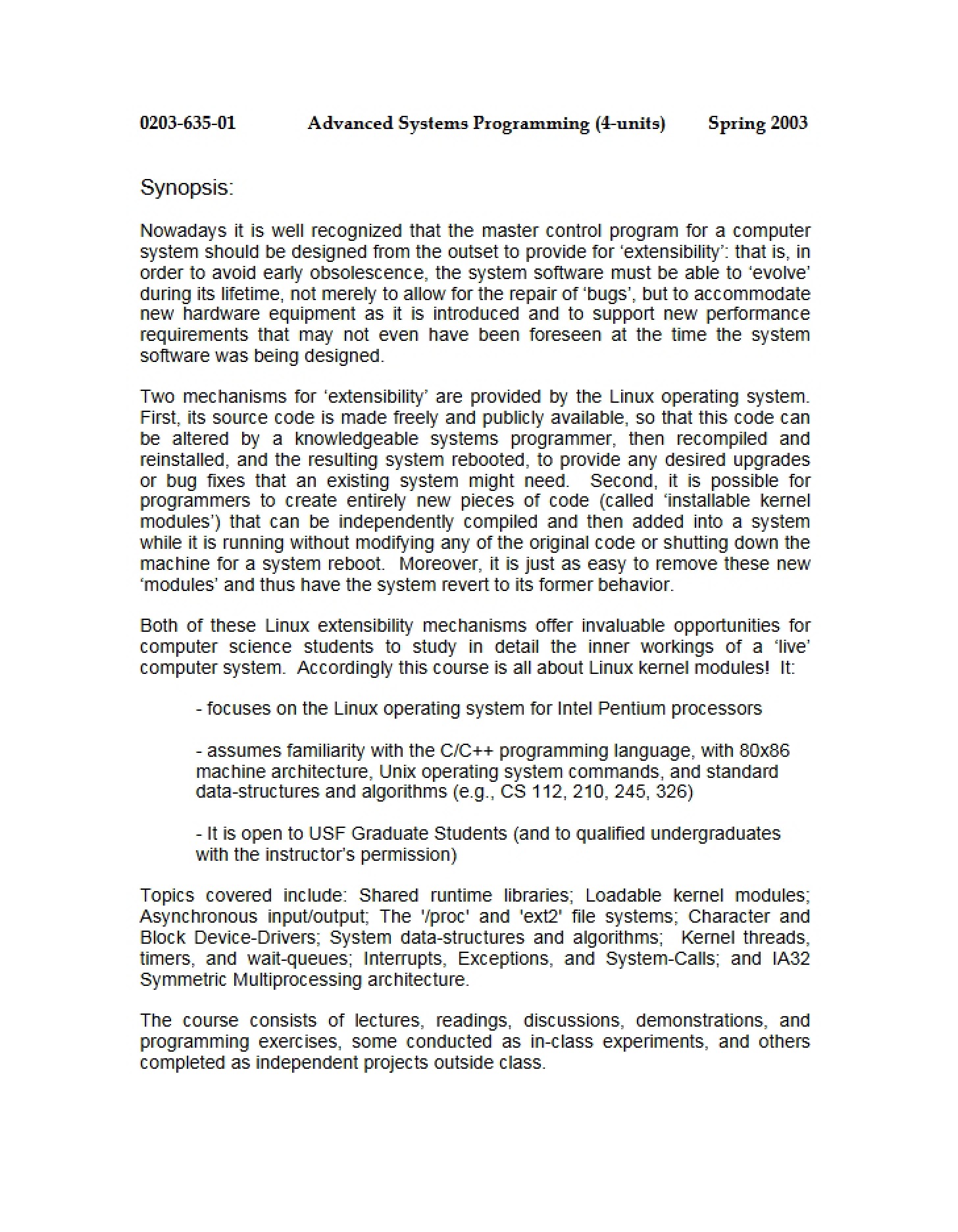
This resource is a focused exploration of programming applications within the context of advanced systems programming. It delves into the crucial interface between application-level code and the underlying operating system – specifically, how programs interact with system resources. The material centers around fundamental input/output operations and the mechanics of how a multitasking operating system manages processes and facilitates communication between them. It bridges the gap between high-level programming concepts and the low-level realities of system calls and kernel interactions.
Why This Document Matters
This material is essential for students aiming for a deep understanding of operating system principles and their practical implementation. It’s particularly valuable for those pursuing careers in systems software development, device driver creation, or performance-critical application programming. Understanding these concepts is foundational for building robust, efficient, and reliable software that effectively utilizes system resources. It will be most helpful when you are tackling assignments that require direct interaction with the operating system or when you need to optimize application performance by understanding system-level bottlenecks.
Common Limitations or Challenges
This resource focuses on core principles and foundational functions. It does *not* provide a comprehensive guide to all possible system calls or a complete operating system implementation. It assumes a prior understanding of C programming and basic operating system concepts. Furthermore, while it touches upon Linux wait queues, it doesn’t offer a complete tutorial on kernel module development or advanced driver programming. It’s a building block, not a complete solution.
What This Document Provides
* An overview of essential C library functions for file input and output.
* Discussion of how to access system call documentation.
* Explanation of the relationship between user-space applications, the C runtime library, and the operating system kernel.
* Concepts related to process states (running, ready, blocked) and kernel task management.
* An introduction to wait queues and their role in efficient inter-process communication.
* Exploration of data structures like ring buffers and their application in system programming.
* Considerations for handling device files and potential blocking issues.