What This Document Is
These are lecture notes covering the foundational concepts of computer systems, specifically Chapter One from the Purdue University CS 15900 course, “Programming Applications For Engineers.” It provides an overview of the core hardware components that make up a computer and introduces the relationship between natural languages and the machine languages computers understand. The notes lay the groundwork for understanding how programs interact with computer hardware.
Why This Document Matters
This document is essential for students beginning their journey into programming. It’s particularly valuable for those needing a clear, concise introduction to the underlying architecture of computers *before* diving into code. Understanding these basic concepts will help students write more efficient and effective programs, and troubleshoot issues more effectively. It’s most useful at the start of a programming course or for anyone seeking a refresher on computer fundamentals.
Common Limitations or Challenges
This document provides a high-level overview and does *not* delve into the intricacies of computer engineering or advanced hardware concepts. It won’t teach you how to build a computer, write assembly language, or diagnose hardware failures. It’s a starting point, not a comprehensive guide. It also doesn’t cover software development methodologies or specific programming techniques.
What This Document Provides
This preview includes information on:
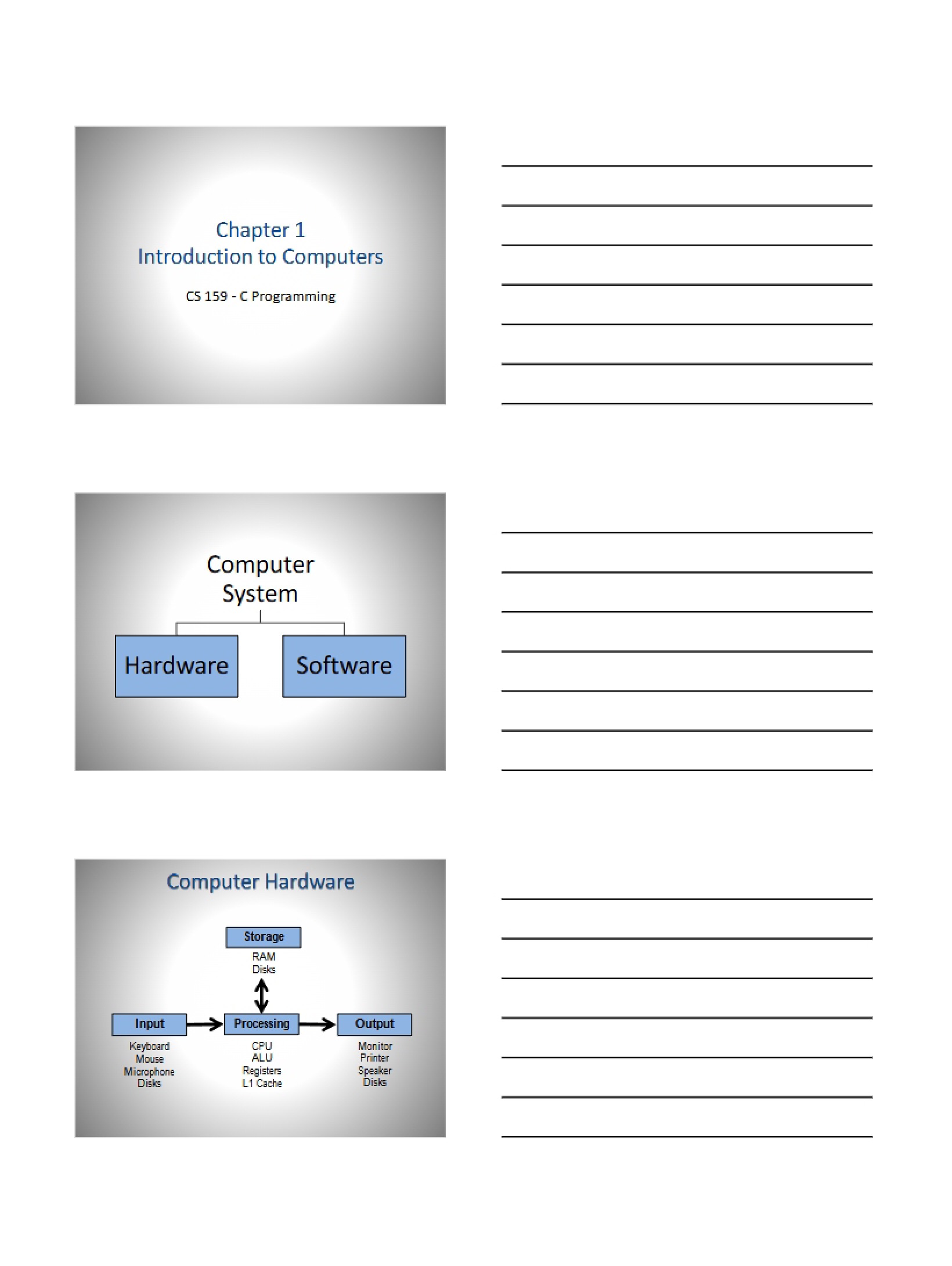
* The four primary components of a computer (CPU, Main Memory, Input/Output, Systems Interconnection).
* The key components *within* the Central Processing Unit (Registers, ALU, Control Unit).
* An explanation of Main Memory (RAM) and its relationship to secondary storage (hard drives).
* A discussion of the instruction cycle and the difference between natural and machine languages.
* An introduction to the need for programming languages as an intermediary between humans and computers.
This preview *does not* include detailed explanations of memory addressing, specific C programming syntax, or in-depth comparisons of different memory technologies. The full document expands on these topics and provides a more comprehensive foundation for the course.