What This Document Is
This is a focused exploration of transport layer protocols within the realm of computer networks. Specifically, it delves into the fundamental services offered by the transport layer, and provides a comparative analysis of two core protocols: TCP and UDP. It examines how applications utilize these protocols to establish communication across networks, focusing on the mechanisms of data delivery and the underlying principles that govern reliable and unreliable transmission. The material builds upon foundational networking concepts, bridging the gap between network-level addressing and application-level data exchange.
Why This Document Matters
This resource is invaluable for students enrolled in computer networking courses, particularly those seeking a deeper understanding of how data is reliably (or unreliably) moved across the internet. It’s beneficial for anyone preparing to design, implement, or troubleshoot network applications. Understanding these protocols is crucial for grasping the performance characteristics of different applications and making informed decisions about which protocol best suits a given need. It’s particularly helpful when studying for exams or working on projects that require a solid grasp of network communication principles.
Common Limitations or Challenges
This material focuses on the conceptual underpinnings and operational characteristics of transport layer protocols. It does *not* provide detailed code implementations, packet captures, or specific configuration guides for network devices. While it touches upon congestion and flow control, it doesn’t offer in-depth analysis of specific algorithms or their mathematical derivations. It also assumes a foundational understanding of the network layer and basic networking terminology.
What This Document Provides
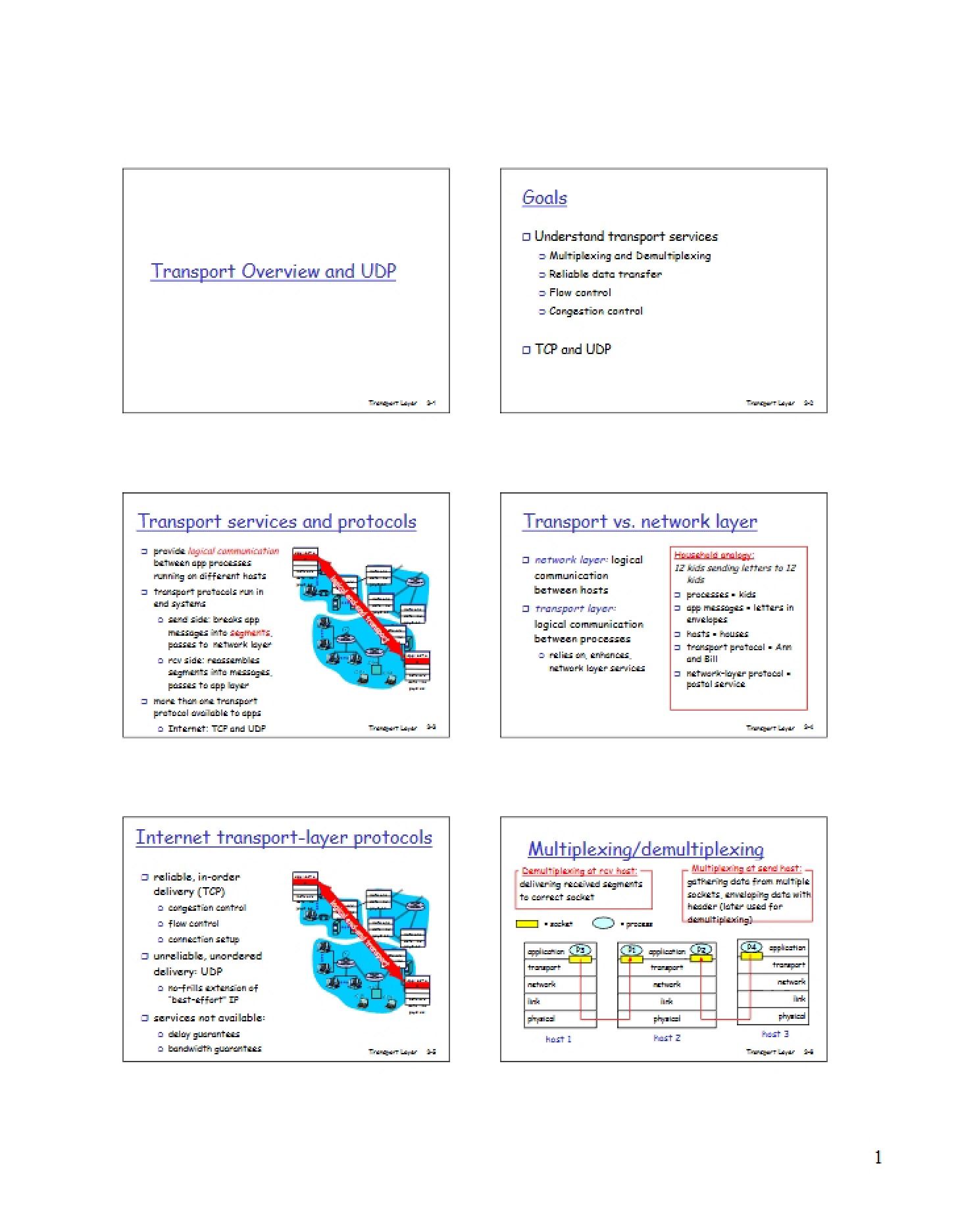
* A clear delineation of transport layer goals, including multiplexing, demultiplexing, reliability, flow control, and congestion control.
* A comparative overview of TCP and UDP protocols, highlighting their strengths and weaknesses.
* An explanation of how the transport layer interacts with both the application and network layers.
* Detailed discussion of the multiplexing and demultiplexing processes, both at the sending and receiving hosts.
* An examination of connectionless and connection-oriented demultiplexing techniques.
* A focused look at the characteristics and common use cases of the UDP protocol.