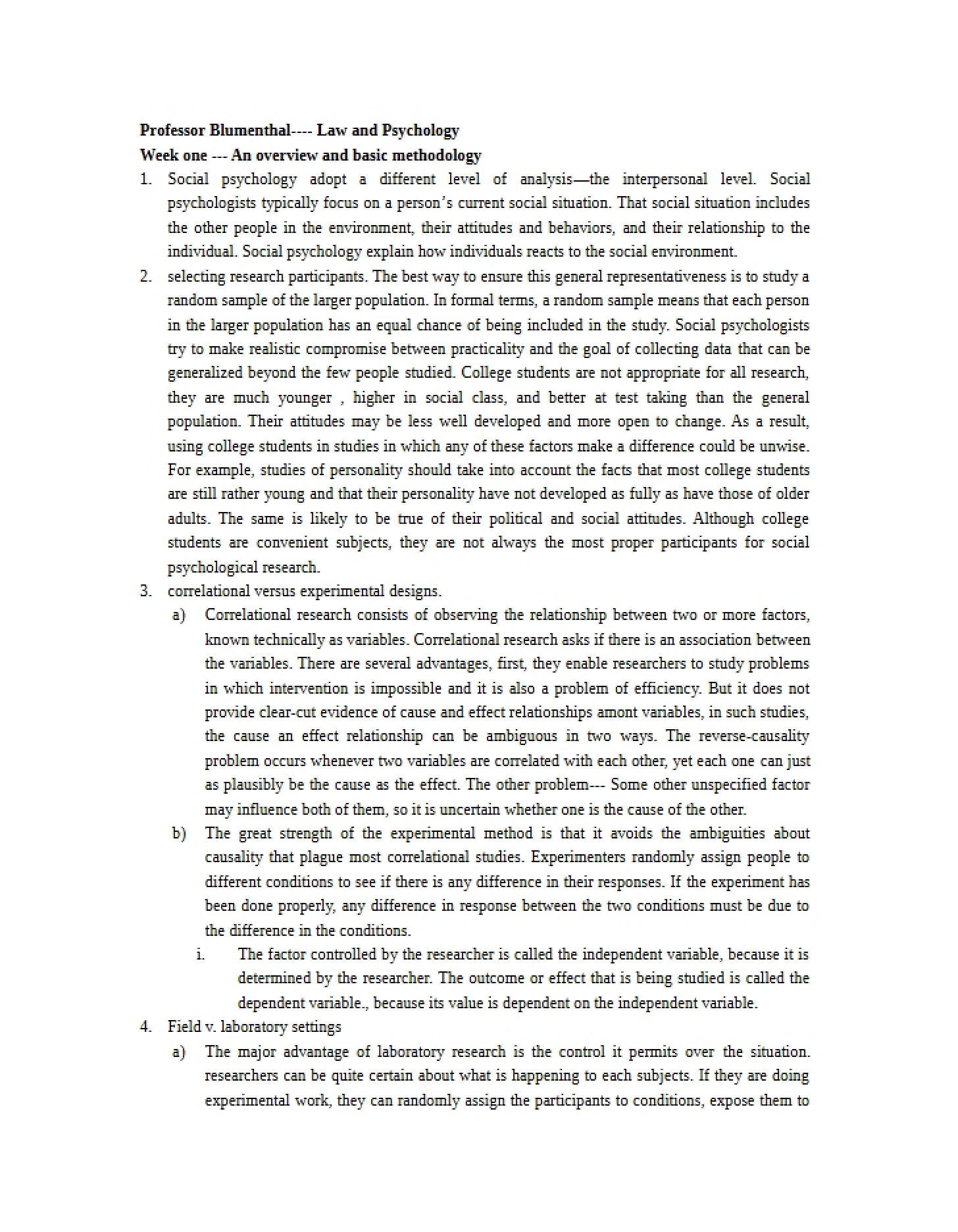
What This Document Is
This is a comprehensive outline for a course exploring the intersection of Law and Psychology. It serves as a structured framework for understanding how psychological principles and research impact the legal system, and conversely, how legal frameworks influence human behavior. The outline details core concepts and foundational research within this interdisciplinary field, offering a roadmap for navigating complex topics.
Why This Document Matters
This study guide is invaluable for students enrolled in Law and Psychology courses, or those preparing for related fields like criminal justice, forensic psychology, or legal studies. It’s particularly helpful for grasping the overarching themes and key areas of inquiry within the discipline. Use this outline to organize your note-taking, identify crucial areas for focused study, and prepare for in-depth discussions. It’s designed to be a foundational resource throughout the semester.
Common Limitations or Challenges
This outline provides a high-level overview and does *not* contain detailed explanations, case analyses, or specific research findings. It will not substitute for attending lectures, completing assigned readings, or engaging in independent research. The outline is a structural tool, and requires accompanying course materials to fully realize its educational value. It also doesn’t offer practice questions or exam predictions.
What This Document Provides
* A hierarchical structure organizing the core themes of Law and Psychology.
* An overview of the relationship between law, social science, and empirical research.
* A framework for understanding different approaches to studying human behavior within a legal context.
* Key terminology related to research methodology in this field, including concepts of validity and experimental design.
* A foundational understanding of the core questions driving research in Law and Psychology.