What This Document Is
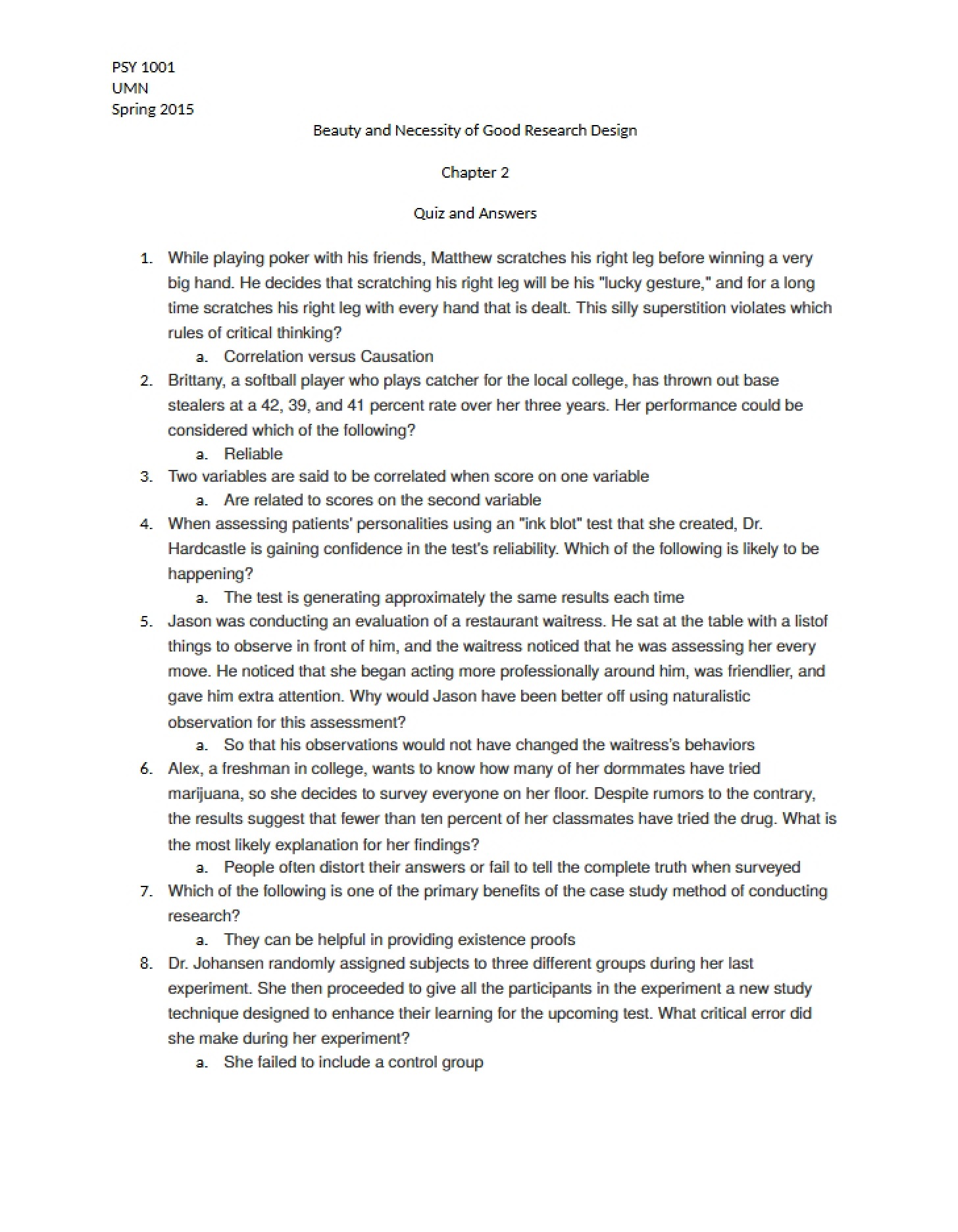
This resource is a comprehensive study guide focused on research methods within the field of introductory psychology. It delves into the core principles and techniques used to systematically investigate human behavior and mental processes. The guide explores various approaches to gathering and analyzing information, laying a foundational understanding for critically evaluating psychological research. It’s designed to accompany coursework at the university level, specifically for a course like Introduction to Psychology (PSY 1001).
Why This Document Matters
This study guide is invaluable for students seeking to master the fundamentals of psychological research. It’s particularly helpful when preparing for exams, completing assignments that require understanding research methodologies, or simply wanting a deeper grasp of how psychological knowledge is acquired. Students who struggle with differentiating research designs, understanding statistical associations, or recognizing potential flaws in studies will find this guide especially beneficial. It’s best used *alongside* course lectures and readings to reinforce key concepts.
Common Limitations or Challenges
This guide is designed to *supplement* – not replace – your core course materials. It does not provide complete lecture transcripts or a substitute for active participation in class. While it covers a broad range of research methods, it won’t delve into highly specialized or advanced statistical techniques. Furthermore, it focuses on the conceptual understanding of these methods; it does not offer step-by-step instructions for *conducting* research. Access to the full guide is required to unlock the detailed explanations and specific examples.
What This Document Provides
* An overview of different descriptive research approaches.
* A discussion of correlational studies and interpreting relationships between variables.
* Detailed exploration of experimental designs, including key components.
* Examination of potential pitfalls in research, such as confounding variables.
* Explanation of concepts related to data analysis and central tendency.
* Key terminology related to research methodology and experimental control.