What This Document Is
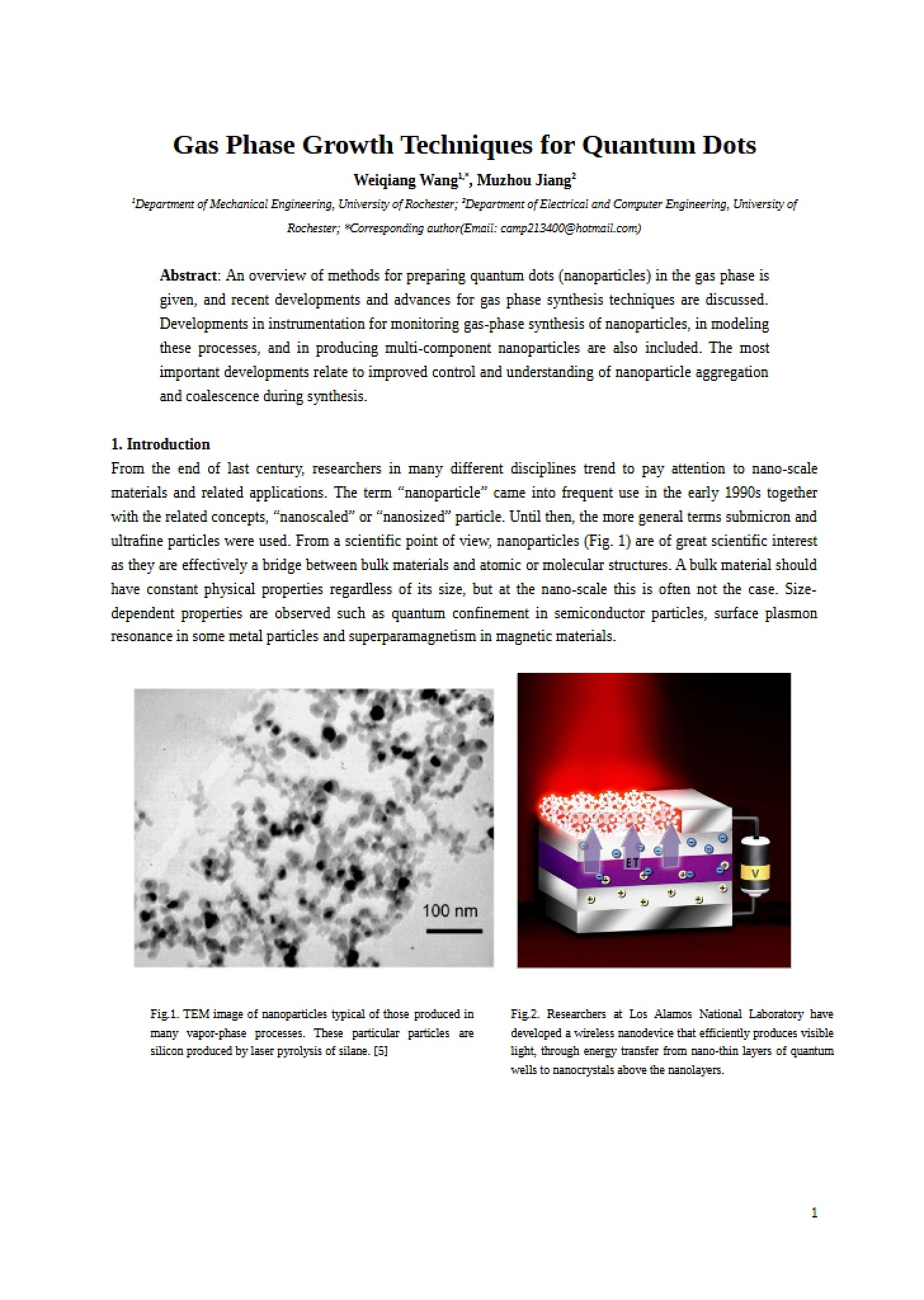
This study guide provides a focused exploration of gas phase growth techniques specifically applied to the creation of quantum dots – a critical area within nano-electro-optics. It’s a research-level overview, delving into the methodologies used to synthesize these nanoparticles directly from gaseous precursors. The material examines the advancements in both the processes themselves and the tools used to monitor and model their development, with a particular emphasis on controlling particle formation and preventing unwanted aggregation. It bridges the gap between fundamental nanoparticle science and practical applications.
Why This Document Matters
This resource is invaluable for graduate students and researchers in electrical engineering, materials science, and related fields. Specifically, those enrolled in advanced nanotechnology or nano-optics courses will find it highly relevant. It’s particularly useful when investigating the synthesis methods for nanoscale materials, preparing for research projects involving quantum dots, or seeking a deeper understanding of the challenges and opportunities in gas-phase nanoparticle production. Professionals working in semiconductor development or advanced materials manufacturing may also benefit from the insights presented.
Common Limitations or Challenges
This guide concentrates specifically on *gas phase* growth techniques. It does not offer a comprehensive review of all quantum dot synthesis methods (e.g., liquid-phase synthesis). While it touches upon applications, it doesn’t provide detailed instructions for building devices or conducting specific experiments. The focus is on the underlying scientific principles and recent developments, not a step-by-step “how-to” manual. It assumes a foundational understanding of physics, chemistry, and materials science.
What This Document Provides
* An overview of the core principles behind gas phase nanoparticle synthesis.
* Discussion of the advantages of gas-phase processing compared to other synthesis methods.
* Exploration of recent advancements in instrumentation for monitoring nanoparticle formation.
* Insights into modeling techniques used to understand and optimize gas-phase synthesis.
* Examination of the challenges related to controlling nanoparticle aggregation and coalescence.
* Consideration of the creation of multi-component nanoparticles using gas-phase techniques.