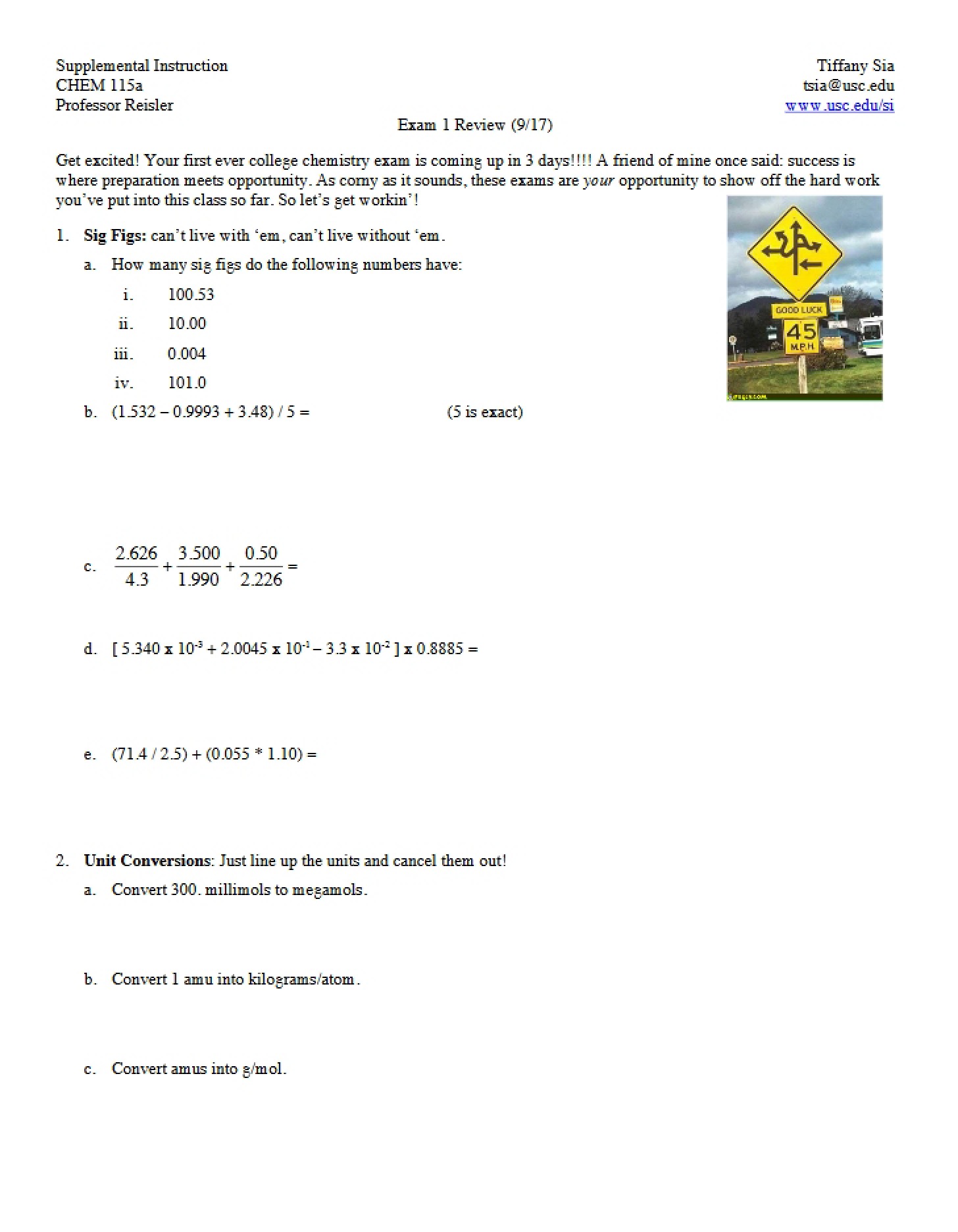
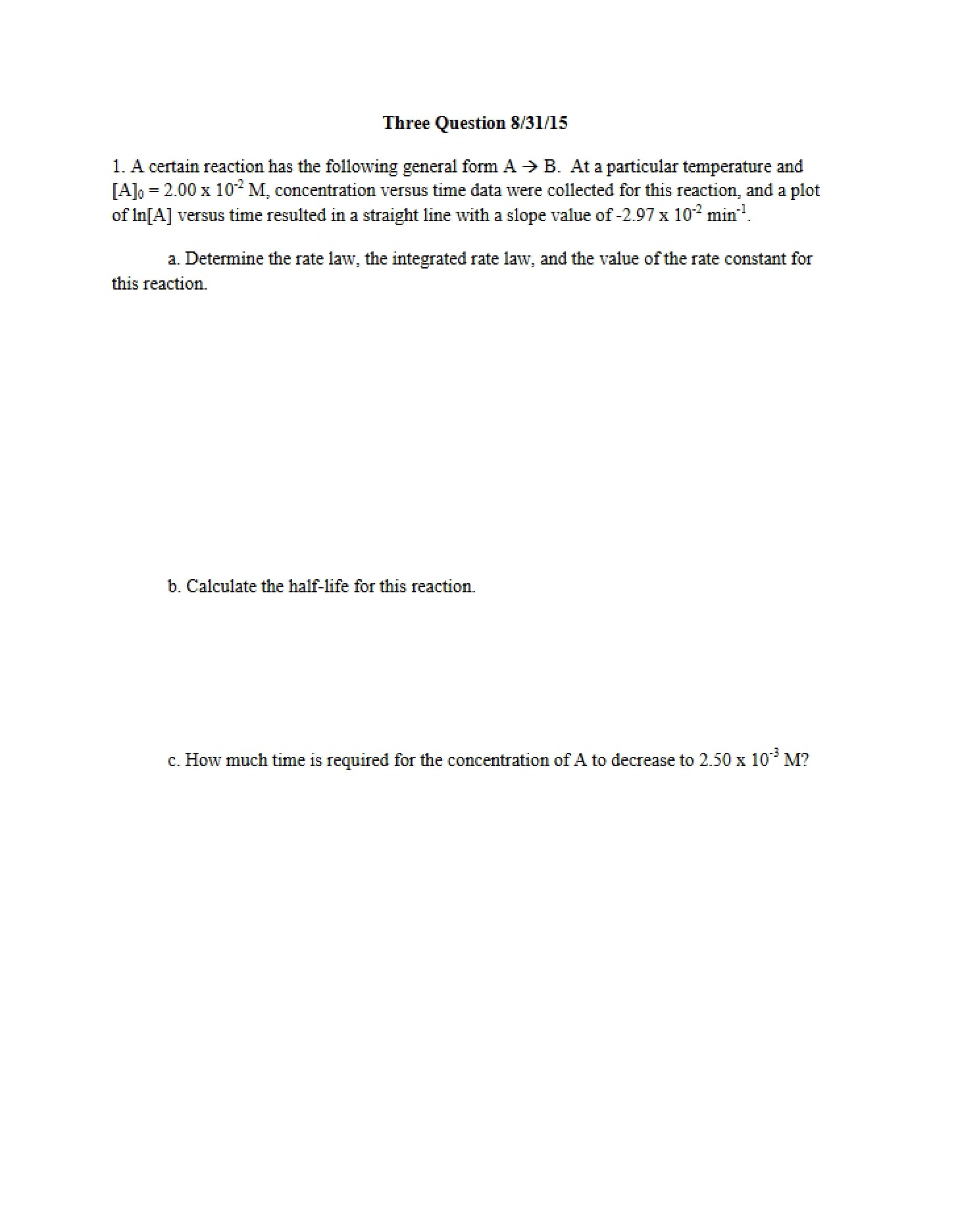
What This Document Is
This document is a practice question set for CHEM 105, General Chemistry at the University of Southern California, originally dated September 14, 2015. It’s designed to test your understanding of core principles related to chemical equilibrium and reaction kinetics. The questions focus on applying theoretical knowledge to quantitative problems, requiring a solid grasp of concepts and problem-solving techniques. Expect questions that demand you predict shifts in equilibrium based on changing conditions and calculate equilibrium pressures and reaction extents.
Why This Document Matters
This question set is an invaluable resource for students preparing for quizzes and exams in General Chemistry. It’s particularly useful for solidifying your understanding *after* reviewing lecture notes and the textbook. Working through these types of problems will help you identify areas where you need further study and build confidence in your ability to apply chemical principles. It’s best used as a self-assessment tool to gauge your preparedness and pinpoint specific topics requiring more attention. Students who actively practice with similar problems consistently perform better on assessments.
Common Limitations or Challenges
This resource provides practice questions, but it does *not* include detailed explanations or step-by-step solutions. It’s intended to challenge you to apply your existing knowledge, not to teach you new concepts. Successfully working through these questions requires a foundational understanding of equilibrium constants, Le Chatelier’s principle, and stoichiometric calculations. It also assumes familiarity with ideal gas law applications. Access to course materials and potentially external resources will be necessary to fully benefit from this practice set.
What This Document Provides
* Problems centered around equilibrium systems and their response to external changes.
* Quantitative problems requiring calculations involving equilibrium constants (K<sub>p</sub>).
* Scenarios involving gas-phase reactions and partial pressures.
* Questions designed to assess understanding of factors affecting equilibrium, such as temperature and volume changes.
* Practice applying concepts to real-world chemical processes, like hydrogen production.