What This Document Is
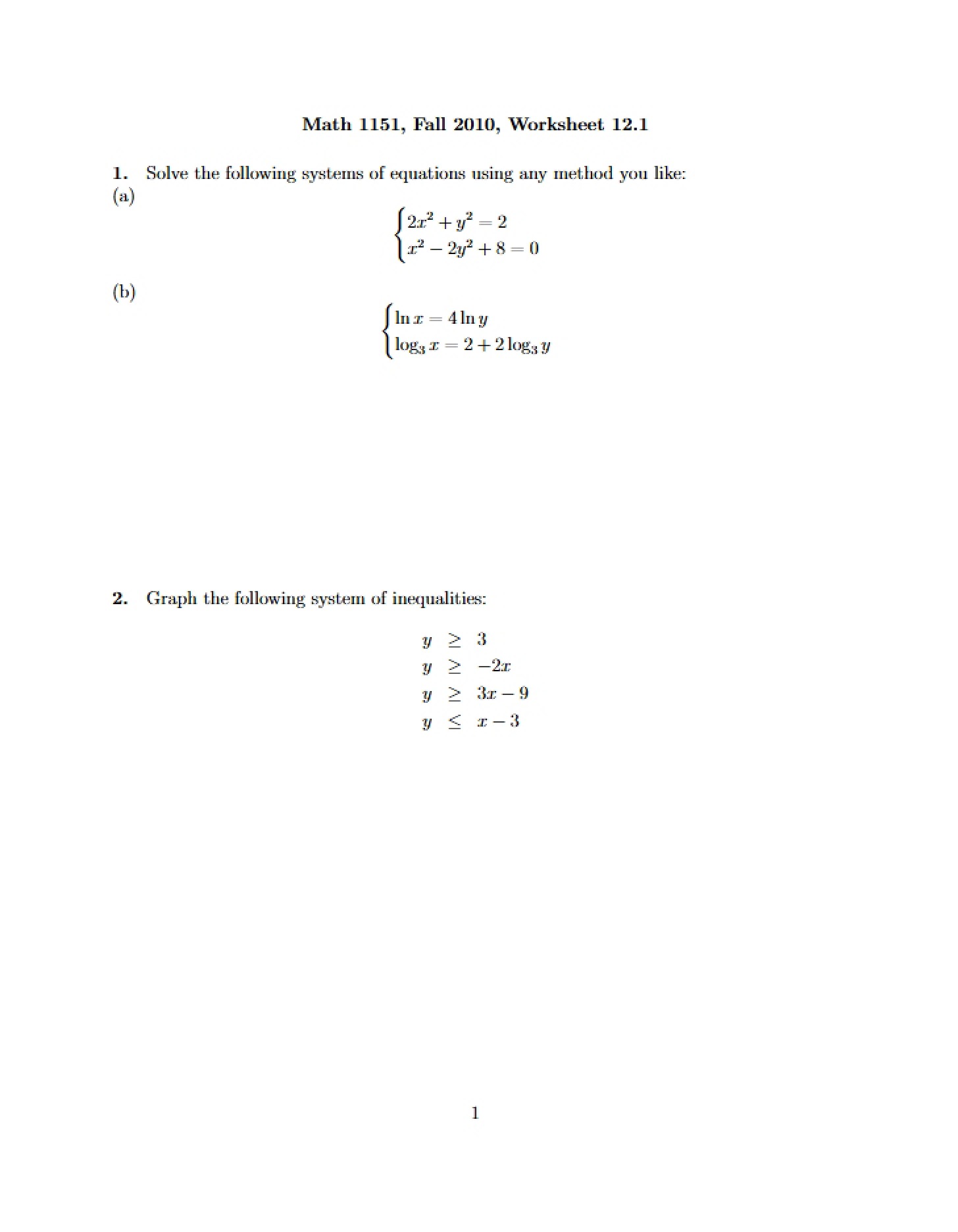
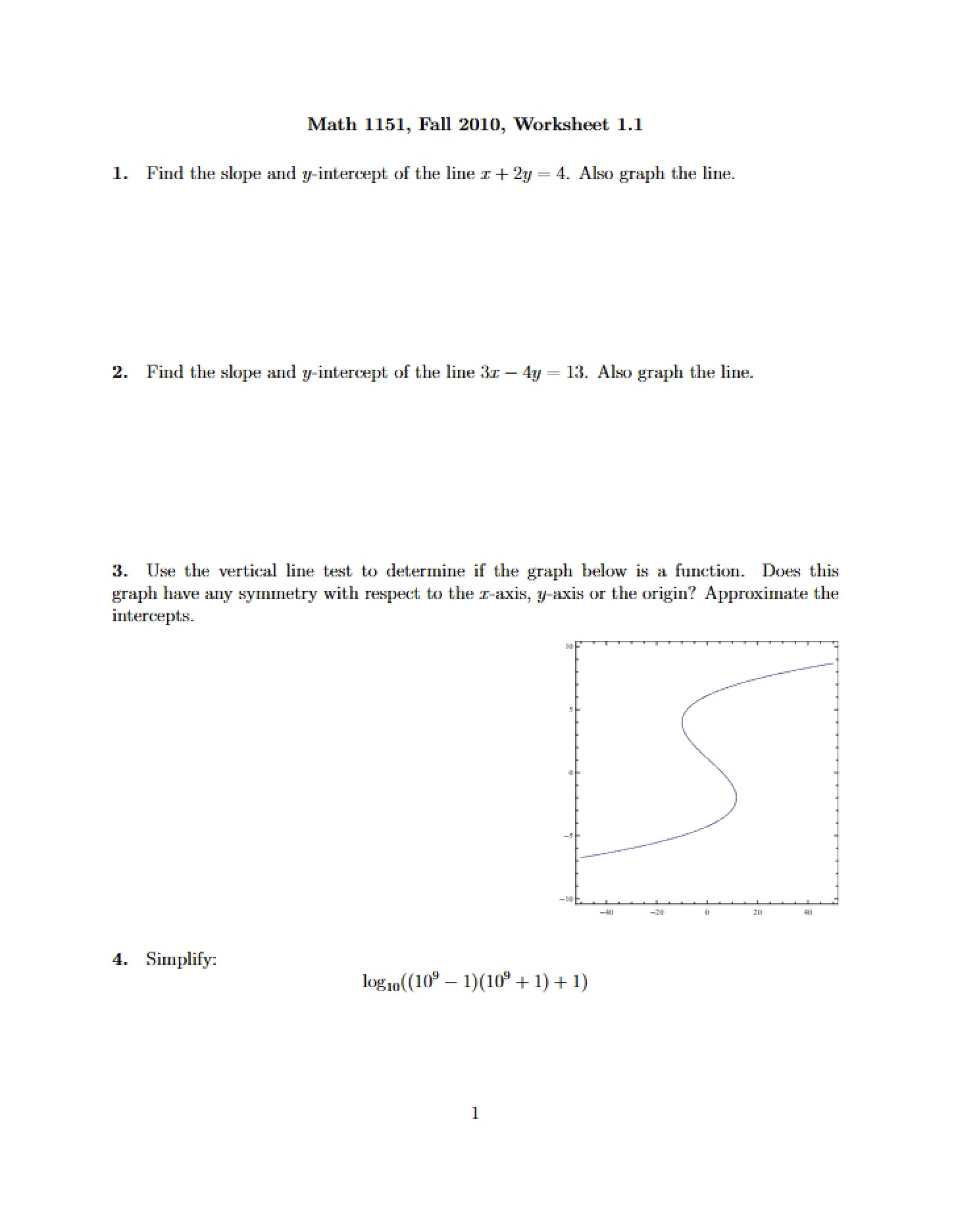
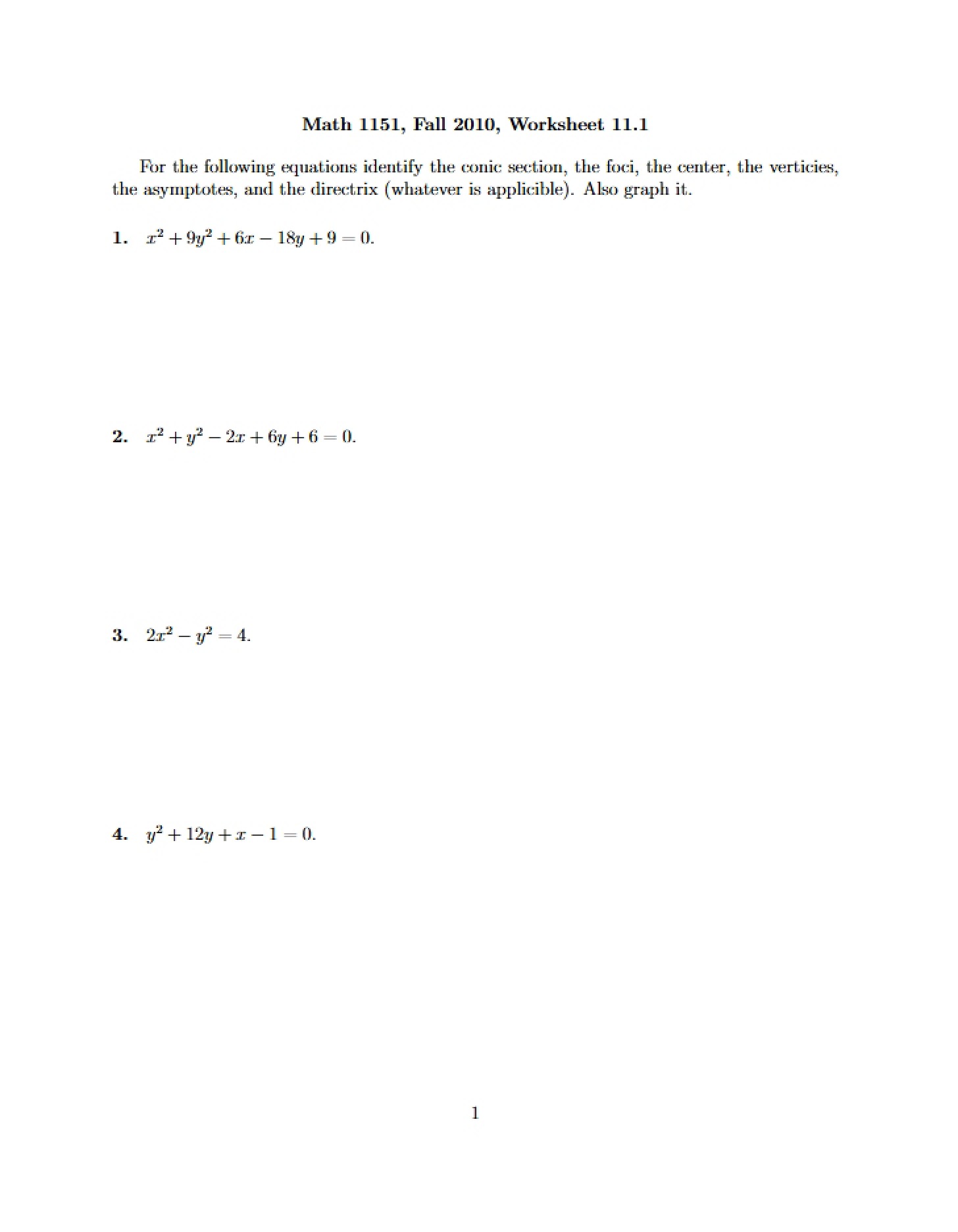
This document consists of a collection of practice questions designed to help you prepare for Test Three in Precalculus II (MATH 1151) at the University of Minnesota Twin Cities. It’s structured as a set of problems mirroring the style and difficulty level expected on the actual assessment. The questions cover a range of core concepts from the course, focusing on applying theoretical knowledge to problem-solving scenarios.
Why This Document Matters
This resource is invaluable for students aiming to solidify their understanding of key precalculus topics and build confidence before taking the test. It’s particularly useful for identifying areas where further study is needed. Working through these types of problems under timed conditions can also help you improve your test-taking strategies and reduce anxiety. Students who actively engage with practice questions consistently perform better on exams. This is best used *after* reviewing lecture notes and assigned readings, as a way to actively test your comprehension.
Common Limitations or Challenges
While this document provides a substantial set of practice problems, it’s important to remember that it is not a substitute for a comprehensive review of all course material. It does not include detailed, step-by-step solutions for each problem; rather, brief answers are provided. Furthermore, the scope of these questions, while representative, may not cover *every* possible topic or question type that could appear on the official test. It’s also noted that the original source contained potential errors, so critical thinking is encouraged.
What This Document Provides
* Practice problems covering topics such as limits (including applications of L’Hopital’s Rule), logarithmic differentiation.
* Questions relating to exponential functions and continuously compounded interest.
* Problems involving optimization – finding maximum or minimum values given constraints.
* Practice with finding derivatives and analyzing function behavior (domain, asymptotes, intervals of increase/decrease, concavity).
* Conceptual questions relating to theorems like the Mean Value Theorem.
* Application problems involving real-world scenarios like decelerating vehicles and geometric constructions.