What This Document Is
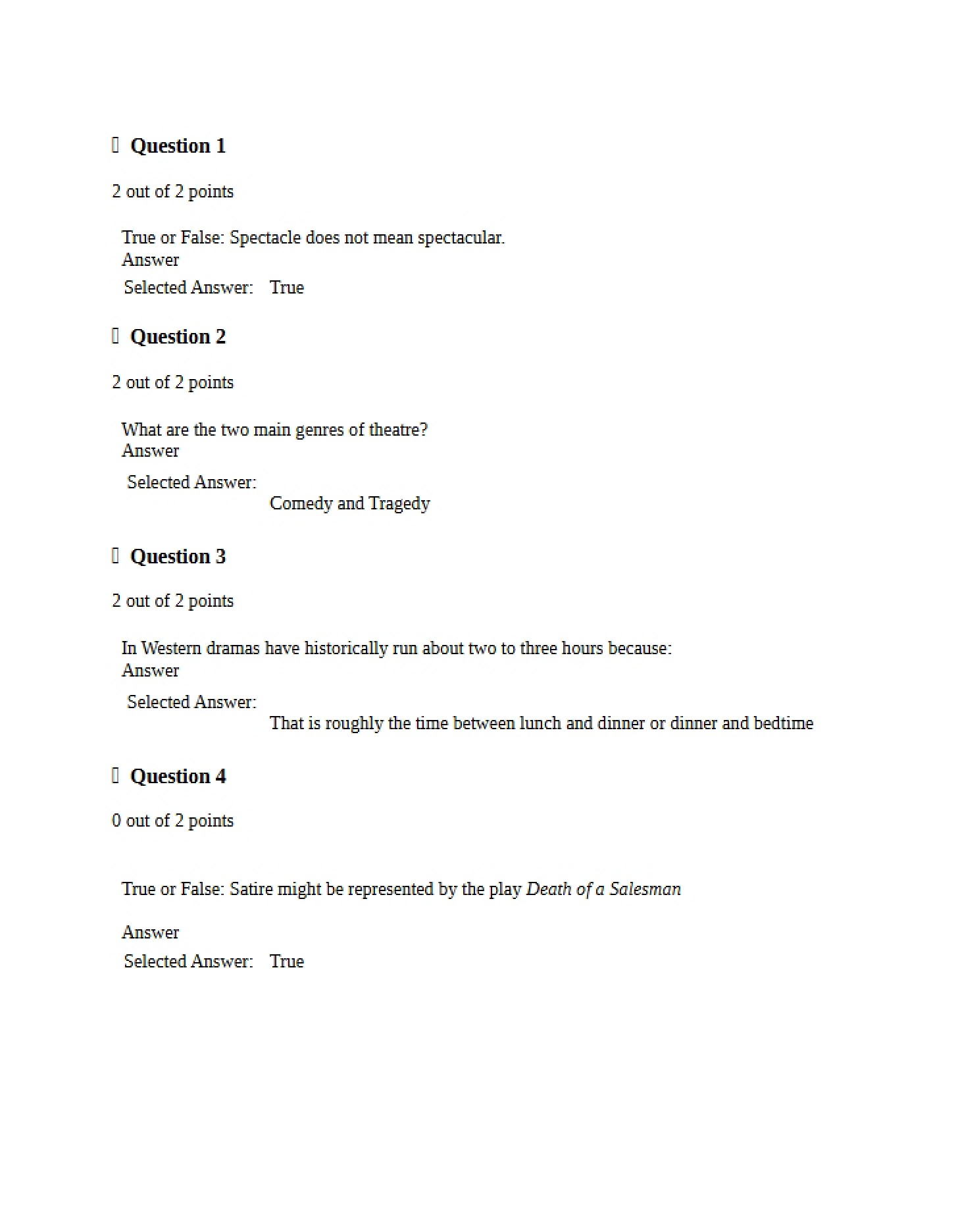
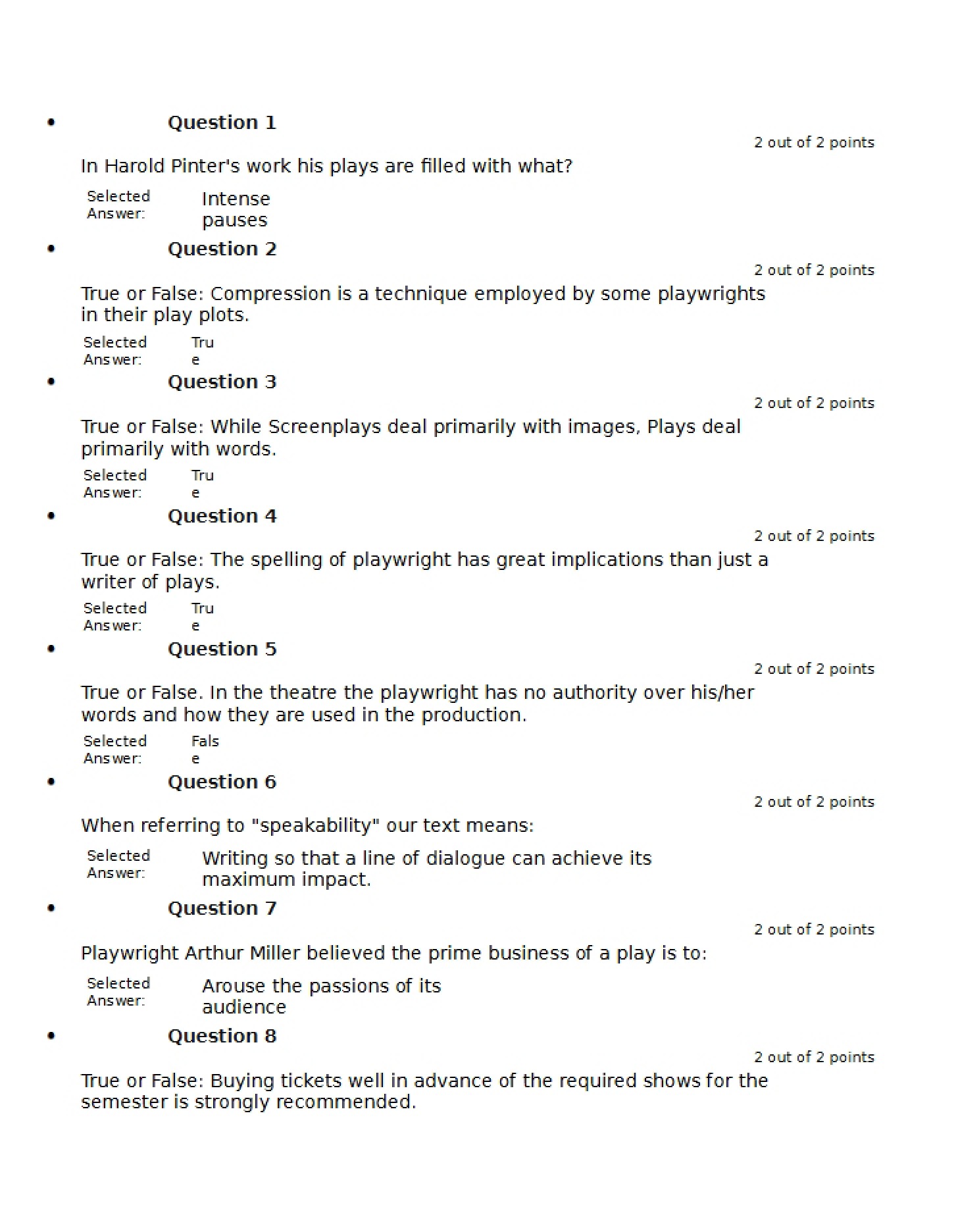
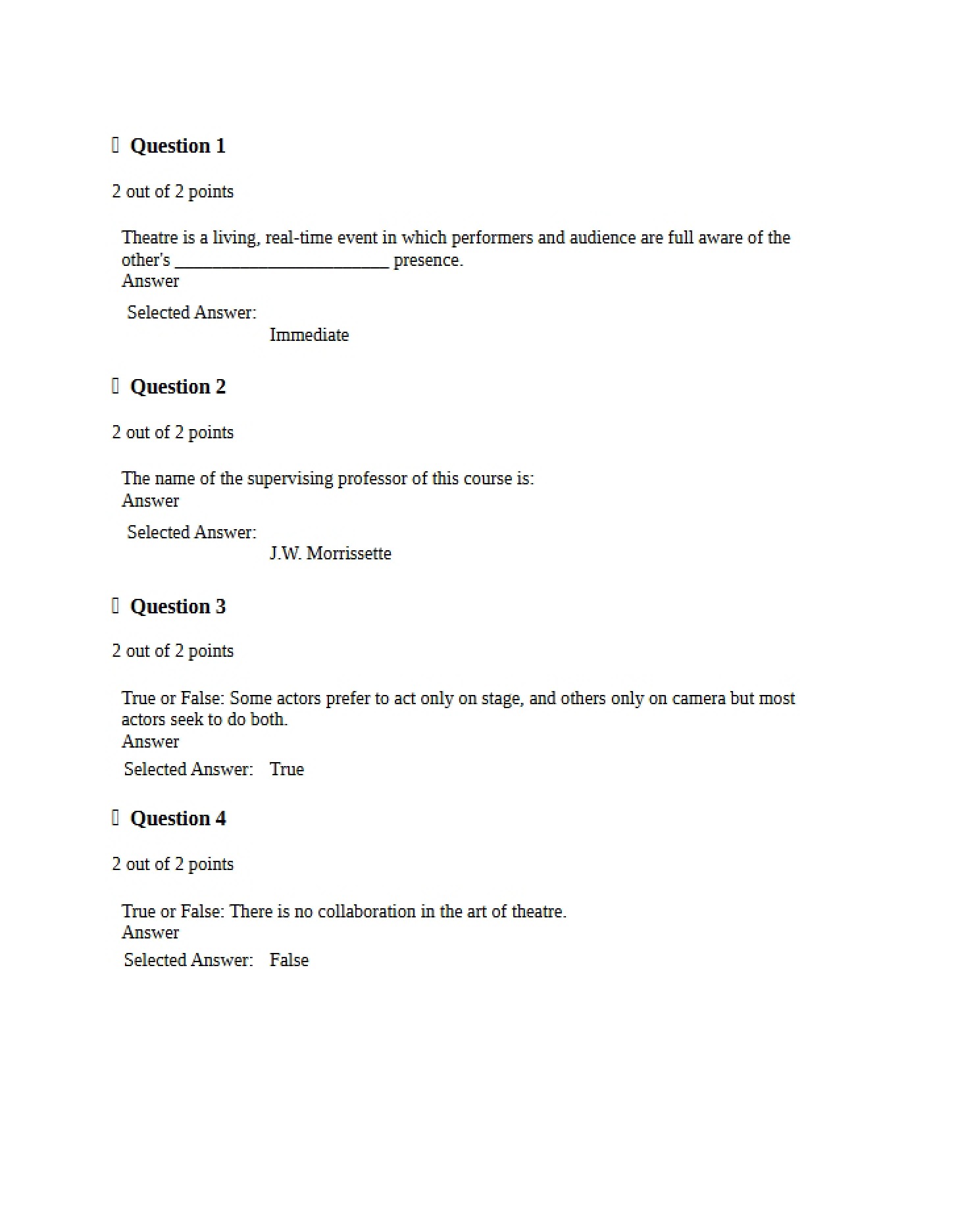
This is a quiz designed to assess your understanding of key concepts and movements within Modern Theatre, as taught in THEA 101 at the University of Illinois at Urbana-Champaign. It focuses on the significant shifts and influential figures that shaped theatre from the late 19th through the early 20th centuries. The quiz format consists of a series of statements and questions requiring you to demonstrate your knowledge of theatrical philosophies, historical context, and prominent artists.
Why This Document Matters
This resource is invaluable for students preparing for assessments on Modern Theatre. It’s particularly helpful for solidifying your grasp of complex theoretical ideas and ensuring you can differentiate between various “isms” that characterize this period. Use this quiz as a self-evaluation tool to pinpoint areas where your understanding is strong and identify topics needing further review before a graded assessment. It’s best utilized *after* completing assigned readings and lectures on the subject matter.
Common Limitations or Challenges
This quiz is a focused assessment and does not provide comprehensive instruction on the material. It assumes you have already engaged with the core course content – lectures, readings, and discussions. It will not *teach* you the concepts, but rather *test* your existing knowledge. Furthermore, it doesn’t offer detailed explanations for correct or incorrect answers; its primary function is to gauge your current level of comprehension.
What This Document Provides
* A series of questions covering major Modern Theatre movements (e.g., Naturalism, Realism, Theatre of Cruelty).
* Opportunities to test your understanding of influential theatrical figures and their contributions.
* Questions designed to assess your ability to distinguish between core tenets of different theatrical philosophies.
* True/False statements requiring critical thinking about the historical and theoretical foundations of Modern Theatre.
* A format mirroring potential assessment questions in THEA 101.