What This Document Is
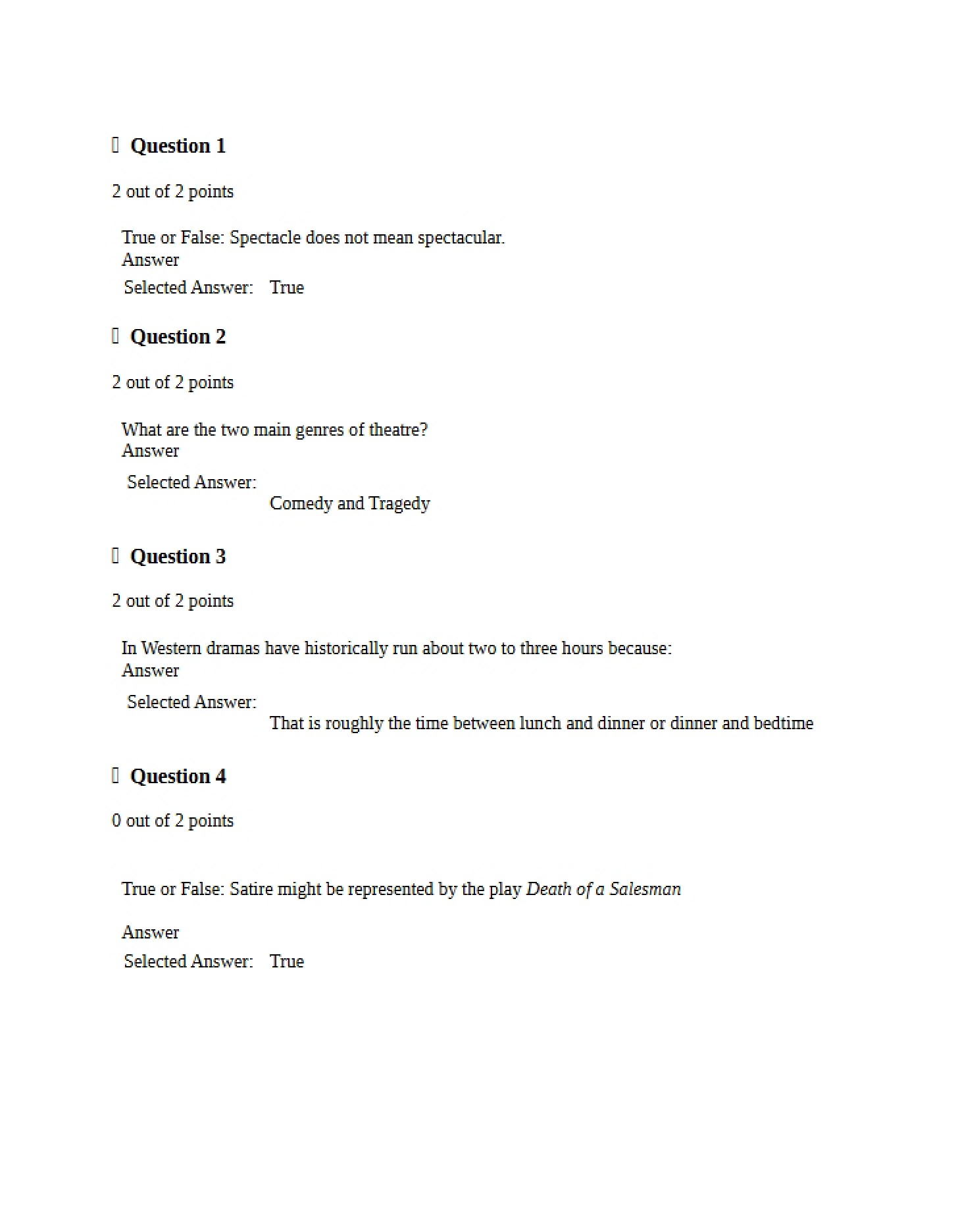
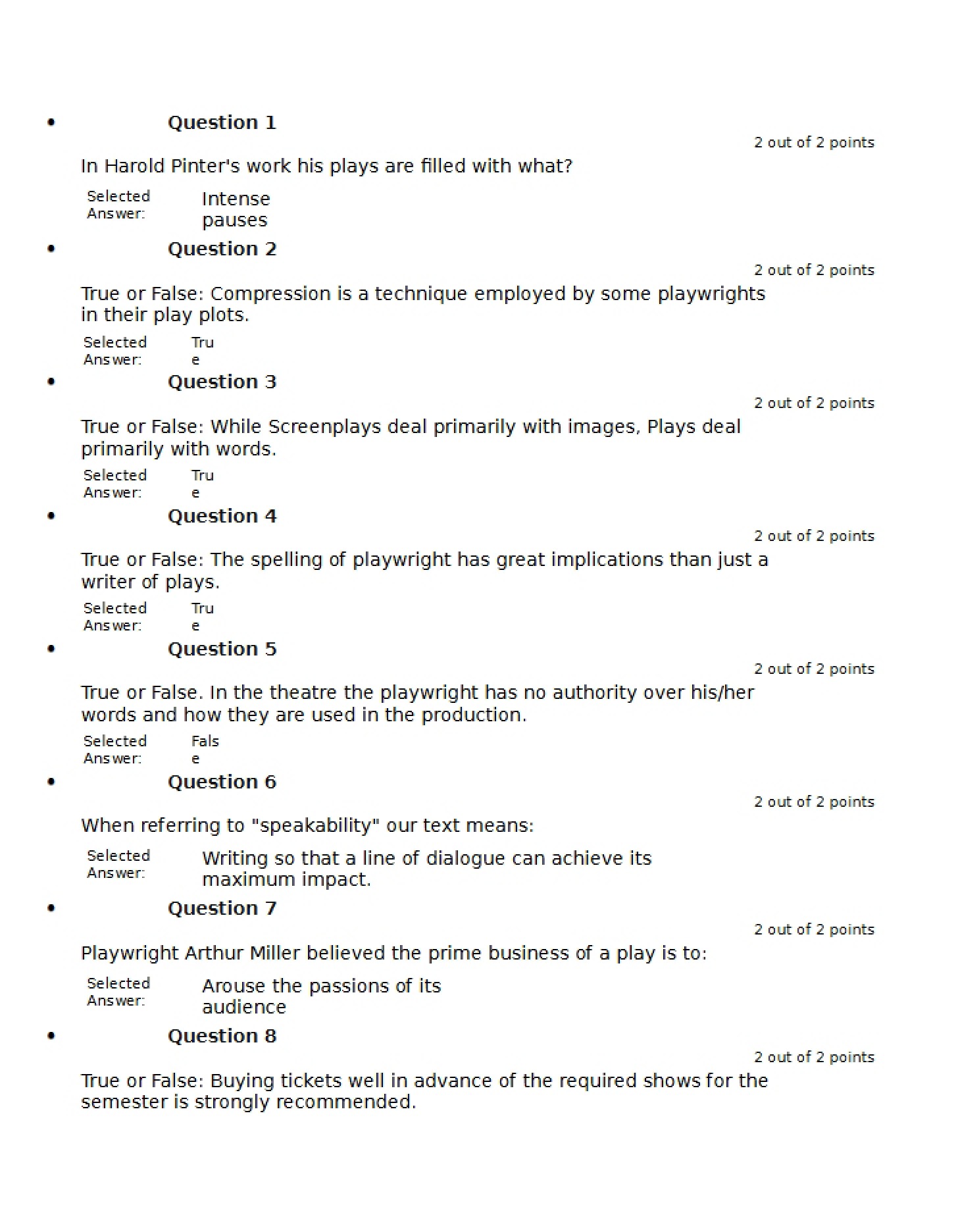
This resource is a quiz designed to assess your understanding of foundational concepts within THEA 101: Introduction to Theatre Arts at the University of Illinois at Urbana-Champaign. It focuses on core terminology, historical context, and critical elements of dramatic structure and performance. This particular installment, Part 3 of Quiz 2, tests knowledge accumulated through lectures, readings, and discussions concerning the building blocks of theatre. The questions are formatted as true/false and multiple choice, requiring both recall and application of key ideas.
Why This Document Matters
This quiz is an invaluable tool for students preparing for graded assessments in THEA 101. It’s particularly helpful for self-evaluation – identifying areas of strength and pinpointing concepts needing further review. Utilizing this resource *before* a formal exam can significantly improve your performance and boost your confidence. It’s also beneficial for students who want to solidify their understanding of theatre fundamentals as they progress through the course. Think of it as a practice run to help you think like a theatre scholar!
Common Limitations or Challenges
This quiz is a focused assessment and does not provide comprehensive instruction on the topics covered. It assumes you have already engaged with the course materials. It will not *teach* you the concepts, but rather *test* your existing knowledge. Furthermore, it represents only a portion of the overall course assessment and should not be considered a complete substitute for thorough study of all assigned materials. Accessing the full quiz will reveal the specific areas where your understanding can be strengthened.
What This Document Provides
* A series of questions covering essential theatre terminology.
* Assessment of understanding regarding dramatic structure and elements.
* Opportunities to review concepts related to theatrical conventions.
* Insight into the historical and theoretical foundations of Western drama.
* Questions relating to the role of the audience and the performance experience.
* Exploration of different theatrical genres and their characteristics.
* A gauge of familiarity with significant works and figures in American theatre.