What This Document Is
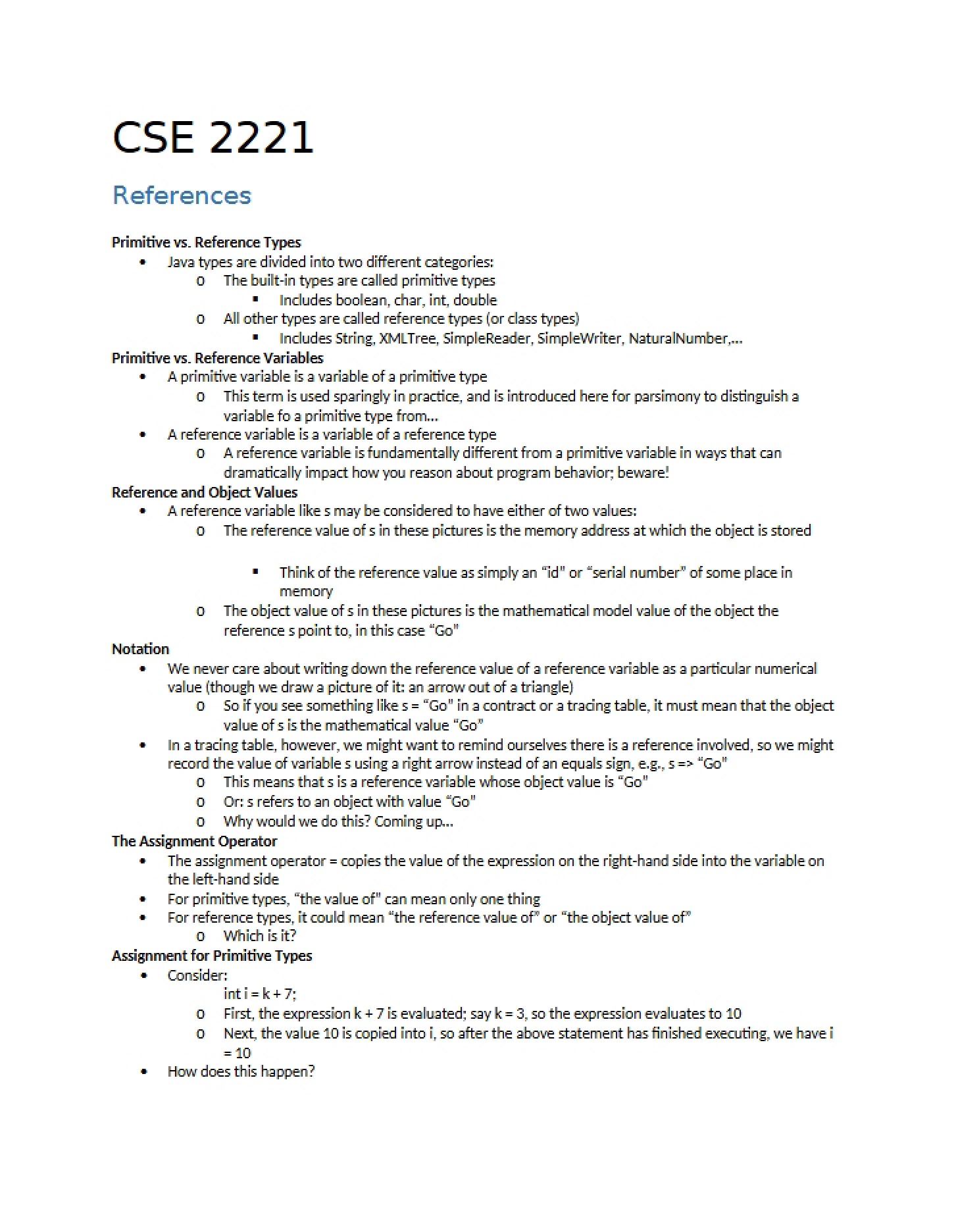
This instructional resource delves into the core concepts of arrays and references within the context of a computer science course. It’s designed to build a strong foundational understanding of how data is structured and manipulated in programming, specifically focusing on the nuances of these two related, yet distinct, concepts. The material explores how arrays function beyond their basic definition as collections of variables.
Why This Document Matters
Students enrolled in introductory and intermediate programming courses – particularly those using Java – will find this resource exceptionally valuable. It’s especially helpful when you’re beginning to grapple with the differences between how data is stored and accessed directly versus through references. Understanding these concepts is crucial for writing efficient, predictable, and bug-free code. This material will be beneficial when working on assignments involving data structures and algorithm implementation.
Topics Covered
* The fundamental definition of arrays and their characteristics.
* The concept of reference types in programming.
* How array names relate to the underlying data they represent.
* The behavior of arrays when assigned, passed as parameters, or returned from methods.
* Comparison of arrays using equality operators and methods.
* Potential pitfalls and best practices when working with arrays.
* Alternative data structures to arrays for more robust applications.
What This Document Provides
* A detailed exploration of the relationship between arrays and references.
* Insights into the behavior of array operations in a programming environment.
* Discussion of common misconceptions regarding array comparison.
* Guidance on utilizing available tools and libraries for array manipulation.
* Recommendations for choosing appropriate data structures based on project requirements.