What This Document Is
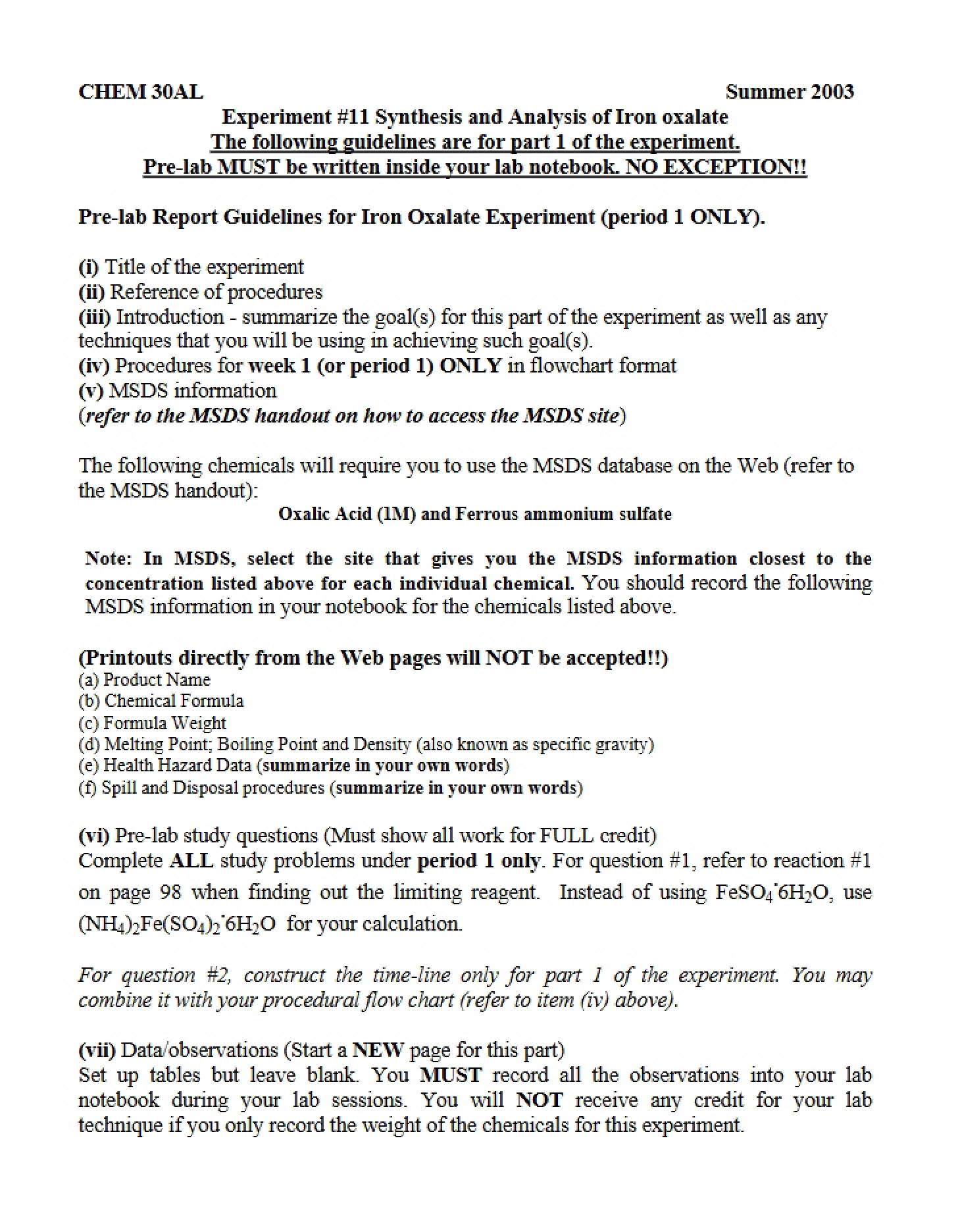
This is a comprehensive post-lab report guideline for a soil analysis project completed within the Organic Chemistry I: Structure and Reactivity (CHEM 30A) course at UCLA. It details the expected structure, content, and requirements for a group report based on experimental work conducted in the lab. This guideline serves as a blueprint for students to effectively communicate their findings and demonstrate their understanding of the analytical processes involved.
Why This Document Matters
This resource is essential for students enrolled in CHEM 30A who have completed the soil analysis laboratory experiment. It’s particularly valuable when preparing a formal, graded group report. Understanding this guideline *before* beginning to write will ensure your group meets all expectations and maximizes your score. It also serves as a valuable review tool, reinforcing key concepts learned throughout the course and preparing you for comprehensive assessments.
Topics Covered
* Experimental Design & Analytical Schemes
* Qualitative and Quantitative Analysis Techniques
* Spectroscopic Data Interpretation (IR, Mass Spec, UV-Vis)
* Data Analysis and Error Propagation
* Compound Identification & Purification Strategies
* Report Formatting and Collaboration Best Practices
* Inorganic and Organic Compound Analysis within Environmental Samples
What This Document Provides
* A detailed framework for structuring your soil analysis report.
* Specific instructions regarding group responsibilities and report presentation.
* Guidance on constructing a simplified flowchart to visualize the experimental process.
* Requirements for including and interpreting both experimental and literature spectra.
* A clear outline for presenting quantitative results, including error analysis and uncertainty estimations.
* Expectations for summarizing findings and discussing potential experimental limitations.
* A section dedicated to the inclusion of supporting experimental evidence.