What This Document Is
This study guide delves into the core principles of establishing causation within sociological research. It’s designed for students in a Research Methods course, specifically addressing how to move beyond simple correlations to understand true cause-and-effect relationships. The material focuses on the critical elements of research design needed to confidently analyze and interpret social phenomena. It builds upon foundational concepts like measurement validity and generalizability, taking the next step toward rigorous sociological inquiry.
Why This Document Matters
This resource is invaluable for students grappling with the complexities of research design and seeking to understand how to build a strong, defensible argument for causality. It’s particularly helpful when planning your own research projects, critically evaluating existing studies, or preparing for assessments that require demonstrating an understanding of causal inference. Anyone aiming to conduct or interpret sociological research will benefit from a firm grasp of the concepts explored within.
Common Limitations or Challenges
This guide focuses on the *theoretical* framework for establishing causation and selecting appropriate research designs. It does not provide step-by-step instructions for conducting statistical analyses or implementing specific research methodologies. It also doesn’t offer pre-determined solutions to research challenges; instead, it equips you with the conceptual tools to navigate those challenges independently. It assumes a basic understanding of research terminology and statistical concepts.
What This Document Provides
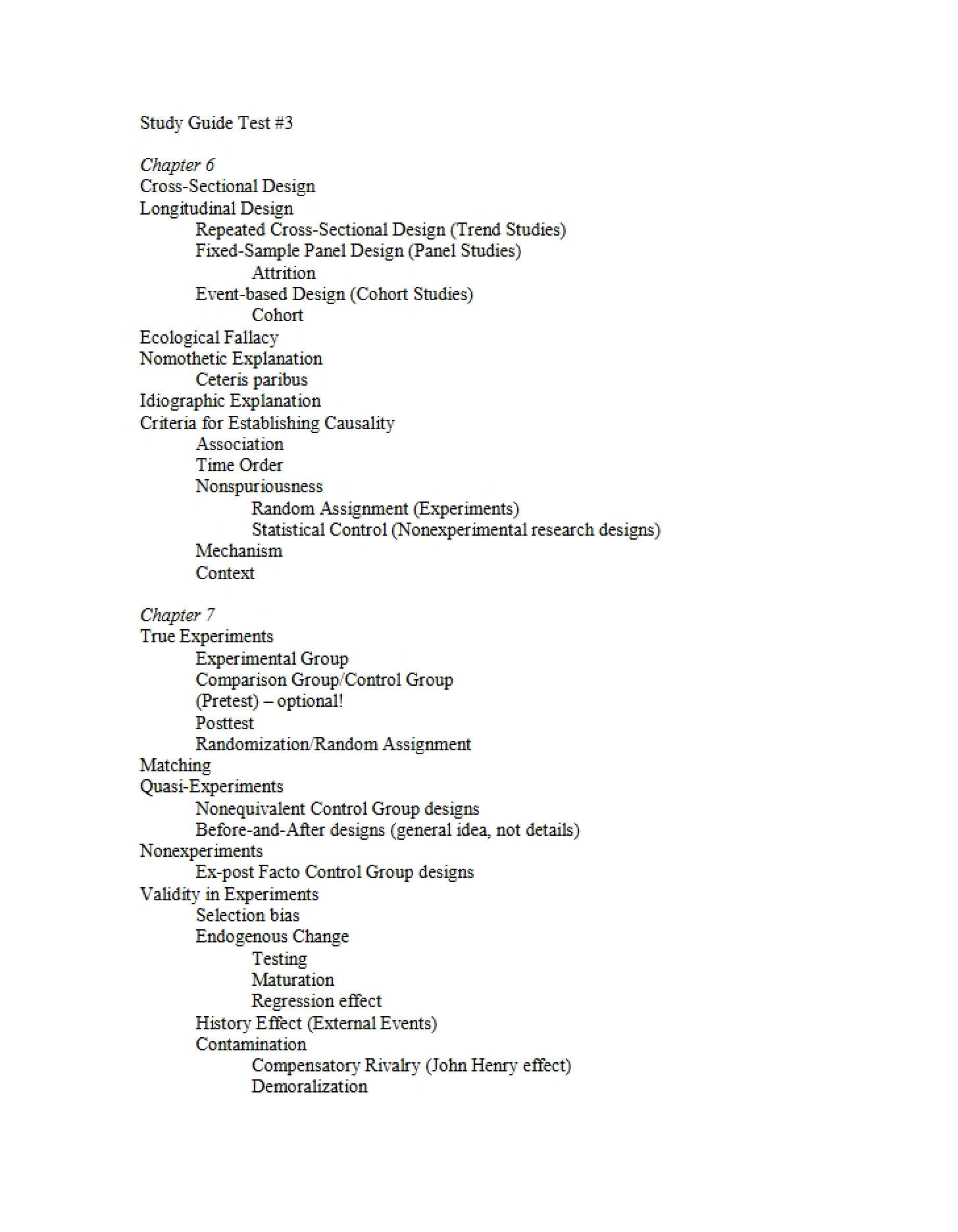
* A detailed exploration of the criteria necessary to establish a causal relationship.
* Discussion of potential pitfalls in identifying true causes, including the concept of spuriousness.
* An overview of the importance of temporal order in causal relationships.
* Examination of the role of causal mechanisms and contextual factors.
* A comparison of different research designs, including cross-sectional and longitudinal approaches.
* Consideration of individual versus group units of analysis in research.