What This Document Is
This resource is a focused preparation guide for Exam I in PSYCH 1100, Introduction to Psychology at The Ohio State University. It specifically concentrates on the core principles and techniques of research methods, laying a foundational understanding crucial for success in the course. It outlines key areas tested on the exam, offering a structured overview of the material.
Why This Document Matters
This guide is invaluable for students aiming to solidify their grasp of psychological research methodologies. It’s particularly helpful when reviewing before an exam, identifying knowledge gaps, and reinforcing understanding of complex concepts. Students who utilize this resource will be better equipped to approach exam questions with confidence and a clear understanding of the scientific basis of psychology. It’s best used in conjunction with course lectures and assigned readings.
Topics Covered
* The fundamental differences between empirical and dogmatic approaches to knowledge.
* Core principles of the scientific method and the relationship between theory and hypothesis.
* Challenges inherent in studying human behavior and strategies to address them.
* Methods for defining and measuring psychological constructs.
* A comparative analysis of various research designs, including naturalistic observation, correlational studies, and experiments.
* Principles of data description, including graphical representations and statistical measures.
* The critical distinction between correlation and causation, and techniques for establishing causality.
* Ethical considerations in psychological research, covering informed consent, and data privacy.
What This Document Provides
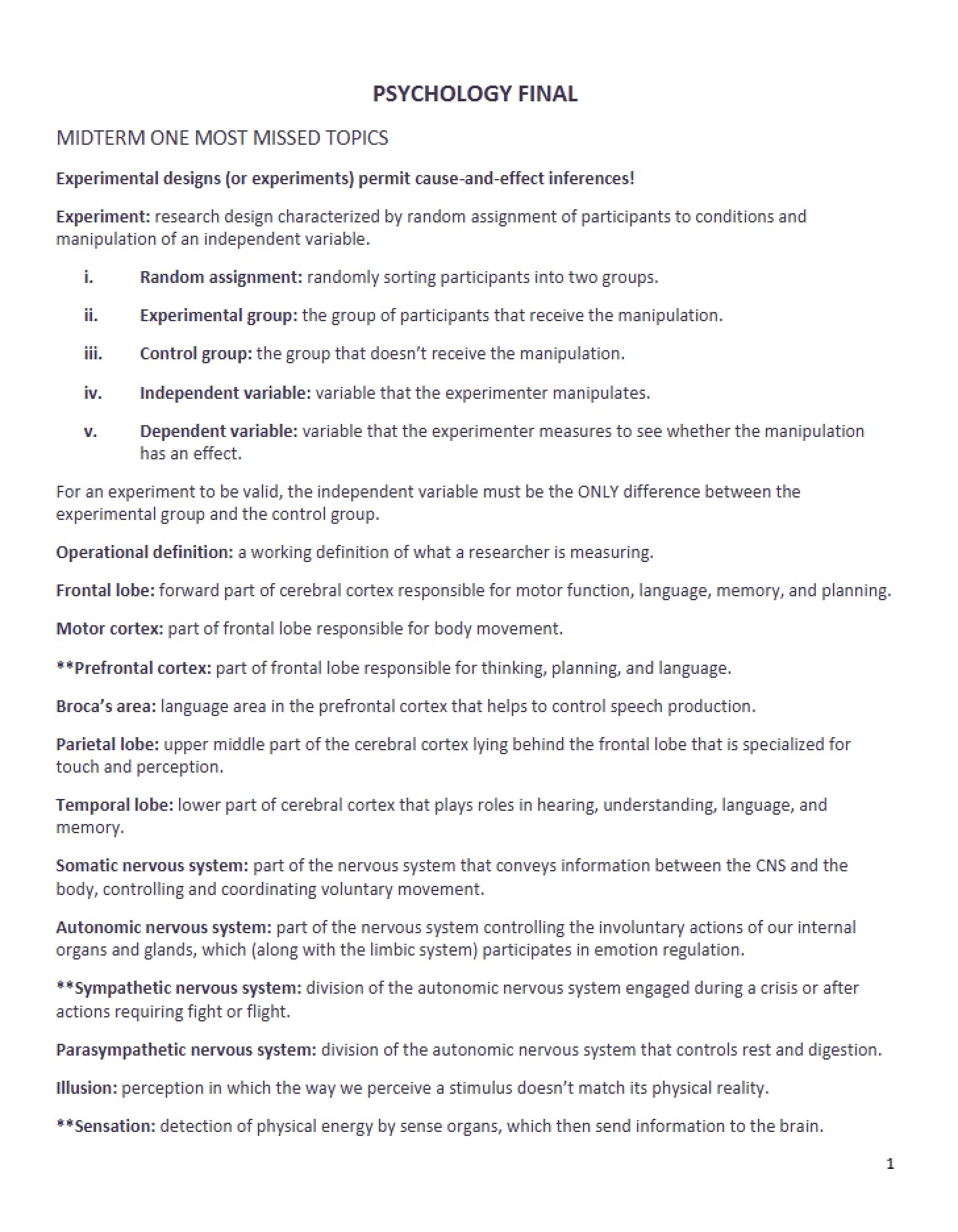
* A comprehensive list of important concepts related to research methods.
* An overview of key terminology, such as validity, reliability, and statistical significance.
* A structured breakdown of experimental design elements, including independent and dependent variables.
* A summary of the principles governing ethical research practices with human and animal subjects.
* A clear outline of the topics that will be assessed on Exam I, allowing for targeted study.