What This Document Is
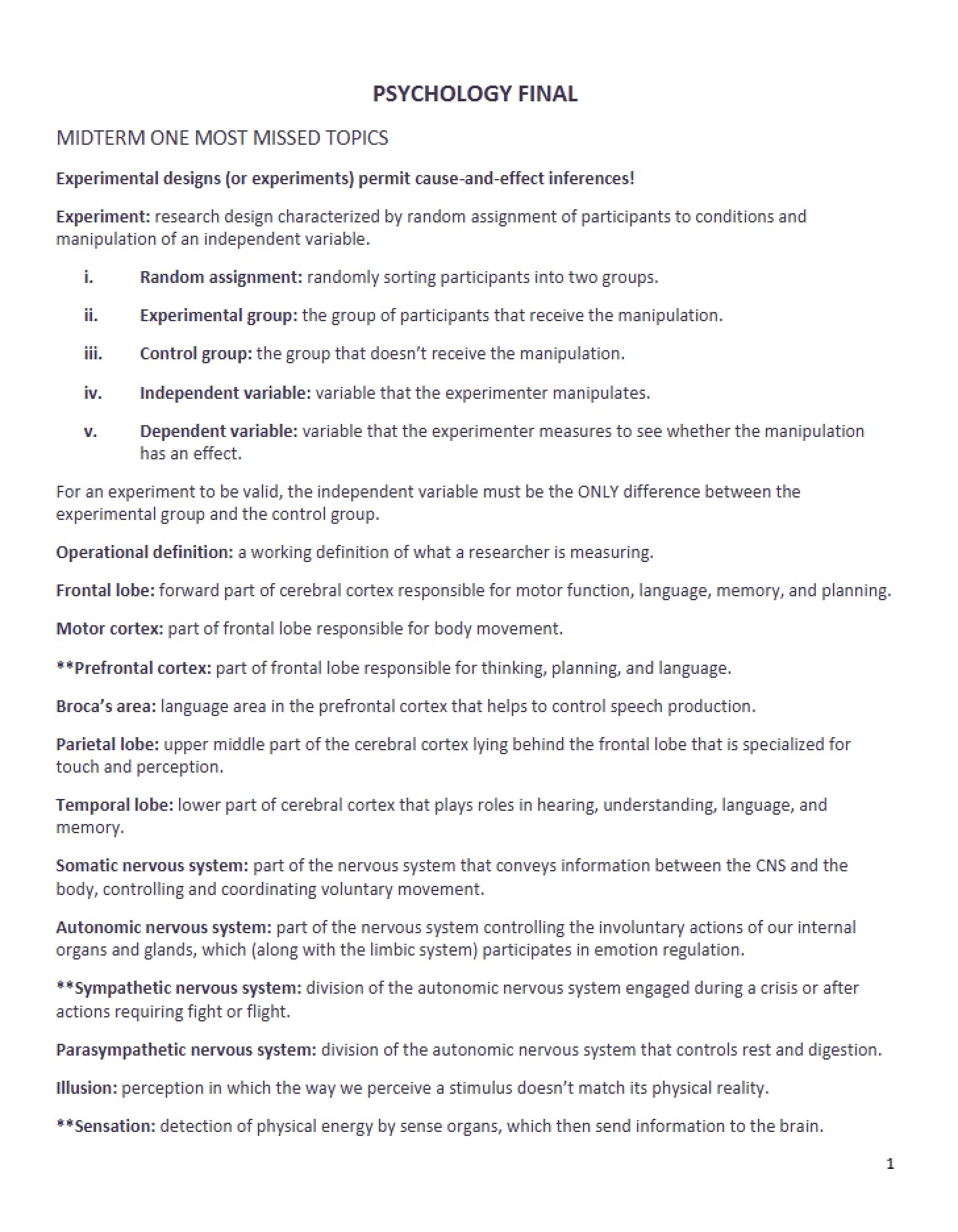
This resource is a focused study guide designed to deepen your understanding of research methodologies within the field of psychology. Specifically geared towards students in an introductory psychology course (like PSYCH 1100 at The Ohio State University), it builds upon foundational concepts and explores more nuanced aspects of designing and evaluating psychological research. It’s intended to supplement course lectures and readings, offering a concentrated review of key principles.
Why This Document Matters
This study guide is particularly helpful for students preparing for quizzes and exams related to research methods. It’s also valuable for anyone seeking a clearer grasp of how psychological studies are conducted, how data is collected, and how conclusions are drawn. If you’re struggling to differentiate between various research approaches or understand the importance of specific controls, this guide can provide a focused review to strengthen your comprehension. It’s best used *after* initial exposure to the material in class or through assigned readings.
Topics Covered
* Principles of sampling and participant selection
* The characteristics of well-designed experiments
* Concepts of reliability and validity in measurement
* Different types of measurement techniques used in psychological research
* Potential sources of bias in self-report and observational data
* Ethical considerations in conducting psychological research
* The role and function of Institutional Review Boards (IRBs)
What This Document Provides
* A focused exploration of factors influencing research quality.
* Discussion of the importance of standardized procedures.
* Examination of different approaches to gathering psychological data.
* Overview of ethical guidelines and their historical context.
* Considerations for interpreting research findings responsibly.