What This Document Is
This is a detailed exploration of two-terminal resistors, a fundamental component in electrical circuit analysis. Part of the Electronic Techniques for Engineering (ELENG 100) course at the University of California, Berkeley, this resource provides a comprehensive treatment of resistors beyond the typical introductory understanding. It delves into the characteristics of various resistor types and their behavior within circuits. This material is designed to build a strong foundation for more advanced circuit analysis techniques.
Why This Document Matters
This resource is invaluable for engineering students, particularly those enrolled in introductory electrical engineering courses. It’s especially helpful for students needing a deeper understanding of resistor behavior, going beyond simple Ohm’s Law applications. It’s beneficial when tackling circuit problems involving both linear and non-linear elements, and when preparing to analyze more complex circuit configurations. Understanding these concepts is crucial for success in subsequent coursework and practical engineering applications.
Topics Covered
* The fundamental v-i characteristics of two-terminal resistors
* Linear versus non-linear resistor behavior
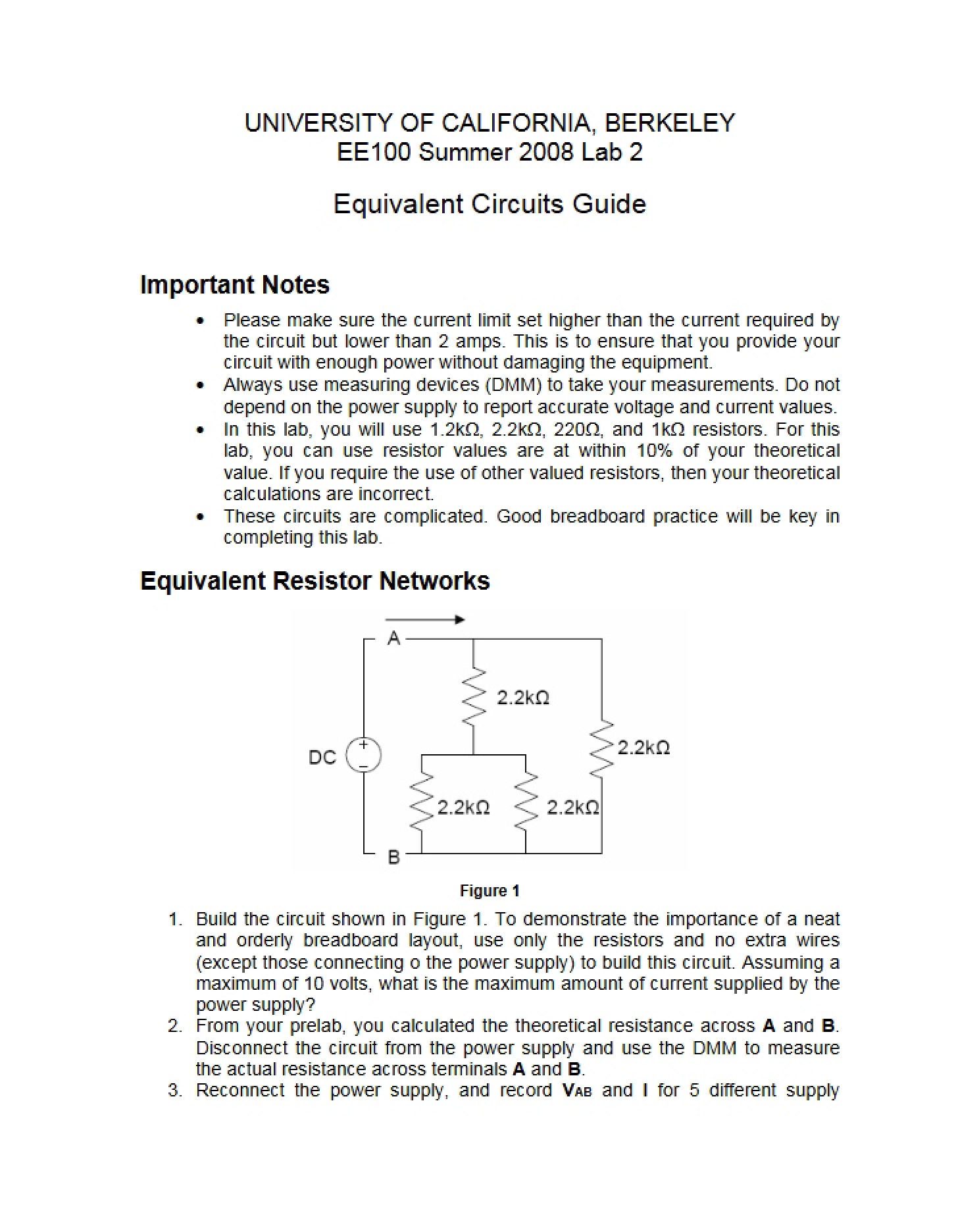
* Series, parallel, and series-parallel resistor interconnections
* Driving-point characteristics of one-ports
* Concepts of equivalence and duality in circuit analysis
* Methods for determining DC operating points in non-linear circuits
* Small-signal analysis techniques
* Transfer characteristics of resistive circuits
What This Document Provides
* A thorough examination of the relationship between voltage and current in various resistor types.
* An introduction to the concept of a “resistor” as a broad category encompassing diverse elements.
* A framework for analyzing circuits composed of interconnected resistors.
* Foundational concepts for understanding more complex circuit analysis methods.
* A basis for exploring the behavior of non-linear circuits and their operating points.