What This Document Is
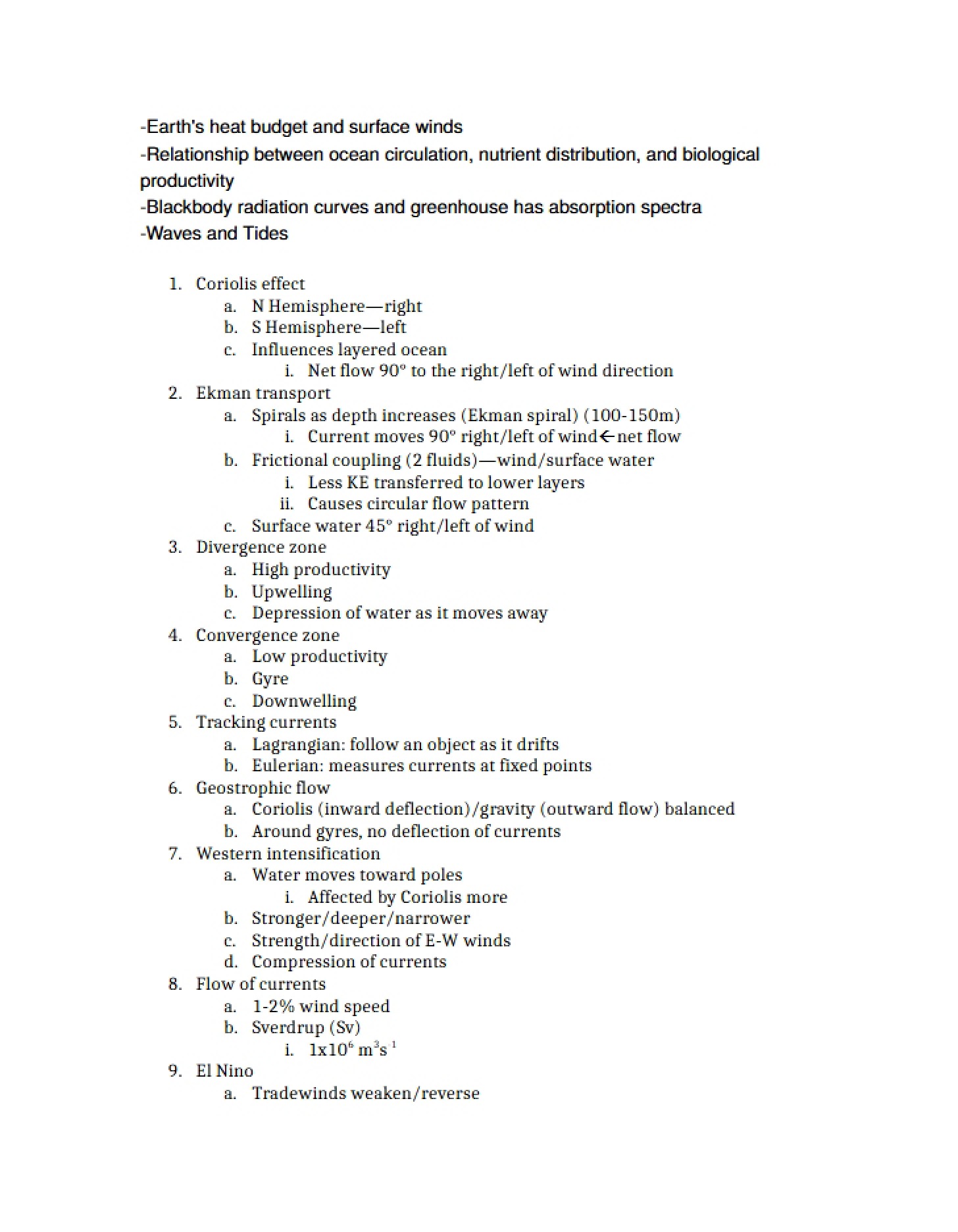
This is a focused review resource designed to help students prepare for Exam 2 in MSCI 101: The Ocean Environment at the University of South Carolina. It’s structured as a comprehensive guide outlining the core concepts and principles that will be assessed on the exam. The review targets specific sections from the course materials, offering a concentrated approach to studying.
Why This Document Matters
This review is invaluable for students aiming to solidify their understanding of key oceanographic principles before a major assessment. It’s particularly useful for those who benefit from a summarized overview of important topics and want to identify areas needing further attention. Utilizing this resource will help you efficiently focus your study efforts and approach the exam with greater confidence. It’s best used in the days leading up to the exam, after completing assigned readings and attending lectures.
Common Limitations or Challenges
This review is *not* a substitute for attending lectures, completing assigned readings, or engaging with other course materials. It does not contain the full explanations or detailed examples presented throughout the semester. It also doesn’t provide new content; rather, it serves as a focused reminder of previously covered material. This resource will help you identify what you *should* know, but won’t teach you the material itself. It also won’t provide the exam questions themselves.
What This Document Provides
* A clear indication of the specific course sections emphasized on the upcoming exam.
* A list of core concepts related to the physical and chemical properties of seawater.
* Guidance on the types of questions you can expect (multiple choice, true/false, quantitative problems, diagram interpretation).
* Focus areas concerning the interplay between biological processes (photosynthesis, respiration) and ocean chemistry.
* Key areas related to energy transfer and circulation within the ocean environment.
* Important considerations regarding salinity, evaporation, and precipitation patterns.