What This Document Is
This is a comprehensive review resource designed to prepare students for Exam 2 in Applied Fourier Series and Boundary Value Problems (ME 201) at the University of Rochester. It consolidates key concepts and techniques covered in lectures and homework assignments, aiming to help students assess their understanding before the assessment. The review references specific course materials and provides guidance on effective study strategies.
Why This Document Matters
This resource is invaluable for students enrolled in ME 201, MTH 281, ME400, or CHE400 who are looking to maximize their performance on Exam 2. It’s particularly useful in the days leading up to the exam as a focused revision tool. Students who utilize this review will gain clarity on the scope of the exam, identify areas needing further study, and build confidence in their problem-solving abilities. It’s best used *after* completing assigned homework and attending lectures, serving as a capstone to your preparation.
Common Limitations or Challenges
This review is not a substitute for attending lectures, completing homework assignments, or actively engaging with the course material. It does not provide step-by-step solutions to problems, nor does it re-teach fundamental concepts. It assumes a baseline understanding of the topics covered in sections 3.2-3.6 of Chapter 3, all of Chapters 4 and 5, and sections 6.1 and 6.2 of Chapter 6. It also doesn’t include the full practice exam – only directs you to where it can be found.
What This Document Provides
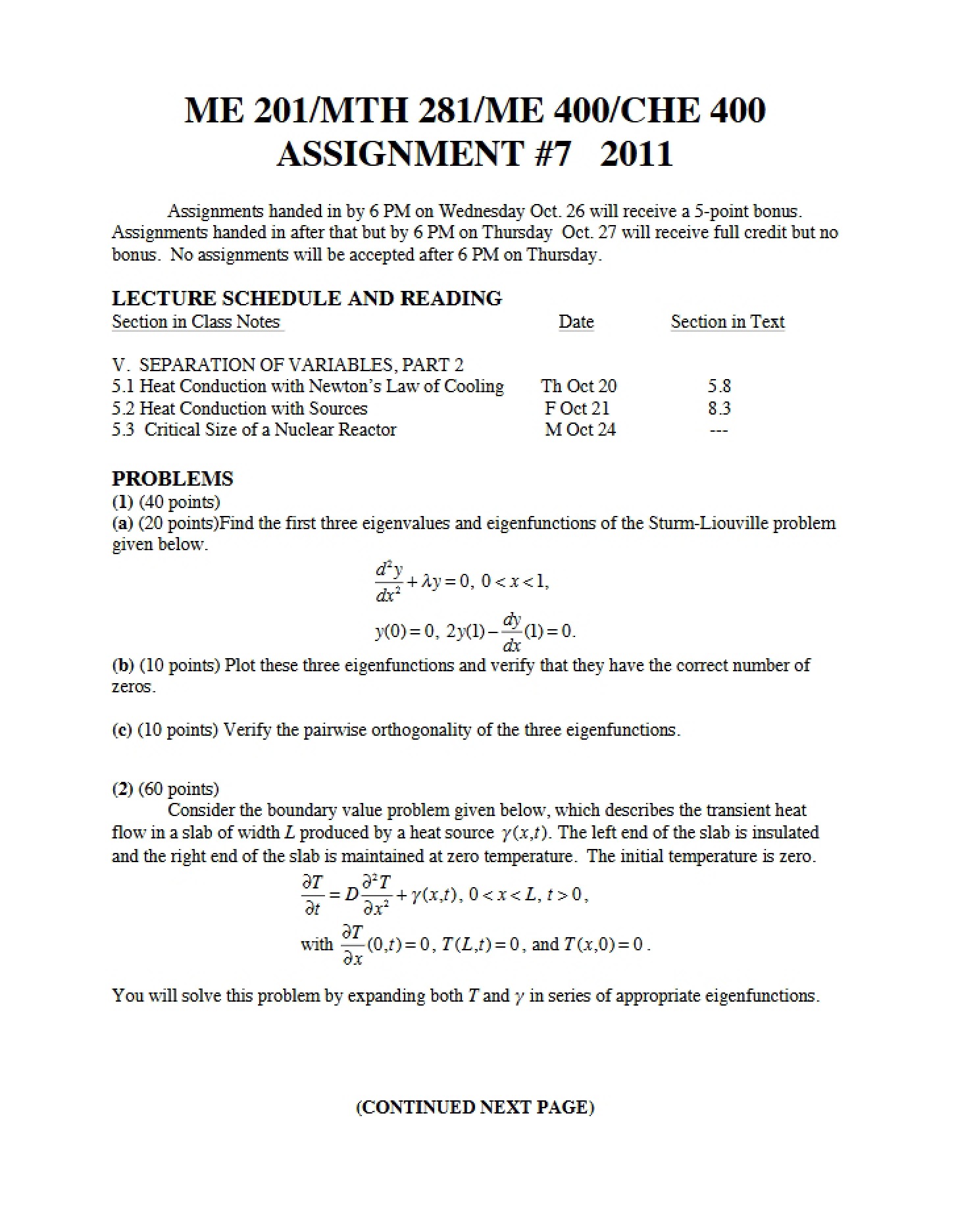
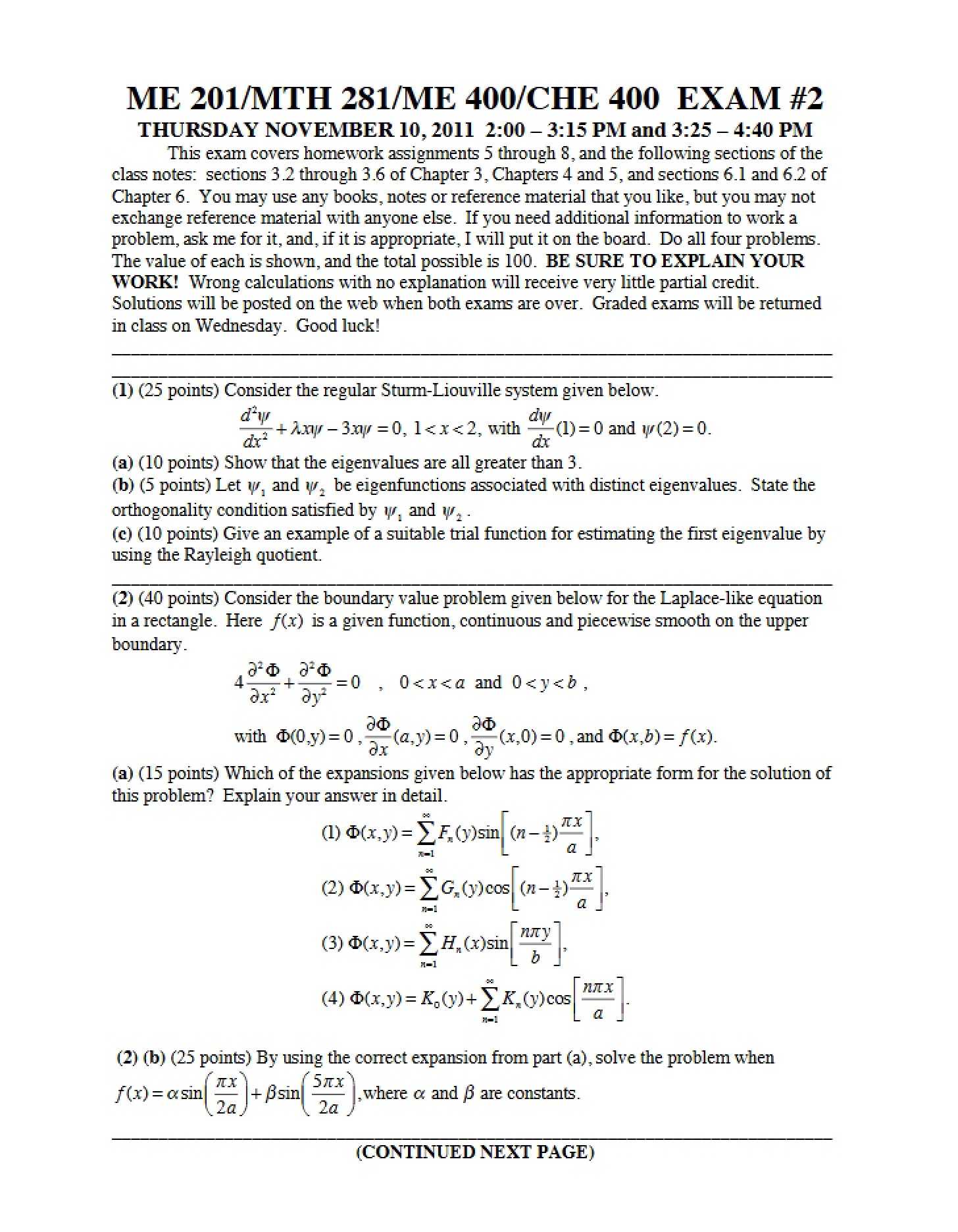
* A clear outline of the topics covered on Exam 2, referencing specific sections from course notes.
* Guidance on utilizing past exam materials for practice.
* A collection of suggested review problems designed to reinforce core concepts.
* Discussion of advanced topics like separation of variables applied to Laplace and Wave equations.
* Exploration of energy integrals and the concept of uniqueness in boundary-value problems.
* An introduction to Sturm-Liouville theory, including eigenvalue and eigenfunction analysis.
* Considerations regarding the application of these theories to physical systems like vibrating strings.