What This Document Is
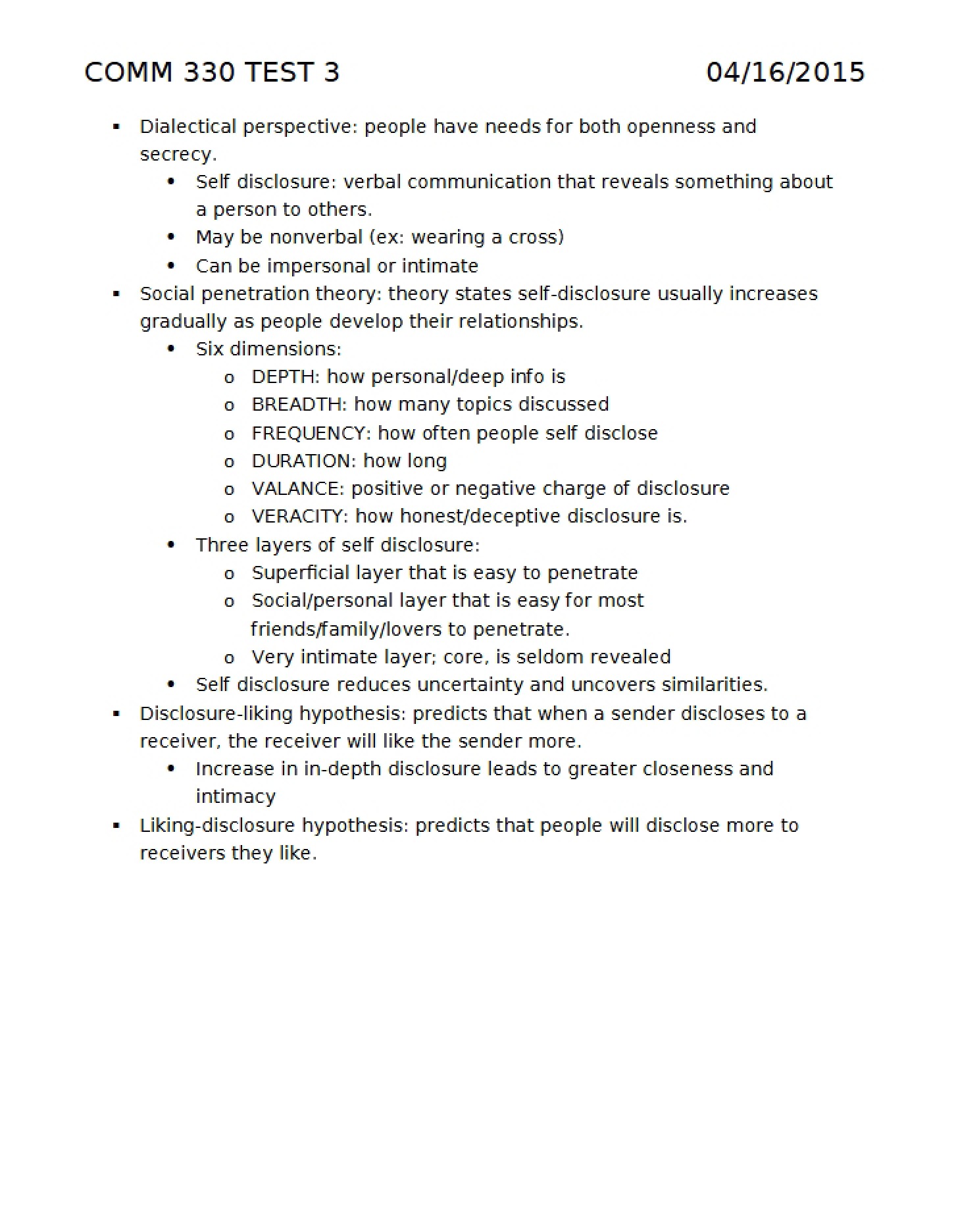
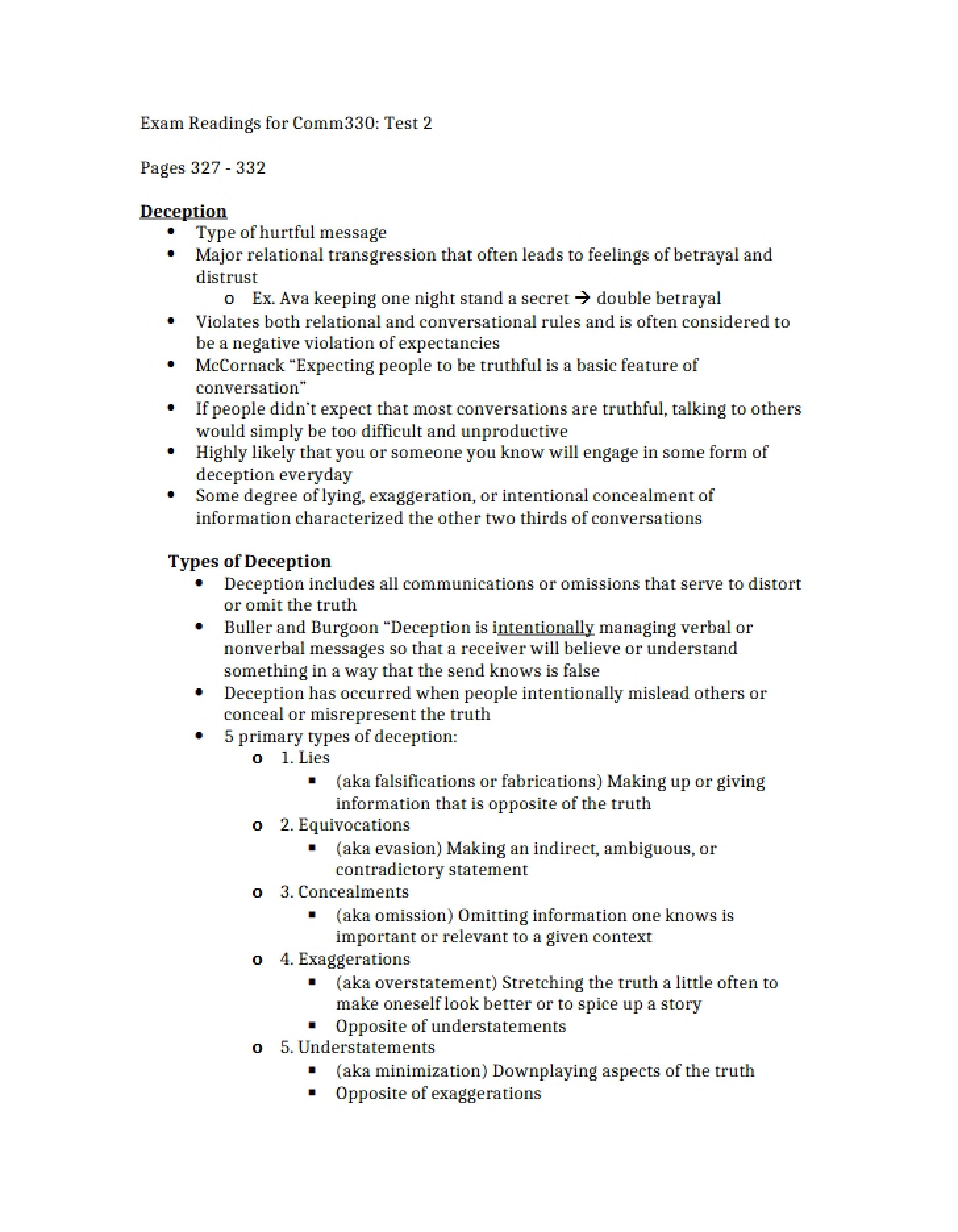
This is a comprehensive review guide designed to support students in COMM 330: Communication and Interpersonal Behavior at the University of Delaware. It focuses on the complex topic of deception – how it manifests in interpersonal communication, the underlying motivations, and how it impacts relationships and leadership dynamics. This guide synthesizes key concepts and research related to understanding and recognizing deceptive behaviors.
Why This Document Matters
This review guide is an invaluable resource for students preparing for assessments, seeking to deepen their understanding of course material, or looking for a consolidated overview of the subject matter. It’s particularly helpful for those wanting to explore the nuances of deceptive communication in various contexts, from everyday interactions to professional settings. Students who utilize this guide will be better equipped to critically analyze communication patterns and understand the psychological factors at play when truthfulness is in question.
Topics Covered
* Different forms of deceptive communication, beyond simply telling a lie.
* The role of motivation in deceptive acts, including both self-serving and altruistic reasons.
* Cultural influences on perceptions and expressions of deception.
* The developmental aspects of deception, linking it to cognitive abilities.
* Deception in leadership contexts and its potential impact on success.
* Identifying potential indicators of deception, both verbal and nonverbal.
* The science behind microexpressions and their connection to concealed emotions.
* Physiological methods used in attempting to detect deception.
What This Document Provides
* A structured overview of key terminology and concepts related to deception.
* Exploration of theoretical frameworks relevant to understanding deceptive behavior.
* Insights into the challenges of accurately detecting deception.
* A framework for analyzing the cognitive processes involved in both telling and detecting lies.
* Considerations for how to increase the likelihood of identifying deceptive cues.
* Discussion of the relationship between emotions and the ability to deceive.