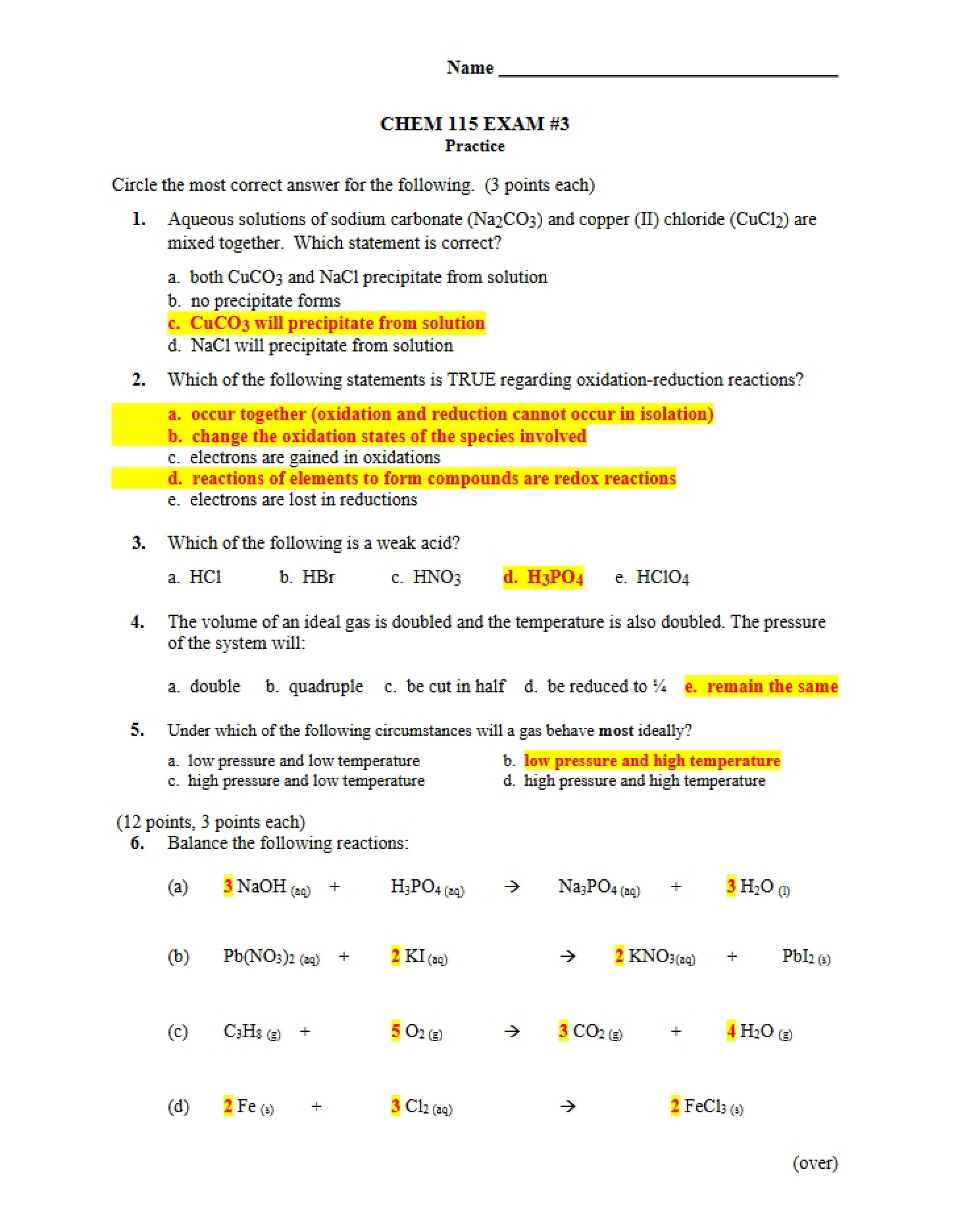
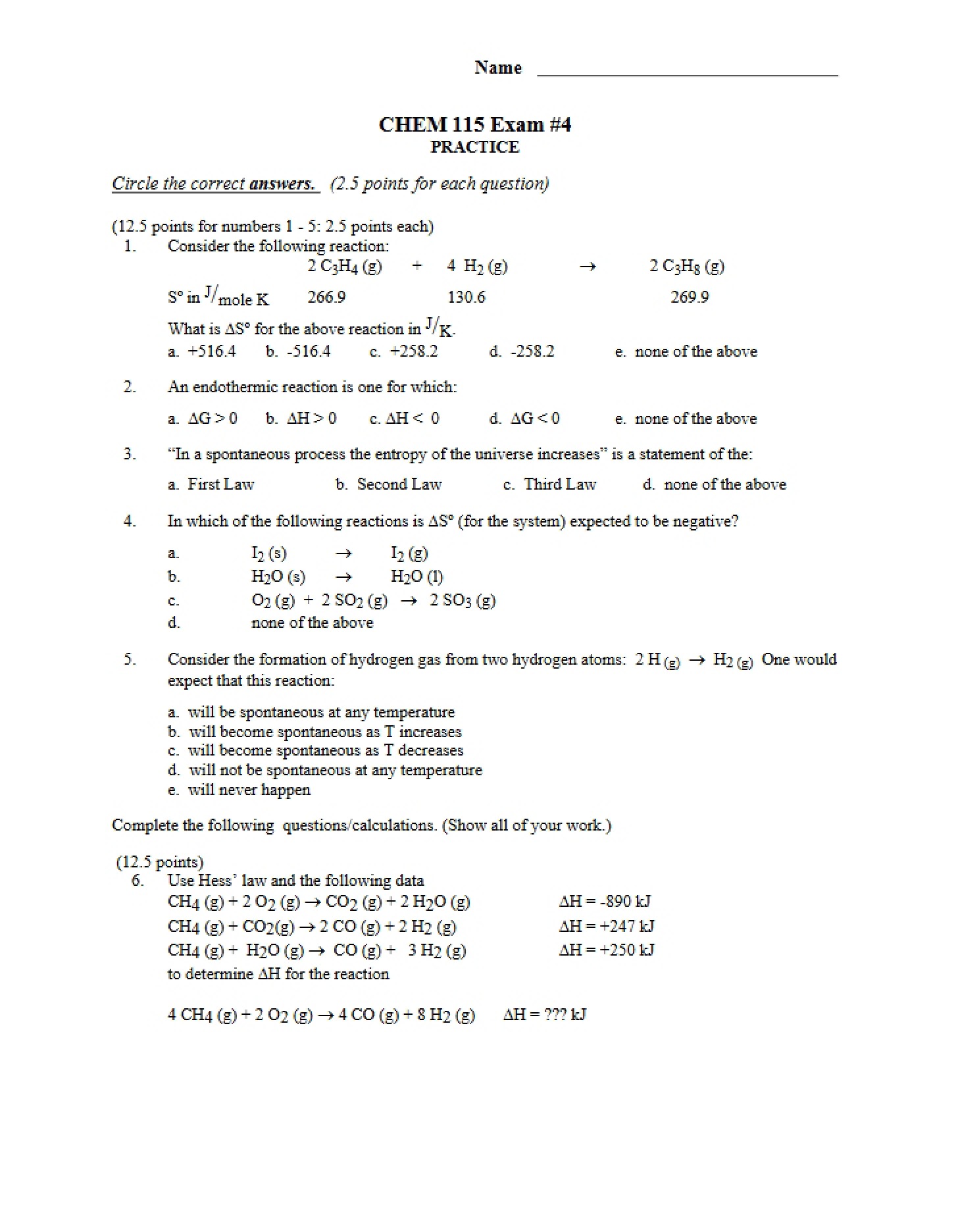
What This Document Is
This resource is a practice review sheet designed to help students prepare for Exam #4 in CHM 115: Elements and Compounds at Wilkes University. It focuses on core concepts related to chemical bonding, molecular geometry, and energy changes in chemical reactions. The material is presented in a question-and-answer format, mirroring the style of questions students can expect on the actual exam. It revisits key principles covered in Units 6, 8, 9, and 10 of the course.
Why This Document Matters
This review sheet is an invaluable tool for students looking to solidify their understanding of fundamental chemistry principles before a major assessment. It’s particularly useful for identifying areas where further study is needed. Students who utilize this resource will be better equipped to approach exam questions with confidence and demonstrate a strong grasp of concepts like bond polarity, electronegativity, hybridization, and molecular shapes. It’s best used *after* completing the assigned readings and attending lectures for the covered units, as a way to actively test and reinforce learning.
Common Limitations or Challenges
This review sheet is designed as a *practice* tool, not a comprehensive textbook replacement. It does not provide detailed explanations of the underlying concepts; rather, it tests existing knowledge. Students unfamiliar with the core material will likely find it challenging to work through the questions effectively. Furthermore, while it covers key topics, it doesn’t encompass *every* detail discussed in the course. Access to the full resource is required to see the detailed solutions and explanations.
What This Document Provides
* A series of multiple-choice questions covering essential concepts in chemical bonding.
* Problems requiring calculations related to bond energies and heat of reaction.
* Exercises focused on predicting molecular shapes and hybridization of central atoms.
* Opportunities to practice applying concepts of formal charge.
* Illustrative examples relating to specific molecules like SF5, N2, and the azide ion.
* A framework for understanding the relationship between electronic structure and molecular stability.