What This Document Is
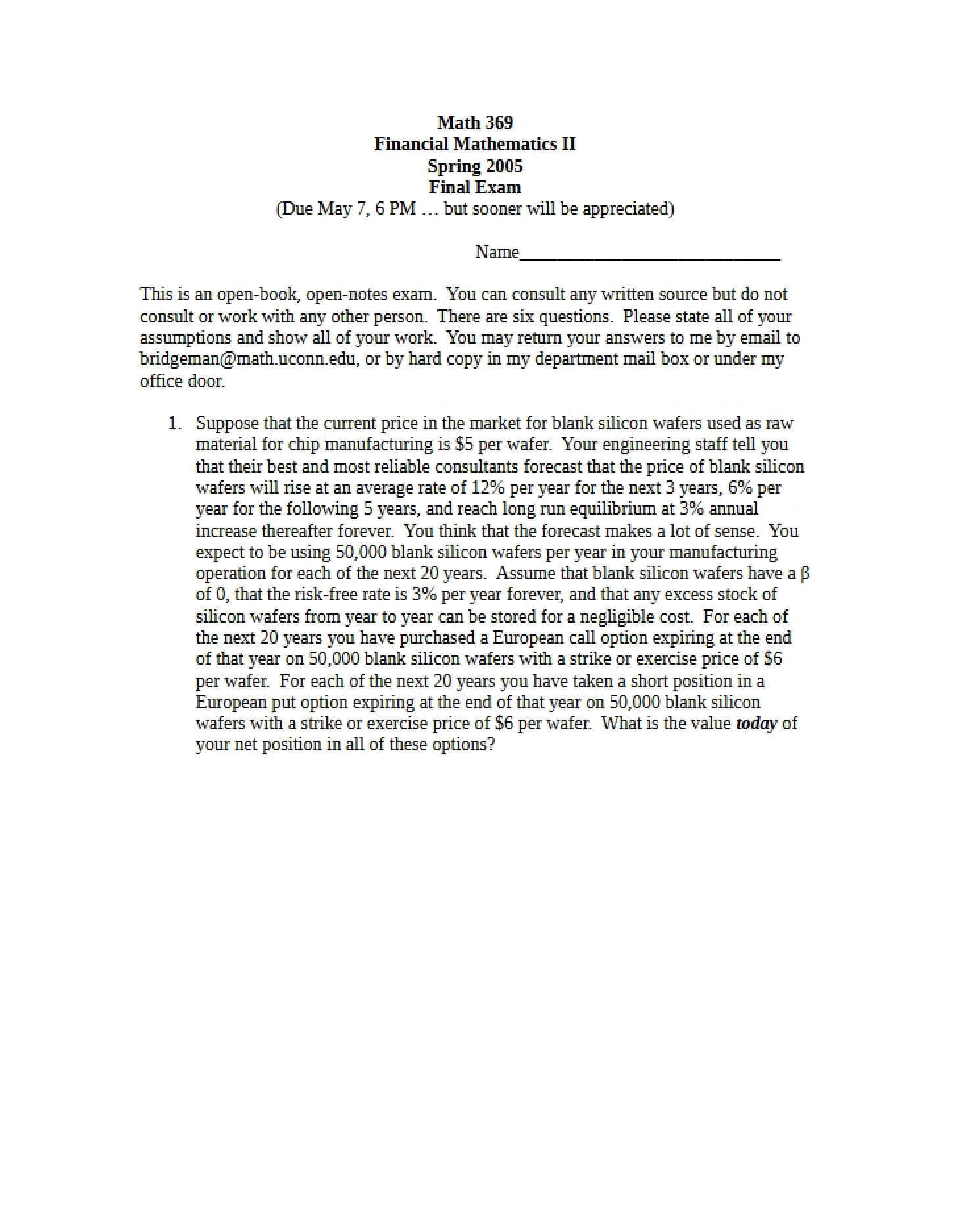
This study guide delves into the critical intersection of risk assessment and capital budgeting decisions within a financial context. Specifically designed for students of Financial Mathematics II (MATH 369) at the University of Connecticut, it expands upon core principles to equip learners with advanced analytical tools. It focuses on applying theoretical frameworks to real-world investment scenarios, emphasizing the importance of incorporating risk into the evaluation of potential projects.
Why This Document Matters
This resource is invaluable for students seeking a deeper understanding of how to make informed investment choices under conditions of uncertainty. It’s particularly helpful when tackling complex assignments, preparing for examinations, or building a strong foundation for future coursework and professional endeavors in finance. Individuals preparing for roles in corporate finance, investment banking, or portfolio management will find the concepts explored here directly applicable to their work.
Topics Covered
* Project Risk Evaluation Techniques
* Weighted Average Cost of Capital (WACC) Calculations
* Beta Coefficients and Systematic Risk
* The Impact of Market Conditions on Investment Decisions
* Capital Budgeting under Varying Levels of Risk
* Analyzing the Effects of Financial Leverage
* Sensitivity Analysis and Scenario Planning
* Risk-Adjusted Discount Rates
What This Document Provides
* Detailed explorations of key financial concepts related to risk and capital budgeting.
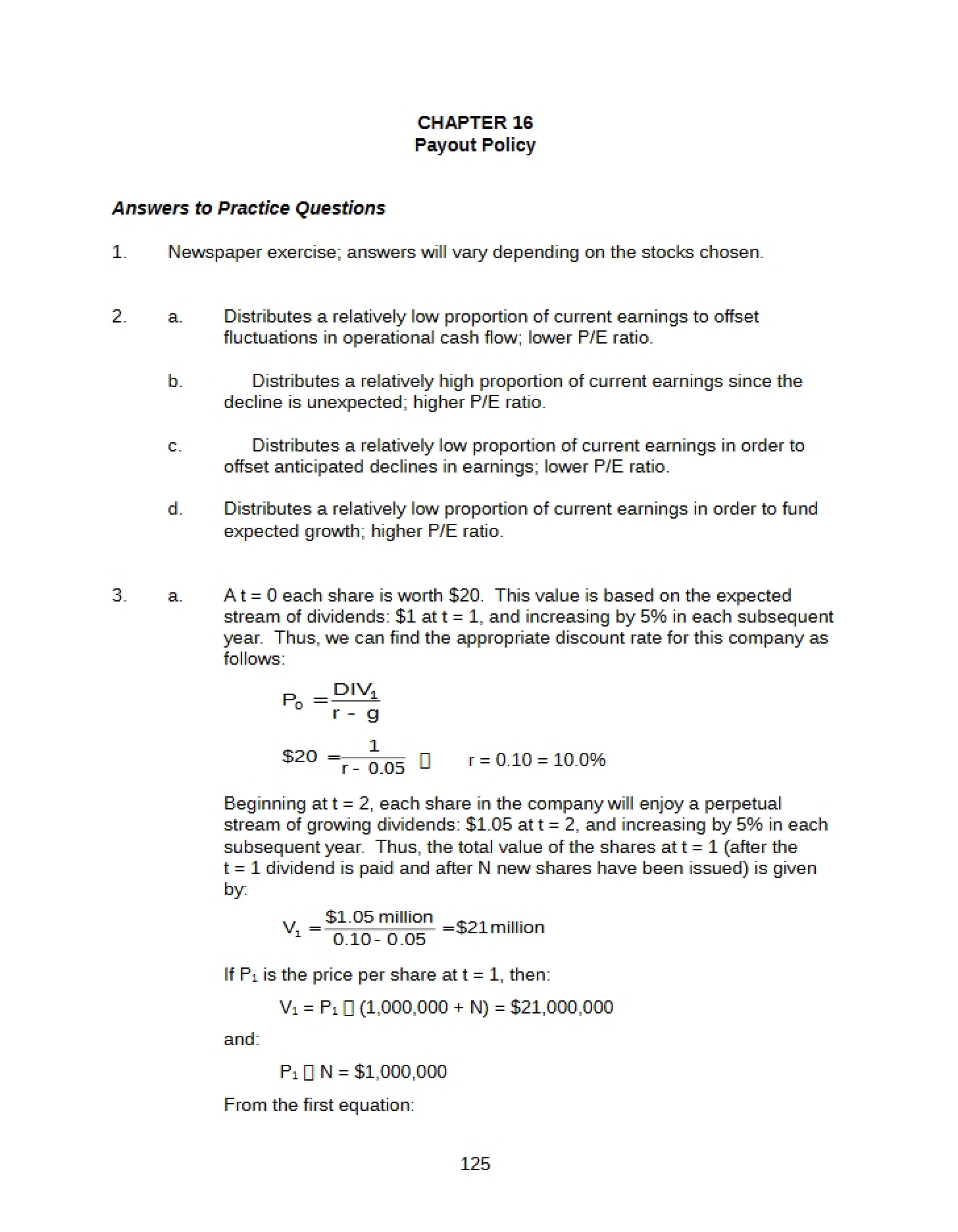
* Illustrative examples demonstrating the application of theoretical models.
* A framework for understanding how to quantify and incorporate risk into investment appraisals.
* Guidance on interpreting financial metrics used in capital budgeting.
* A comprehensive resource to support learning and reinforce understanding of advanced financial mathematics principles.
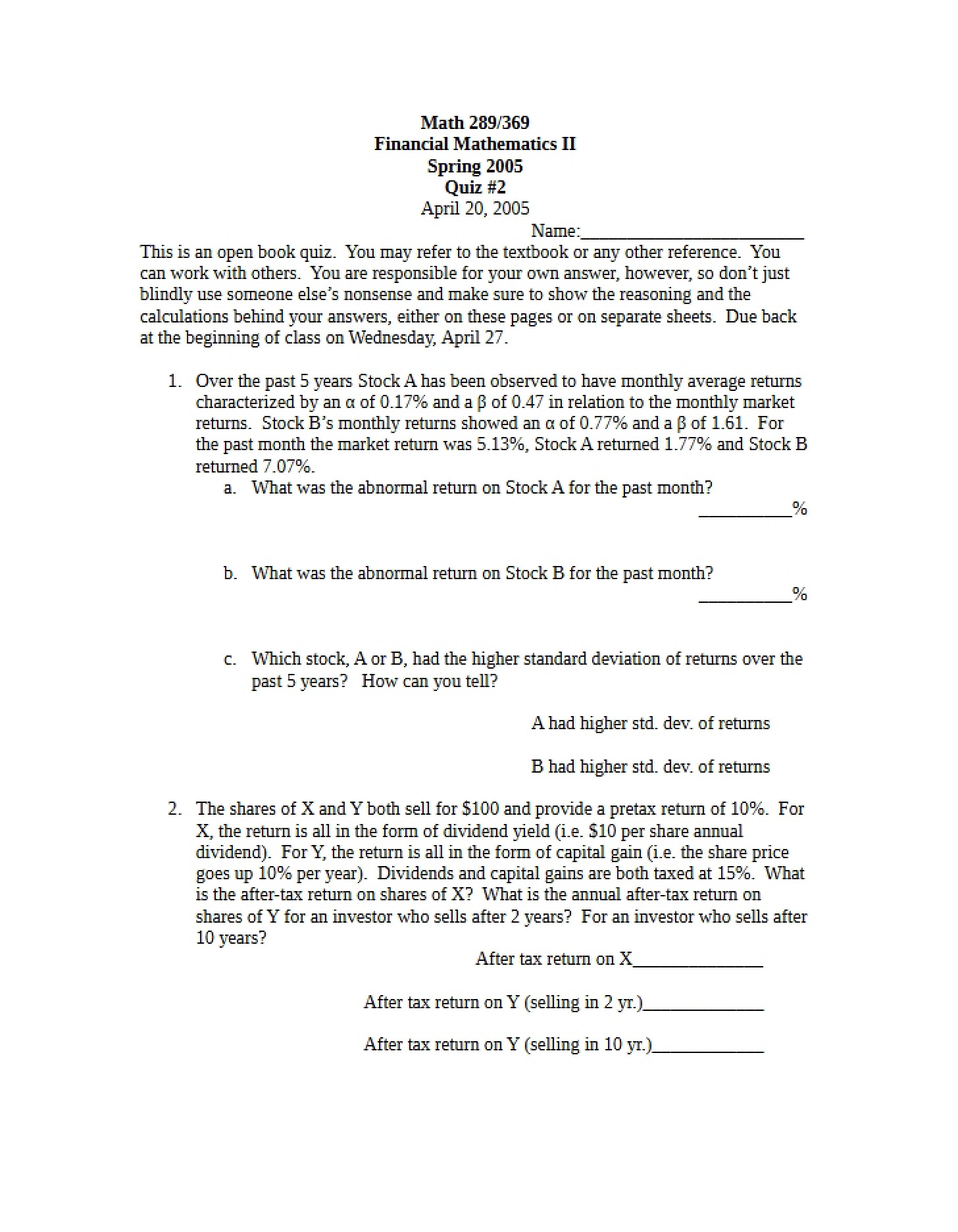
* Practice questions designed to test comprehension and application of the material.