What This Document Is
This is a laboratory assignment designed for an introductory-level Signals & Circuits course (ECE 111) at the University of Rochester. Specifically, it focuses on the practical analysis of transient behavior in first-order RL and RC circuits. The lab requires students to investigate how these circuits respond to step changes in voltage – a fundamental concept in electrical engineering. It’s a hands-on exercise meant to reinforce theoretical understanding with real-world experimentation and data analysis. The assignment emphasizes detailed write-ups, including circuit diagrams and a concise summary of objectives, methods, results, and conclusions.
Why This Document Matters
This lab is crucial for students learning to analyze circuits that don’t instantly reach a steady state. Understanding transient responses is essential for designing and troubleshooting a wide range of electronic systems, from simple filters to complex power supplies. Students preparing for more advanced coursework in areas like control systems, communications, and power electronics will find a solid grasp of these concepts invaluable. It’s particularly helpful for those who learn best by doing and seeing the theoretical concepts play out in a physical circuit. This assignment will help build skills in experimental procedure, data interpretation, and technical report writing.
Common Limitations or Challenges
This document outlines the lab procedure and expectations, but it does *not* provide pre-solved examples or step-by-step solutions. Students will need to apply their understanding of circuit theory to identify unknown circuit components and analyze observed waveforms. The lab requires careful measurement and analysis, and students may encounter challenges in accurately determining component values within specified tolerances. It also doesn’t include detailed explanations of the underlying theory; that is assumed to be covered in lectures and textbook readings.
What This Document Provides
* A detailed description of the laboratory exercise and its objectives.
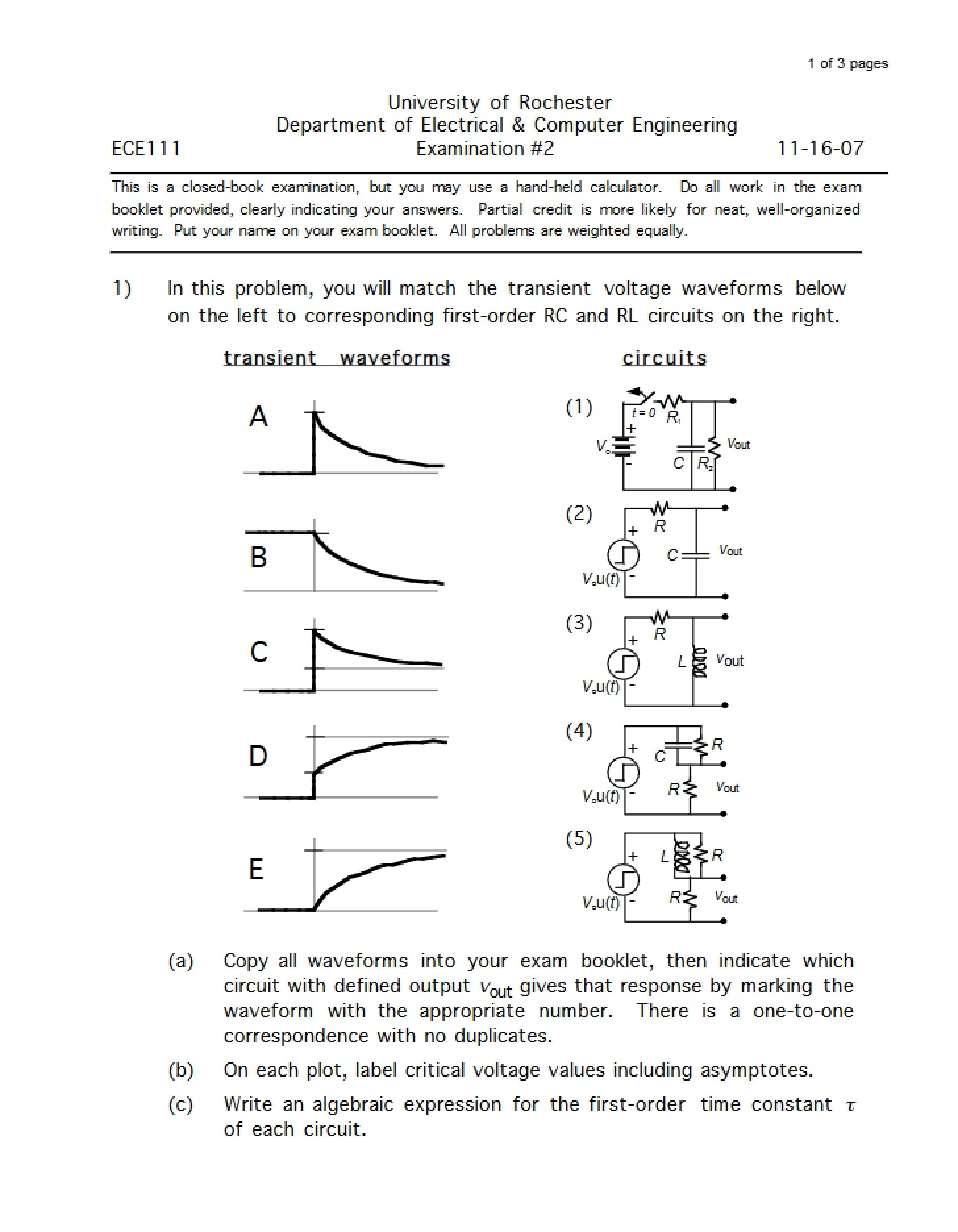
* Instructions for preparing for the lab, including a pre-lab matching exercise of circuits and waveforms.
* Guidance on setting up the experimental apparatus using a square wave generator and oscilloscope.
* Requirements for a comprehensive lab write-up, including circuit diagrams, data analysis, and error assessment.
* Specific instructions regarding the format and content of the required summary page.
* A clear statement of grading criteria, emphasizing conciseness, grammar, and adherence to deadlines.