What This Document Is
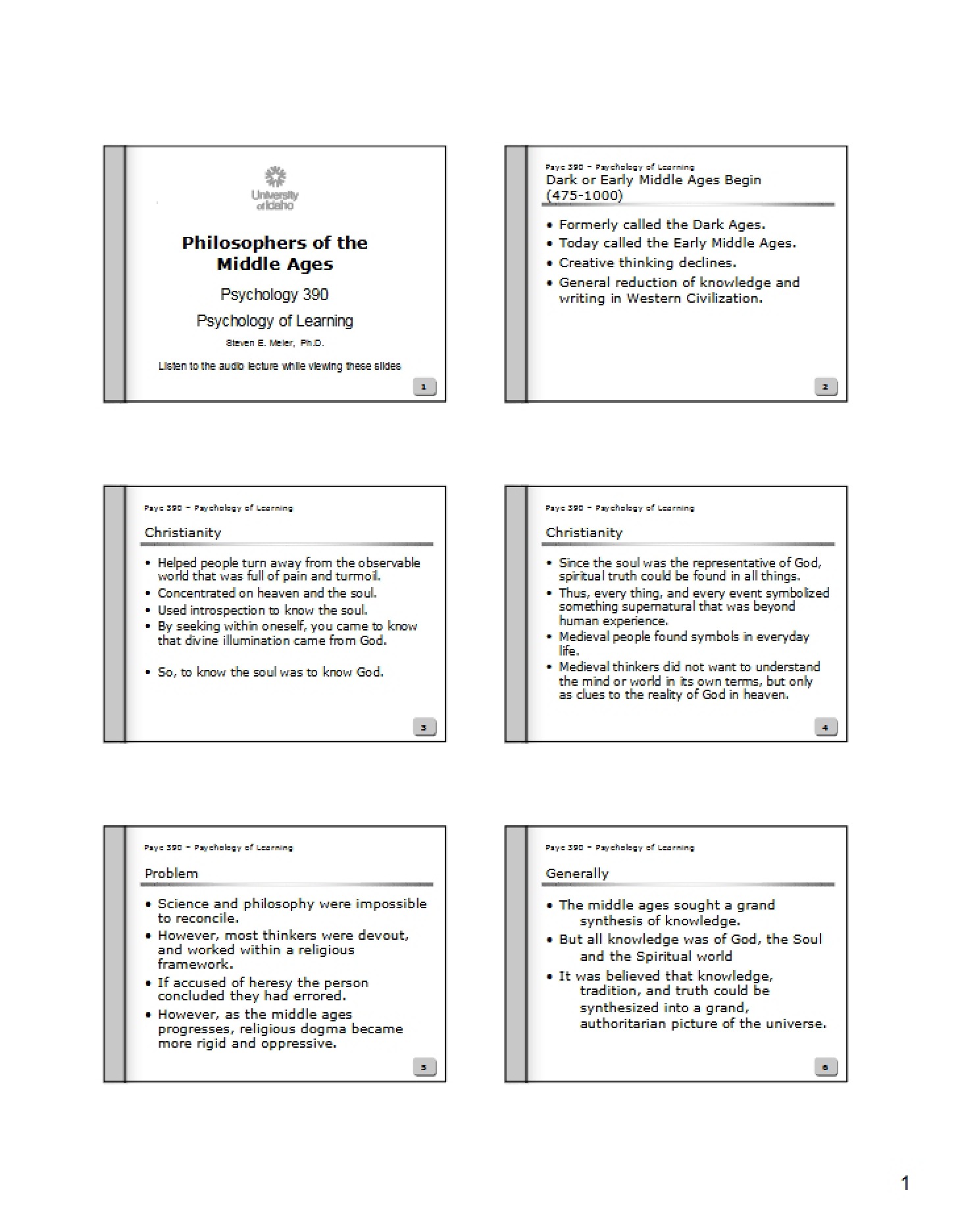
This resource is a set of lecture slides designed to accompany a Psychology of Learning course (PSYC 390) at the University of Idaho. It offers a historical overview of influential thinkers from ancient Greece and Rome who laid foundational ideas relevant to the study of how learning occurs. The material explores the perspectives of early philosophers and physicians, tracing the evolution of thought regarding knowledge acquisition, the nature of the mind, and the relationship between the body and mental processes. It’s intended to be used in conjunction with audio lectures or video presentations.
Why This Document Matters
This material is particularly valuable for students in psychology, education, or related fields seeking to understand the historical roots of contemporary learning theories. It’s ideal for those preparing for exams, working on research projects related to the history of psychology, or simply wanting a broader understanding of the intellectual context within which modern psychological principles developed. Access to the full content will provide a deeper understanding of the origins of key concepts.
Topics Covered
* Early perspectives on memory and organization
* The Socratic Method and its emphasis on critical thinking
* The development of systematic observation in the study of human experience
* Nativist versus empiricist viewpoints on the origins of knowledge
* Ancient theories of perception and the location of mental processes
* Early conceptualizations of mental illness and its potential causes
* Principles of association and their relevance to learning
* The contributions of key Roman medical thinkers
What This Document Provides
* Biographical information on prominent Greek and Roman philosophers and physicians.
* Summaries of core philosophical arguments related to knowledge, perception, and the mind.
* An exploration of early attempts to apply scientific methods to the study of human behavior.
* Insights into the historical development of concepts that continue to influence the field of psychology today.
* A framework for understanding the evolution of thought regarding the biological basis of mental processes.