What This Document Is
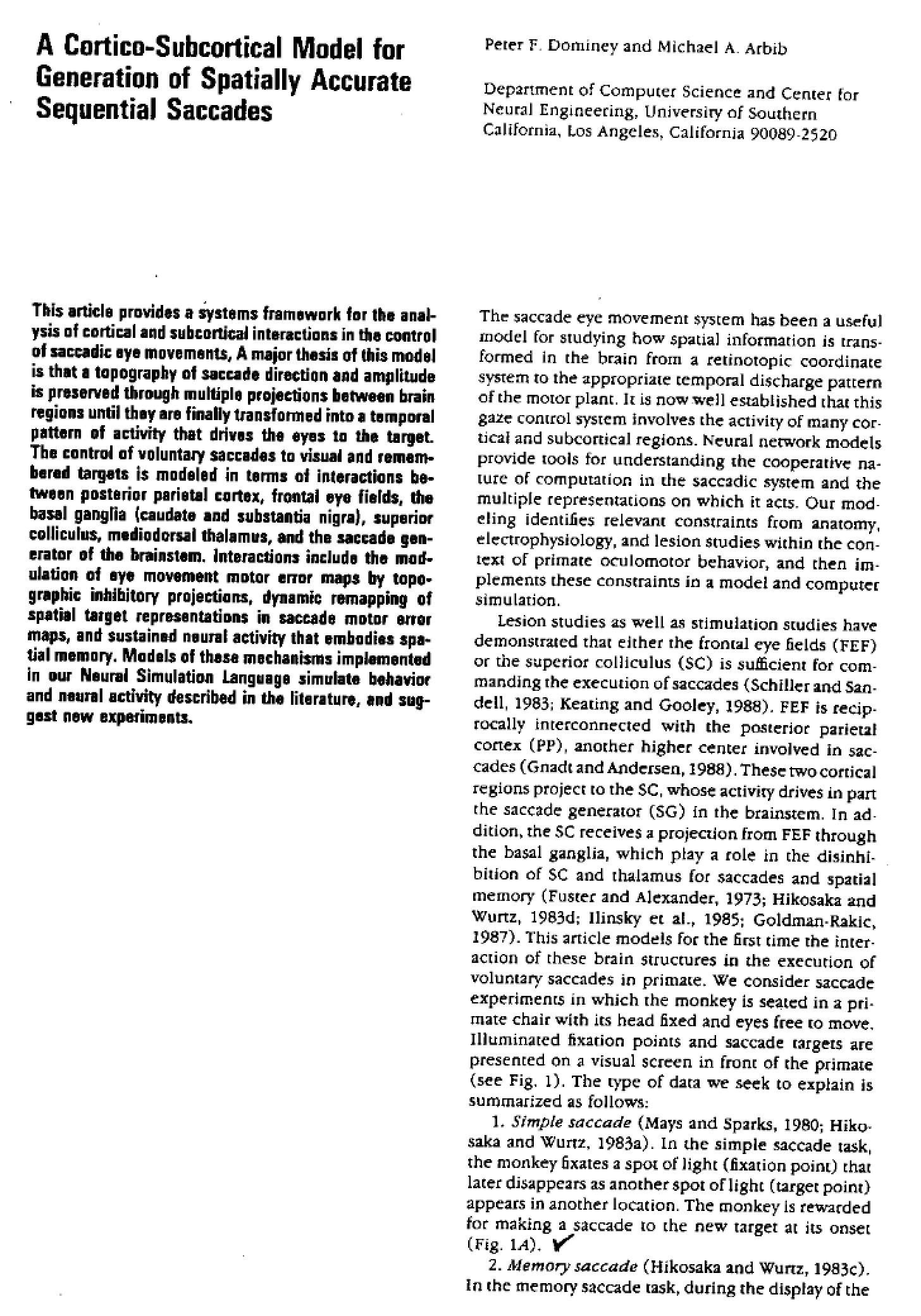
This material represents lecture notes from CSCI 564: Brain Theory and Artificial Intelligence at the University of Southern California, specifically focusing on the topic of saccades – the rapid, ballistic movements of the eyes. It appears to be part one of a two-part lecture series (Lecture 20), drawing from assigned readings and supplementary materials. The notes delve into the neurophysiological underpinnings of saccadic eye movements, exploring the roles of various neuron types and control systems. It builds upon foundational concepts in computational neuroscience and aims to bridge biological observations with theoretical modeling.
Why This Document Matters
Students enrolled in advanced neuroscience, computational biology, or related fields will find these notes particularly valuable. They are ideal for those seeking a deeper understanding of how the brain controls movement, specifically the complex mechanisms governing eye movements. This resource is best utilized *during* or *immediately after* a lecture on the topic, or when studying the oculomotor system. It can also be helpful for students preparing to explore more advanced models of neural control. Individuals interested in robotics and biologically-inspired control systems may also find the concepts presented relevant to their work.
Common Limitations or Challenges
These notes are a record of a specific lecture and are intended to *supplement*, not replace, required readings or independent study. The material assumes a foundational understanding of neuroscience terminology and concepts. It does not provide a comprehensive overview of all aspects of eye movement control, nor does it offer practical exercises or problem sets. The notes present a specific perspective on saccade control, and alternative theories or models are not fully explored within this resource.
What This Document Provides
* An overview of key neuron types involved in saccade generation (including EBNs, IBNs, TNs, OPNs, and TRIGs).
* Discussion of hypotheses regarding the control of saccades, including the roles of omnipause and trigger neurons.
* Exploration of control systems models used to explain saccade generation.
* References to relevant research and supplementary reading materials.
* A look at early neurophysiological data informing our understanding of saccade control.