What This Document Is
This document presents a focused exploration of conservation equations as applied to heat and mass transfer phenomena, originating from the CHBE 523 course at the University of Illinois at Urbana-Champaign. It delves into the mathematical foundations necessary for analyzing and simplifying complex transfer processes. The material builds upon core principles to investigate scenarios involving reaction kinetics and heat transfer in various geometries. It emphasizes a scaling approach to understand the relative importance of different physical effects.
Why This Document Matters
This resource is invaluable for chemical engineering students tackling advanced heat and mass transfer concepts. It’s particularly helpful for those seeking a deeper understanding of how to apply fundamental equations to real-world problems. Students preparing for exams, working on assignments, or needing a supplementary resource to the core course material will find this document beneficial. It’s designed to strengthen analytical skills and provide a framework for approaching complex transfer problems systematically.
Topics Covered
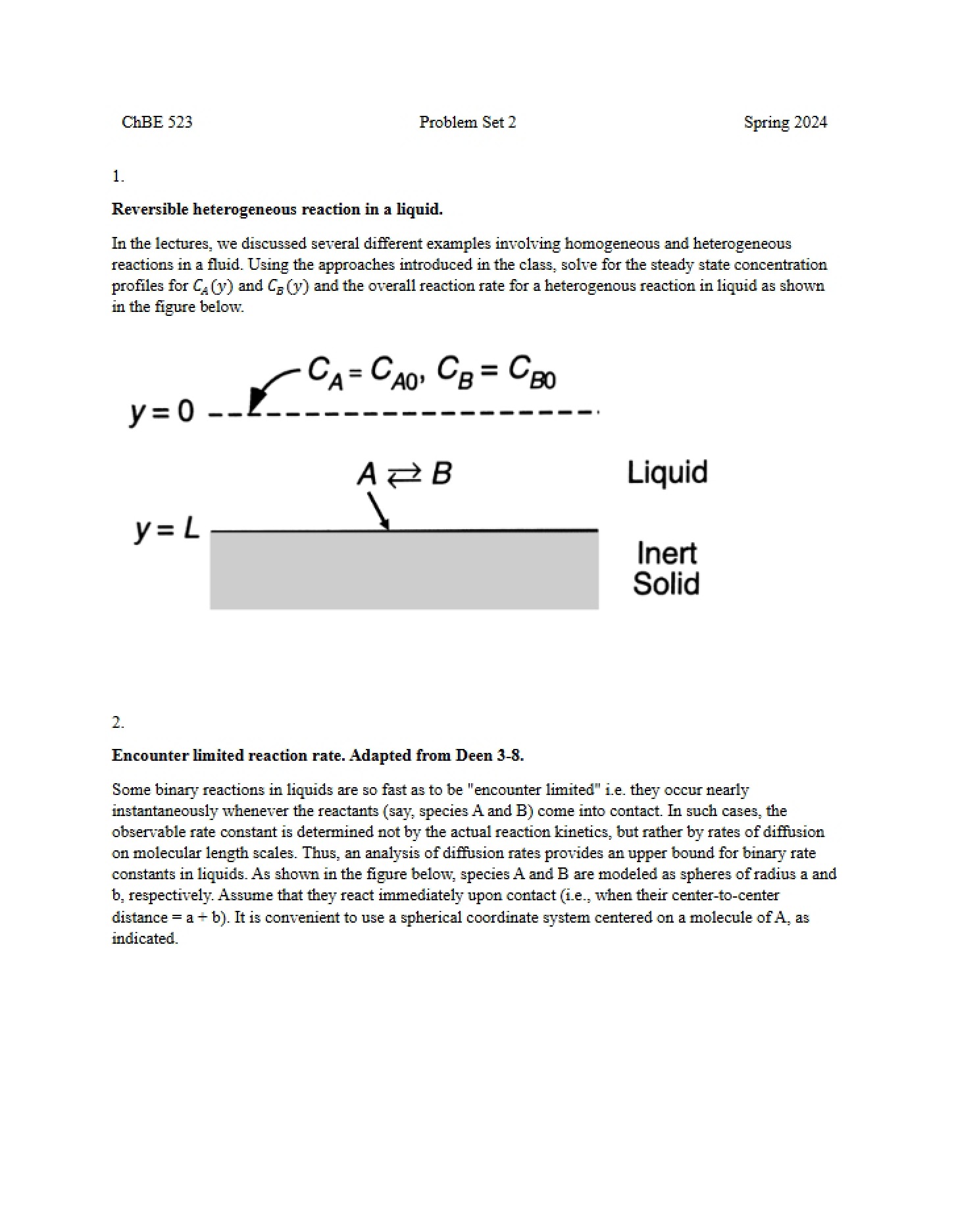
* Application of conservation equations to systems with chemical reactions
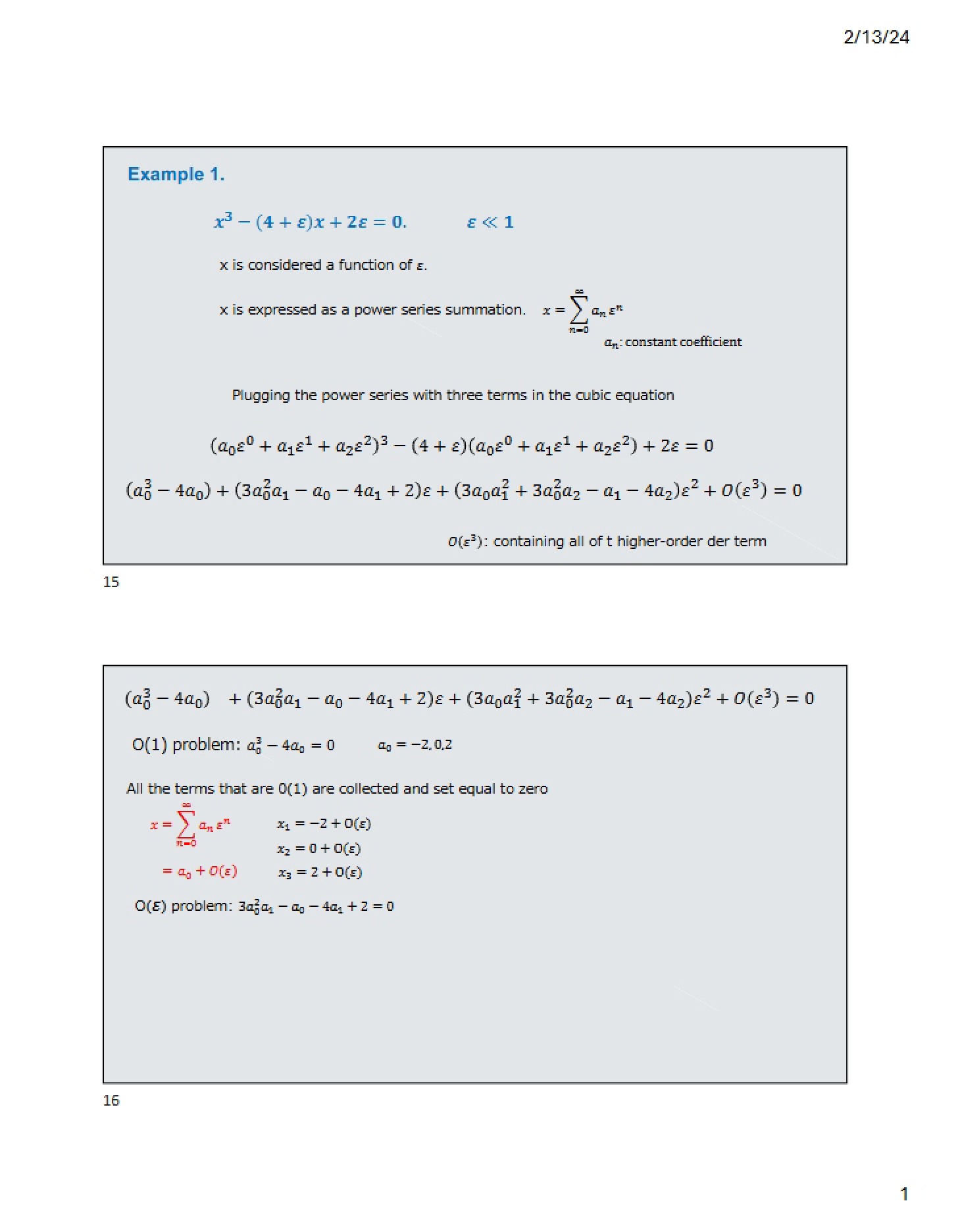
* Scaling analysis for determining dominant transport mechanisms
* Heat transfer analysis in cylindrical geometries, including electrically heated wires
* Model simplification techniques, including spatial and temporal approximations
* Order of magnitude analysis for identifying key parameters
* The concept of dimensionless numbers and their role in simplifying equations
* Boundary condition considerations for various heat transfer scenarios
What This Document Provides
* A structured presentation of conservation equation applications.
* Illustrative examples of how scaling impacts solution approaches.
* A discussion of spatial simplification methods (3D to 1D/0D).
* An overview of the pseudo-steady state approximation and its uses.
* A framework for identifying dominant rate processes in heat and mass transfer.
* A foundation for understanding the limitations of simplified models.
* A basis for analyzing heat transfer from extended surfaces.