What This Document Is
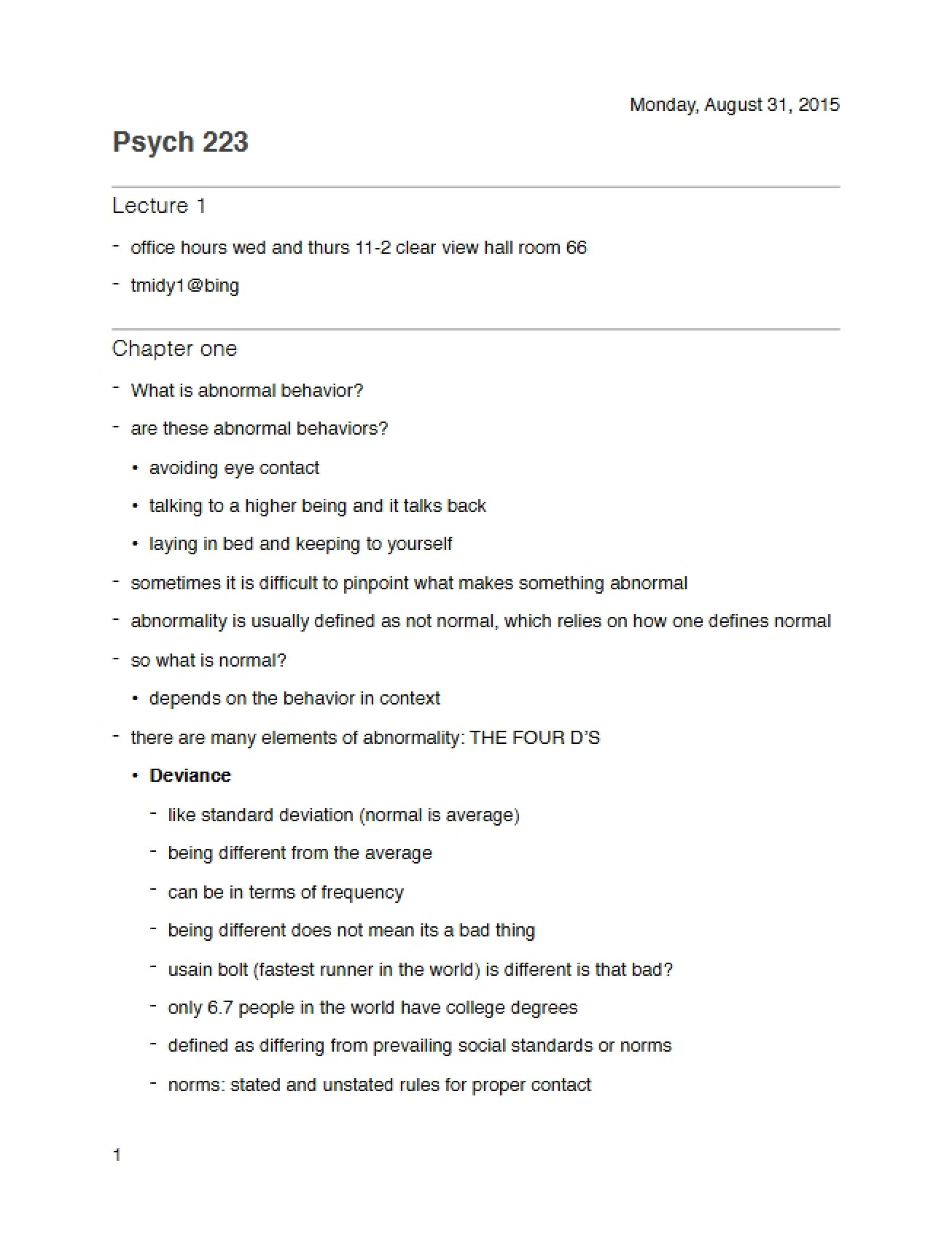
This study guide is designed to help students prepare for the second exam in PSYC 223: Behavior Disorders, offered at Binghamton University. It outlines the core lecture content that will be assessed on the exam and emphasizes the importance of understanding diagnostic criteria for various disorders.
Why This Document Matters
This guide is essential for students enrolled in PSYC 223 who are preparing for a significant evaluation of their understanding of behavior disorders. It’s intended to be used during focused review sessions, helping students prioritize key concepts and identify areas where further study is needed. The exam assesses not just recall, but the ability to apply knowledge to clinical scenarios.
Common Limitations or Challenges
This study guide is *not* a substitute for attending lectures or completing assigned readings. It highlights main points but doesn’t encompass the entirety of course material. It also doesn’t provide in-depth explanations or practice problems – it’s a roadmap, not a complete course in itself. Students will still need to engage with the full lecture slides and course materials for a comprehensive understanding.
What This Document Provides
The study guide specifically focuses on these topics: the relationship between low rates of response contingent reinforcement and depression (including the work of Lewinsohn and Coyne), the role of avoidance behavior in depression, cognitive schemas and attributional styles in depression, predispositions to addictive behavior, temporal discounting and its connection to addiction, the roles of operant and classical conditioning in substance use disorders, and the A and B processes in addiction as they relate to withdrawal, tolerance, and cravings.
It *does not* include detailed explanations of every concept, practice questions, or a complete summary of all lecture slides. It serves as a focused outline of key areas for exam preparation.