What This Document Is
This study guide is designed to help students prepare for the second exam in JTC 100: Media in Society at Colorado State University. It focuses on key concepts and topics covered in lectures and readings related to advertising, radio, and television. It’s a review tool, not a replacement for course materials.
Why This Document Matters
This guide is essential for students enrolled in JTC 100 who want to assess their understanding of the material and focus their study efforts. It’s most useful in the days leading up to the exam as a way to identify areas needing further review. The guide exists to help students succeed on the exam by highlighting the most important concepts the instructor expects them to know.
Common Limitations or Challenges
This study guide provides an overview of topics, but it does *not* contain complete explanations of all concepts. It’s a focused review, and students should still refer to their notes, readings, and other course materials for a comprehensive understanding. This preview does not offer answers or solutions to potential exam questions.
What This Document Provides
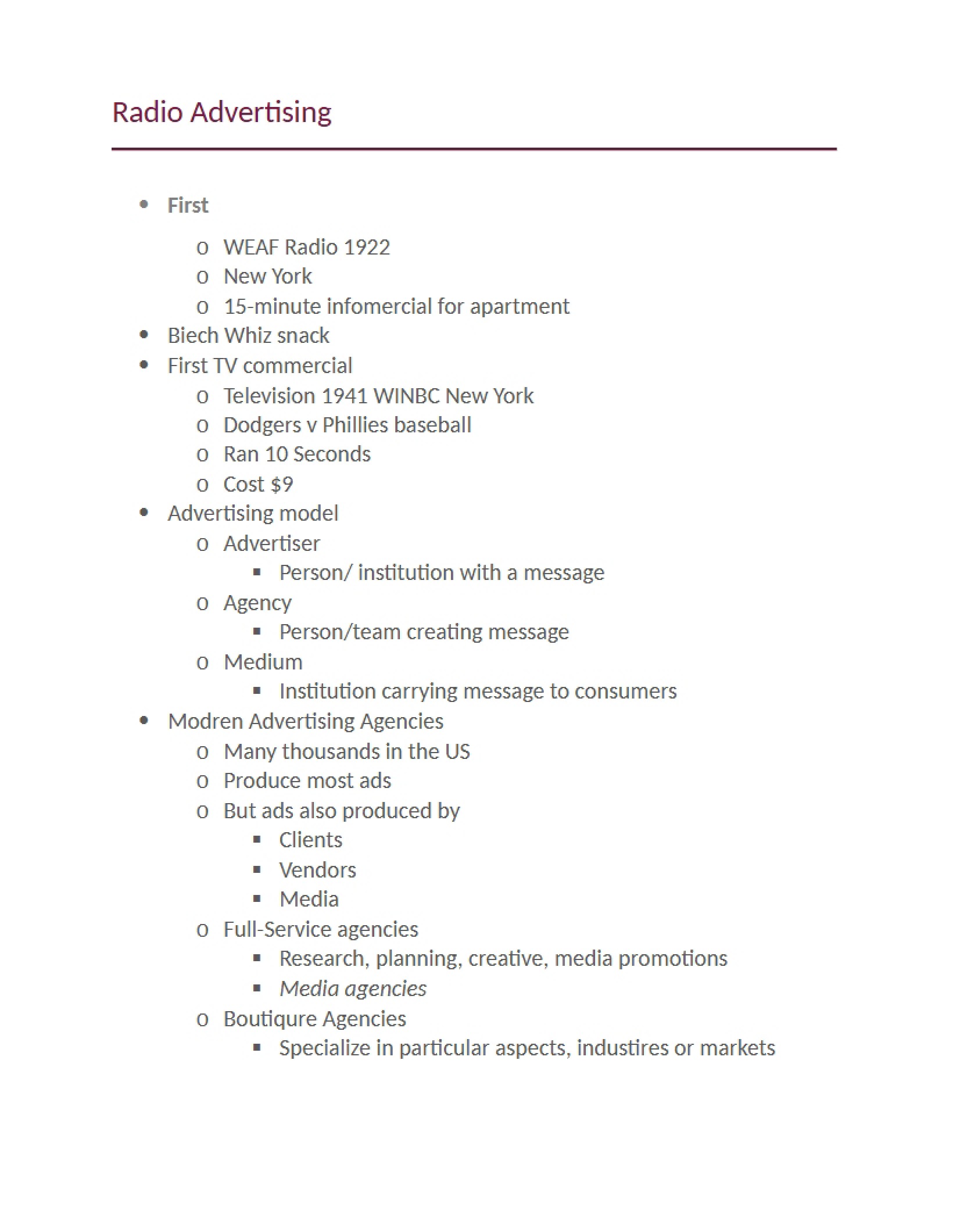
The full study guide includes review points on: sound branding and its role in advertising, the concept of brand positioning, the economic function of advertising, the distinction between viral marketing and other marketing strategies, current advertising spending trends, the “association principle” in advertising, types of advertising (organic, earned, paid), subliminal advertising, various advertising approaches (plain-folks, hidden-fear, snob-appeal), the historical role of department stores in newspaper advertising revenue, the significance of the Marlboro Man ad, the history of the town crier, how advertising impacts shopping behavior, the difference between psychographics and demographics, the impact of the Titanic sinking on radio, and the effects of the 1996 Telecommunications Act on radio and television.
This preview only provides a high-level overview of the document’s scope and content.