What This Document Is
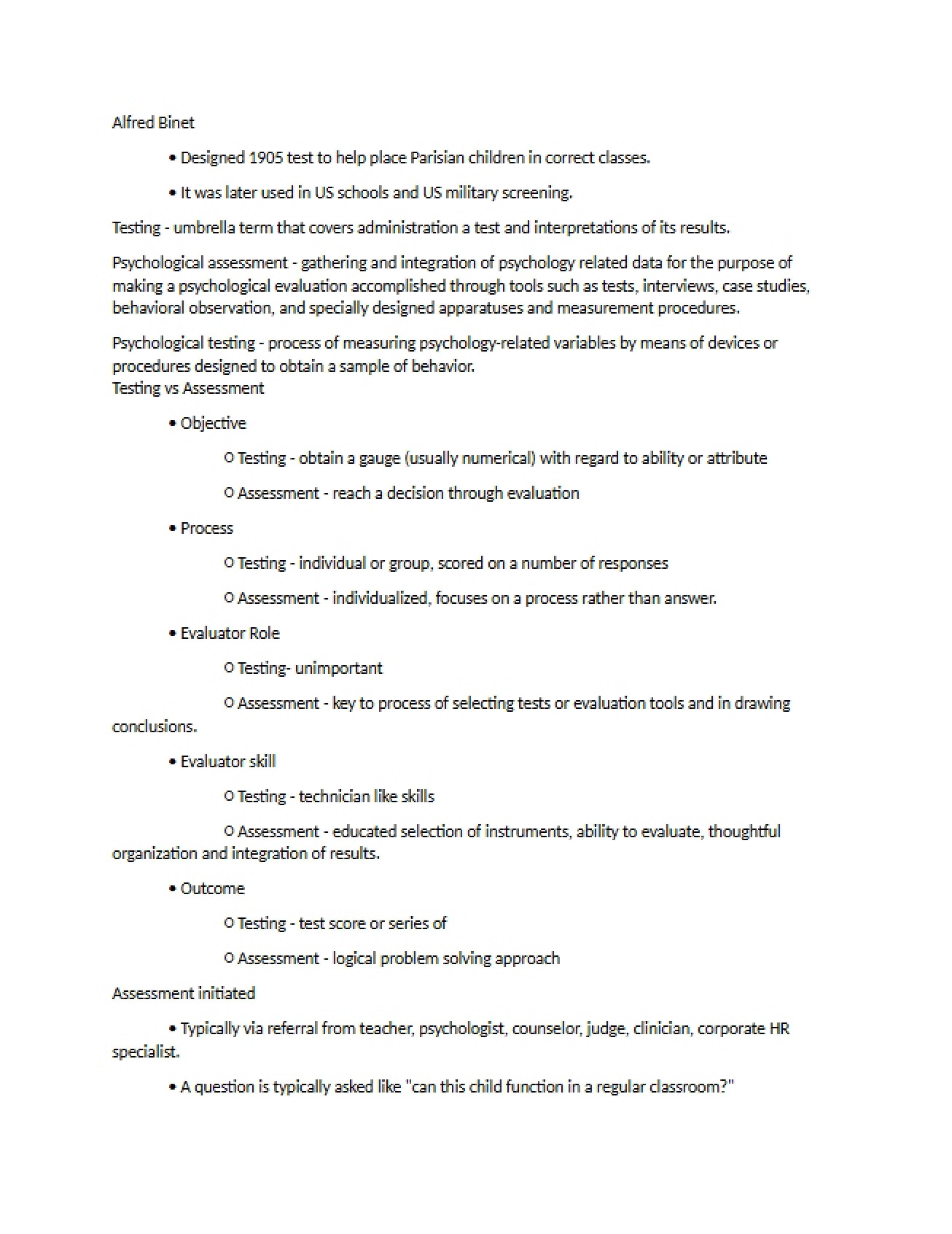
This is a study guide designed to help students prepare for the second exam in PSYC 385: Experimental Psychology Tests, at Binghamton University. It focuses on key concepts related to test construction, standardization, reliability, and norms, drawing primarily from Chapters 4 and 5 of the course textbook.
Why This Document Matters
This study guide is a crucial resource for students enrolled in PSYC 385 who are aiming to succeed on Exam 2. It’s intended for review *after* lectures and readings, helping to pinpoint areas needing further study. It exists to consolidate the core material covered in these chapters, offering a focused overview of the topics that will be assessed.
Common Limitations or Challenges
This study guide is a preview of the full material; it doesn’t replace attending lectures, completing assigned readings, or engaging with other course materials. It’s a roadmap, not a complete solution. It won’t provide in-depth explanations or practice problems beyond what’s listed. Successfully using this guide requires prior engagement with the course content.
What This Document Provides
This study guide includes an overview of:
* Different types of sampling methods (stratified, stratified-random, purposive, incidental/convenience).
* The standardization process for psychological tests, including administration and data analysis.
* The concept of norms and various types of norms (percentile, age, grade, etc.).
* The distinction between norm-referenced and criterion-referenced test interpretation.
* Cultural considerations in test construction and standardization.
* An introduction to reliability coefficients and the components of an observed score (true score + error).
* The difference between random and systematic error.
This preview *does not* include detailed explanations of each concept, practice questions, or a comprehensive list of all topics covered on the exam. It is a high-level overview to help you assess the document’s relevance to your study needs.