What This Document Is
This document is a review guide for Quiz #2 in Auburn University’s Principles of Management (MNGT 3100) course. It outlines the major topics and themes covered in Chapters Four through Six, intended to help students prepare for an assessment of their understanding of these core concepts. It’s a focused recap, not a replacement for the assigned readings or class discussions.
Why This Document Matters
This review is valuable for students enrolled in MNGT 3100 who are preparing for their second quiz. It serves as a concentrated overview of key ideas, helping students identify areas where they may need further study. It’s most effectively used *after* completing the readings and attending lectures, as a tool for self-assessment and targeted review. This guide exists to improve quiz performance by highlighting essential material.
Common Limitations or Challenges
This review guide is not a comprehensive substitute for the textbook chapters or lecture notes. It provides a high-level overview and does not include detailed explanations, examples, or practice problems. It will not teach you the material; it simply points you to what you should already know. It also doesn’t guarantee a specific score on the quiz.
What This Document Provides
This review guide specifically covers:
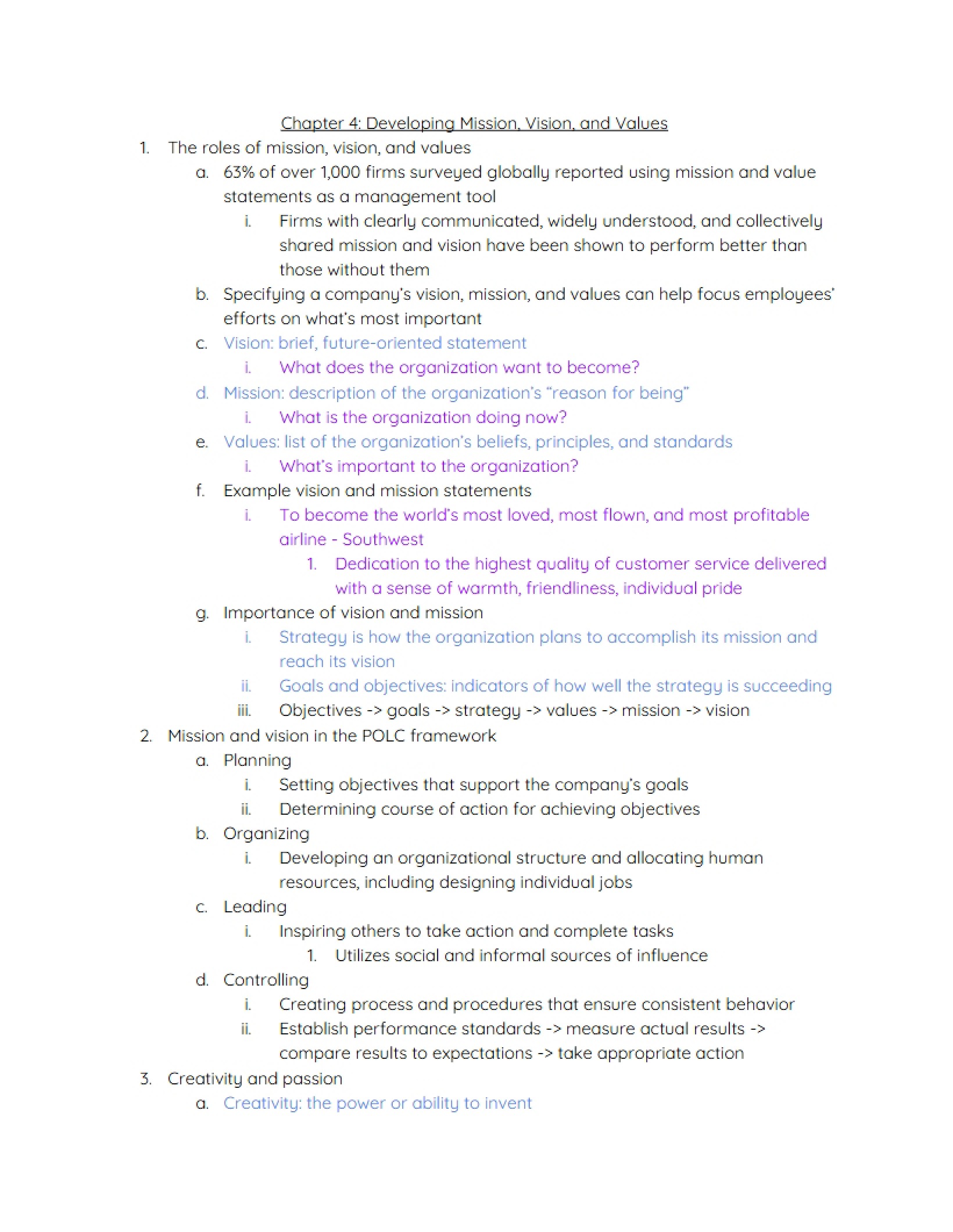
* The roles of mission, vision, and values statements in organizational strategy.
* The connection between these statements and the P-O-L-C framework (Planning, Organizing, Leading, Controlling).
* Concepts related to creativity, passion, and different approaches to innovation (sustainability, novelty, flexibility).
* Stakeholder analysis and its importance in management.
* Strategic management processes, including strategy formulation and implementation.
* Corporate and business strategy levels.
* SWOT analysis as a strategic tool.
* The distinction between intended, deliberate, realized, and emergent strategies.
* Generic business-level strategies (cost leadership and differentiation).
This preview does *not* include detailed explanations of each concept, practice questions, or a complete breakdown of the quiz format. It also does not include any external resources or links.