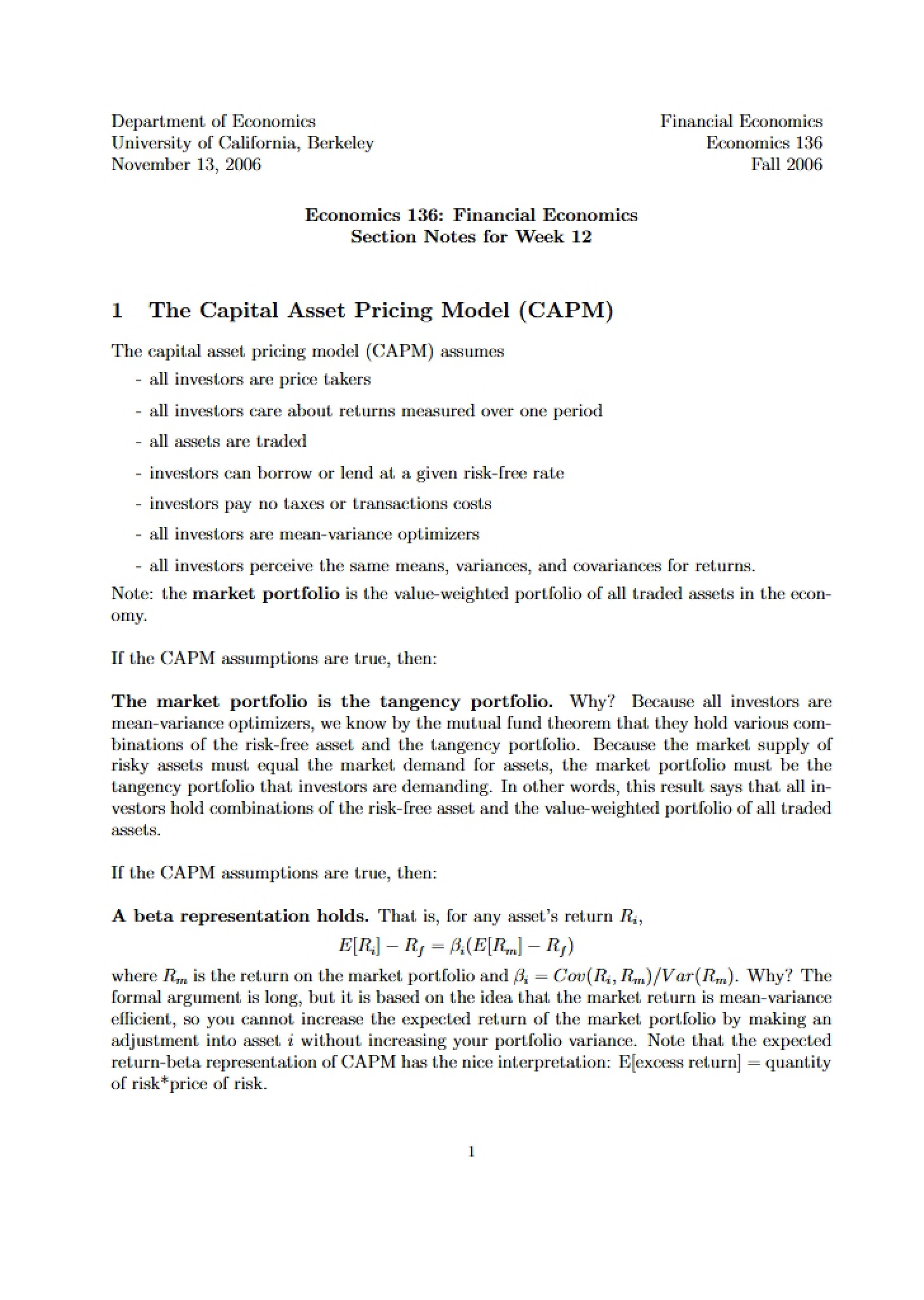
What This Document Is
This document represents a section from the ECON 136 Financial Economics course at UC Berkeley, specifically Section 17. It appears to be a detailed set of lecture notes and supporting materials focused on the critical intersection of money and financial markets. The material is structured as a classroom session, including planned activities like quizzes and problem-solving exercises. It builds upon previously covered concepts and prepares students for further exploration of related topics.
Why This Document Matters
This resource is invaluable for students currently enrolled in Financial Economics (ECON 136) at UC Berkeley. It’s particularly helpful for those seeking to solidify their understanding of core principles related to money, banking, and financial markets *during* and *immediately following* a lecture. It’s designed to be used in conjunction with assigned problem sets and readings, offering a focused review and expansion of key ideas. Accessing this material can significantly enhance comprehension and performance in the course.
Topics Covered
* The fundamental roles of money (M1 & M2 definitions)
* Characteristics and valuation of stocks and bonds
* The dynamics of money supply and demand
* Principles of fractional reserve banking
* The relationship between interest rates and bond prices
* Factors influencing the demand for money
* The impact of economic events on savings and investment equilibria
* The effect of technological advancements on capital markets
What This Document Provides
* A structured agenda outlining the session’s flow, including recap quizzes and problem set review.
* Contact information for the Graduate Student Instructor (GSI), including office hours and email.
* Links to supplementary handouts available online.
* A review of definitions and concepts from previous lectures concerning financial instruments and banking.
* A series of recap questions designed to test understanding of core concepts.
* Discussion points related to problem set questions, exploring how various economic scenarios impact financial equilibria.
* A framework for analyzing the impact of government policies and technological changes on investment and savings.