What This Document Is
This document provides a detailed exploration of the Sequence data type, a fundamental concept within computer science. It’s designed for students learning about abstract data types and their implementation, specifically within the context of a components-based programming approach. The material delves into the theoretical underpinnings of Sequences and how they function as alternatives to traditional array structures. It’s a focused study of how to manage and manipulate ordered collections of data.
Why This Document Matters
This resource is particularly valuable for students enrolled in data structures and algorithms courses, or those building a strong foundation in software design. It’s ideal for anyone seeking a deeper understanding of Sequence implementation and its advantages. If you’re grappling with the complexities of managing data order, or looking for a robust alternative to built-in array functionalities, this material will provide a solid base for your learning. Understanding Sequences is crucial for developing efficient and scalable applications.
Topics Covered
* Core principles of the Sequence data type
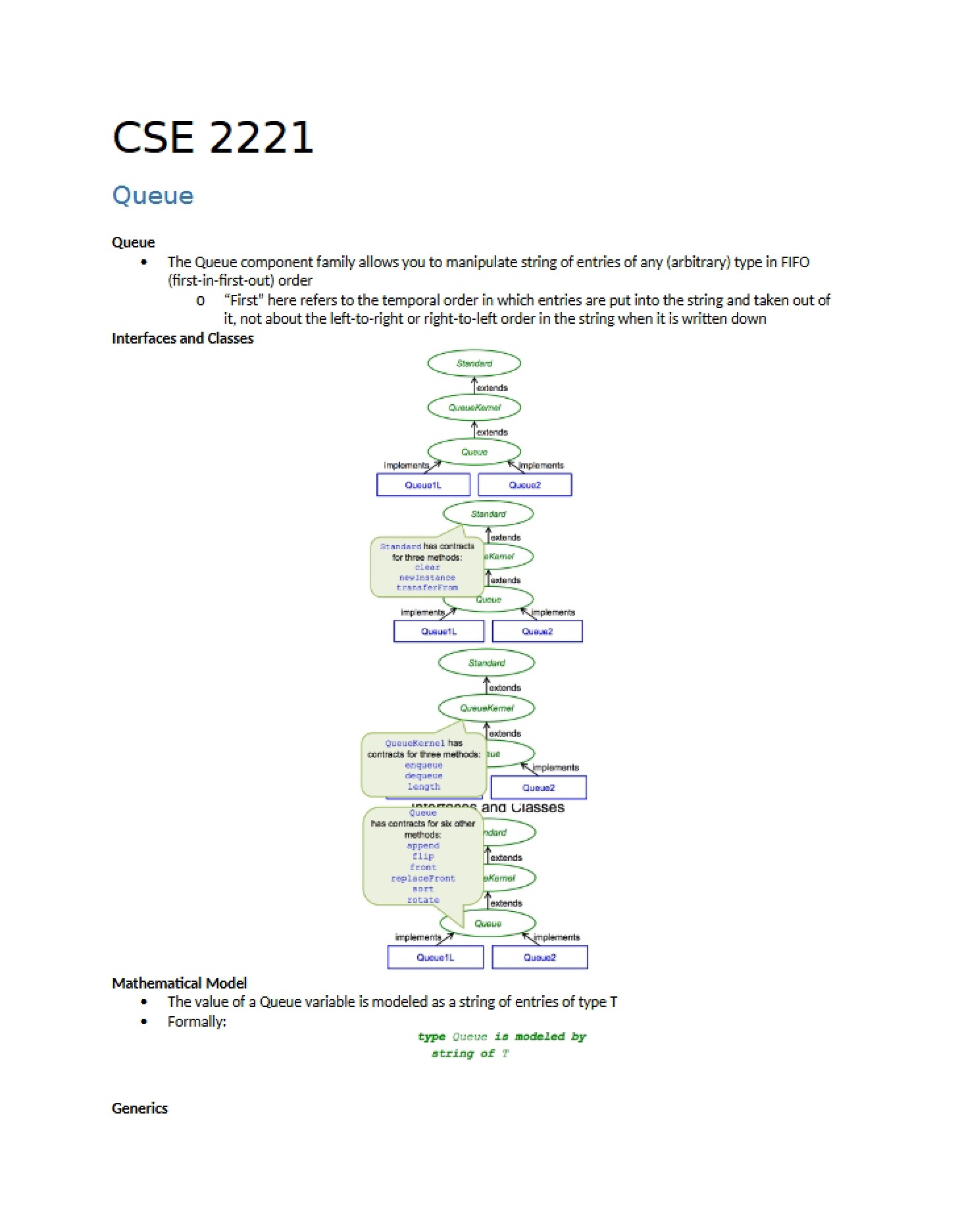
* Relationships between Sequence interfaces and kernel implementations
* Mathematical modeling of Sequence behavior
* Detailed examination of Sequence methods and their pre- and post-conditions
* Concepts of data manipulation within a Sequence, including adding, removing, and replacing entries
* Operations for modifying Sequence structure, such as appending, flipping, inserting, and extracting data
What This Document Provides
* Formal definitions of key Sequence methods, outlining their expected behavior.
* A comprehensive overview of the contracts associated with Sequence components.
* Detailed specifications for methods relating to Sequence modification and data access.
* Explanations of how Sequences are modeled mathematically to ensure predictable behavior.
* A structured approach to understanding the functionality of Sequence operations like `add`, `remove`, `length`, `entry`, and more.
* Insights into how Sequences handle data updates and aliases.