What This Document Is
This document represents the first session of a course on Actuarial Problem Solving (MATH 370) at the University of Illinois at Urbana-Champaign. It focuses on foundational concepts in probability theory, essential for success in actuarial science and related fields. This material lays the groundwork for more complex modeling and risk assessment techniques explored later in the course. It’s designed as a lecture-style presentation of core principles.
Why This Document Matters
This session is crucial for students beginning their study of actuarial science, statistics, or any field requiring a strong understanding of probability. It’s particularly beneficial for those who need a refresher on fundamental probability concepts or are looking to build a solid base for advanced coursework. Reviewing this material early in the semester can significantly improve comprehension of subsequent topics and problem-solving abilities. It’s ideal for use during initial course study, as a reference during homework assignments, or as preparation for quizzes and exams.
Topics Covered
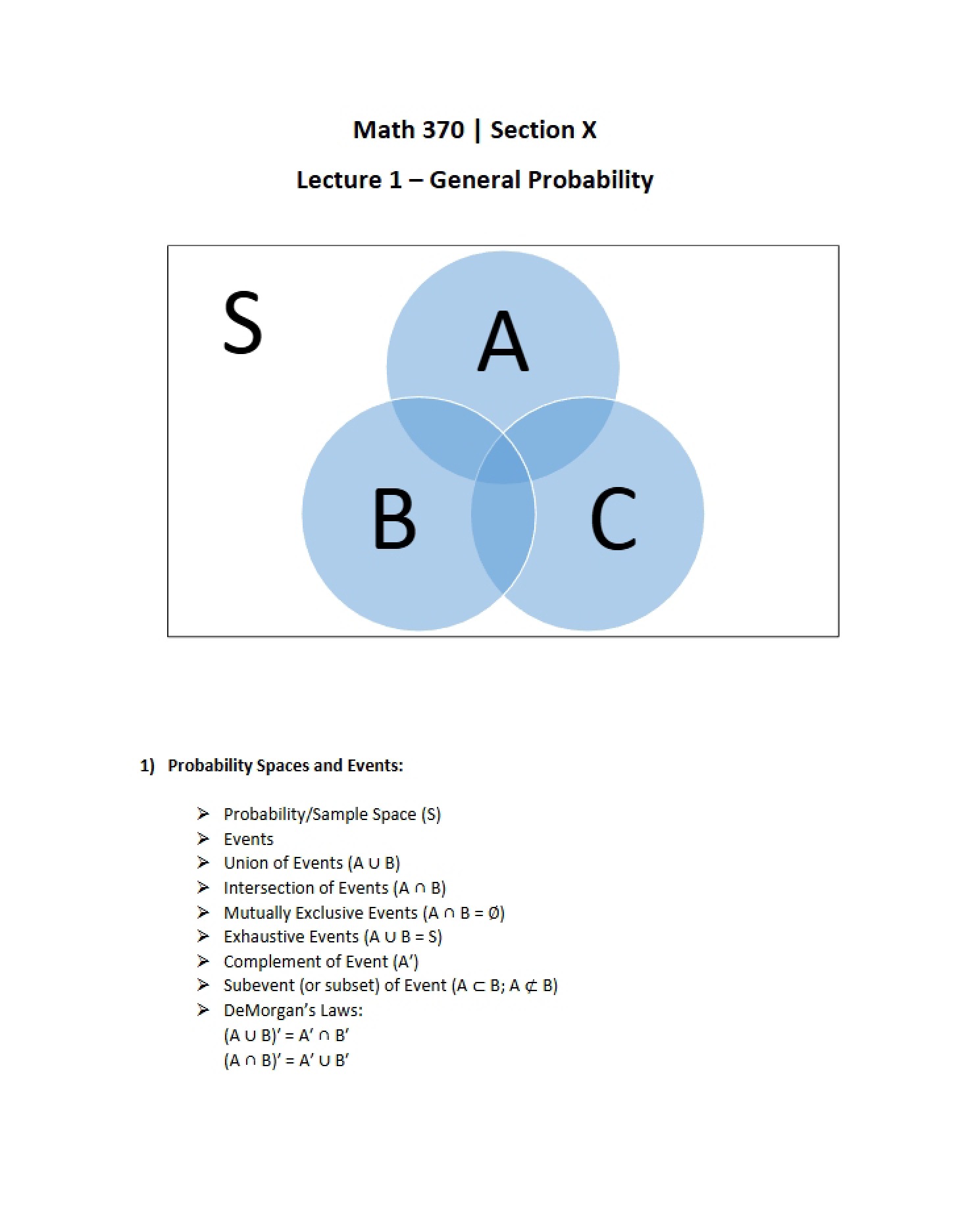
* Probability Spaces and Events – defining the framework for probabilistic analysis.
* Relationships Between Events – exploring concepts like unions, intersections, and complements.
* Event Rules – understanding how events combine and interact.
* Fundamental Probability Rules – establishing the basic axioms and properties of probability.
* Applications of Probability – examining how these concepts apply to real-world scenarios.
What This Document Provides
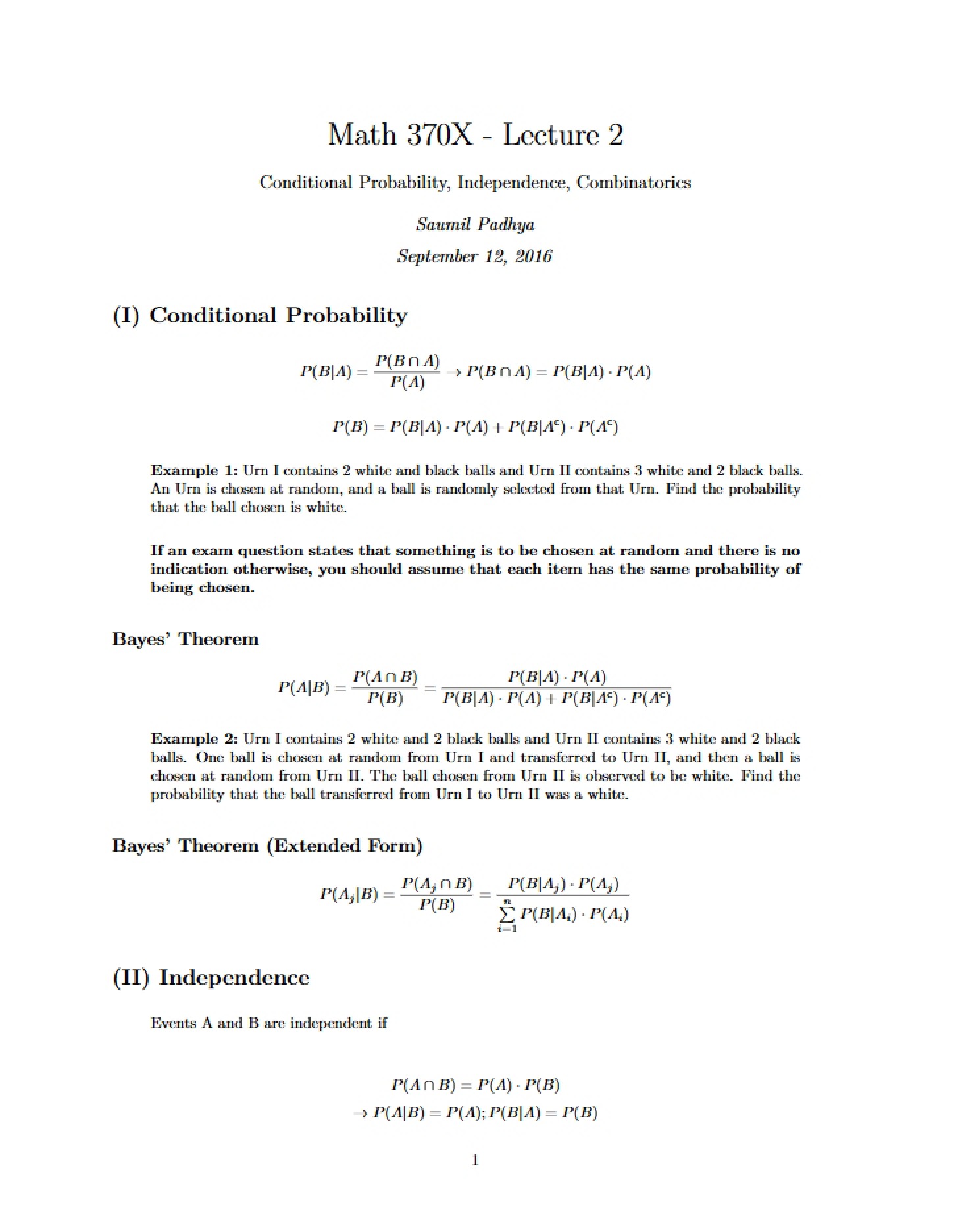
* A clear introduction to the language and notation of probability.
* An overview of key definitions and concepts related to events and probability spaces.
* A structured presentation of essential probability rules and theorems.
* Illustrative scenarios designed to promote conceptual understanding.
* A foundation for applying probability principles to solve practical problems.