What This Document Is
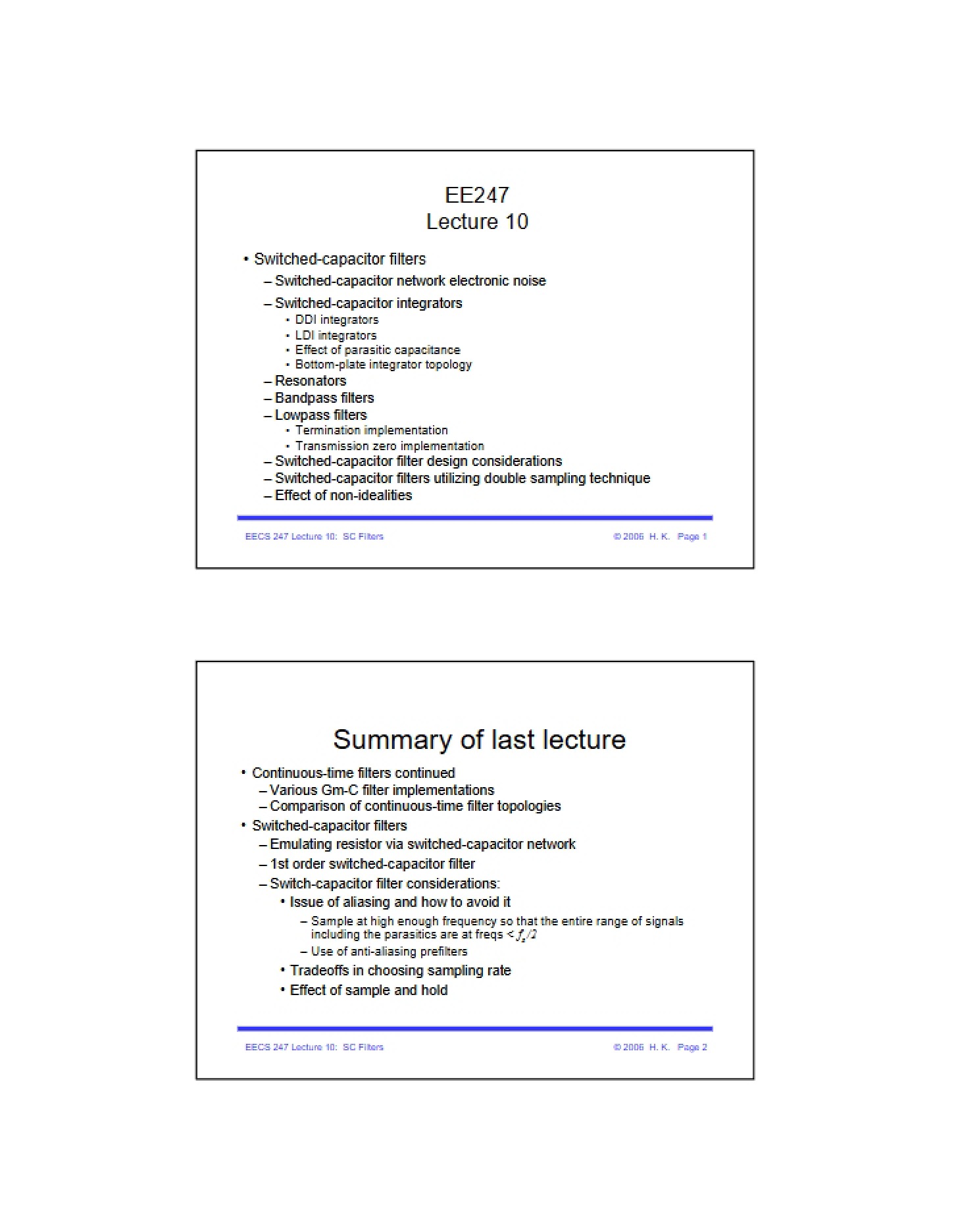
This document represents Session 11 for ELENG 247A, Introduction to Microelectromechanical Systems, at the University of California, Berkeley. It’s a lecture-based resource focused on advanced filter design and data conversion techniques within the realm of MEMS. The material builds upon previous sessions concerning switched-capacitor filters and delves into the practical considerations that arise when implementing these circuits. It explores the impact of real-world component limitations on filter performance.
Why This Document Matters
This session is crucial for students aiming to design and analyze analog circuits for MEMS applications. It’s particularly valuable for those specializing in signal processing, sensor interfaces, or low-power circuit design. Engineers and researchers needing a deeper understanding of switched-capacitor filter behavior and the nuances of data converter design will also find this material beneficial. Reviewing this content will prepare you for more advanced topics in mixed-signal circuit design and system-level integration.
Topics Covered
* Continued analysis of switched-capacitor filter design
* The effects of non-ideal operational amplifier characteristics
* Bilinear switched-capacitor filter implementations
* A comprehensive overview of various filter topologies and their comparative strengths
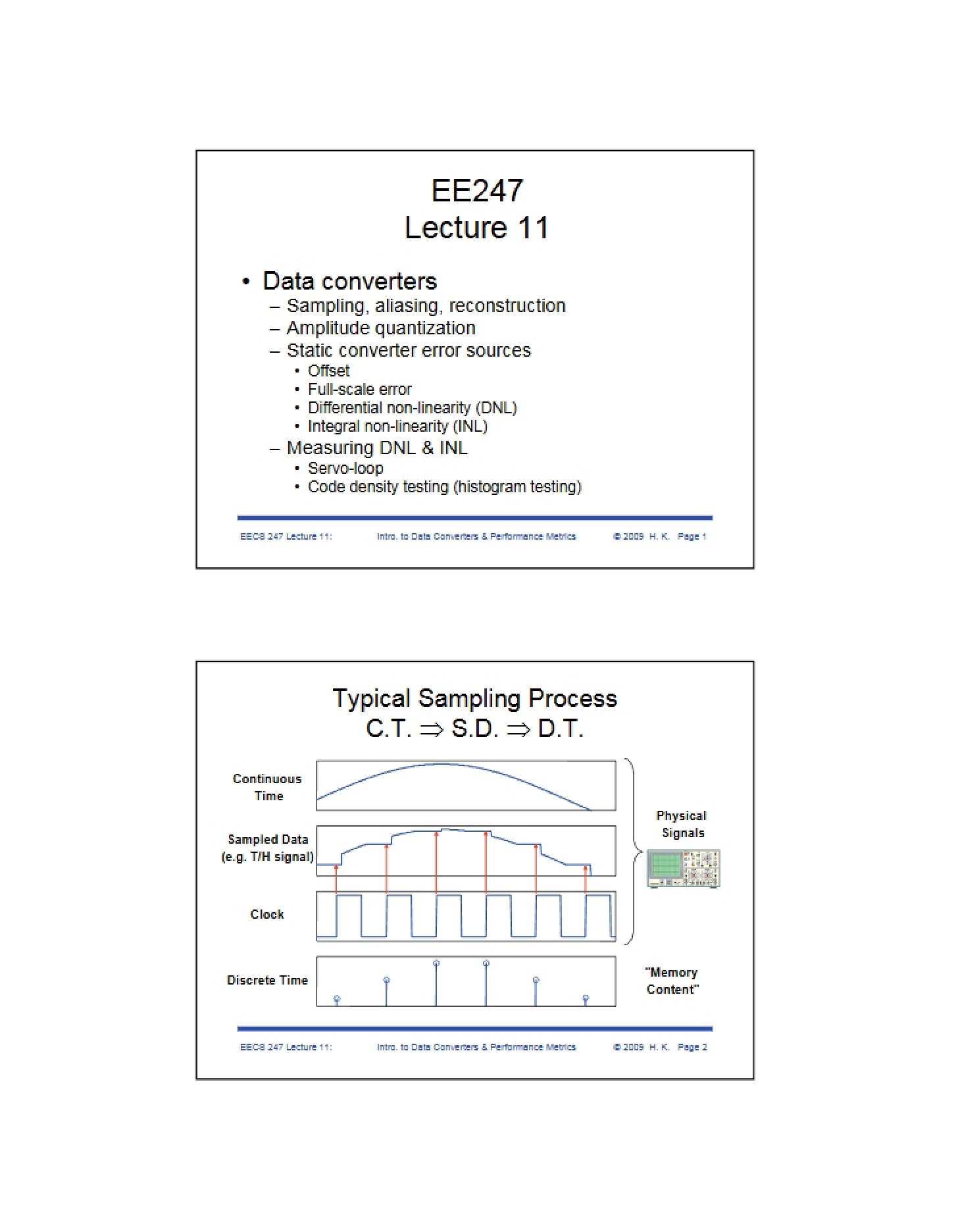
* Introduction to fundamental concepts in data conversion
* Impact of component limitations on filter performance (gain, bandwidth, slew rate)
* Analysis of magnitude response deviations due to non-ideal opamp behavior
* Relationships between opamp characteristics and achievable filter Q-factor
What This Document Provides
* Detailed exploration of the impact of opamp non-idealities on filter performance.
* References to seminal research papers in the field of switched-capacitor filter design.
* Discussion of techniques for mitigating the effects of component limitations.
* Insights into the trade-offs involved in selecting different filter topologies.
* A foundation for understanding the challenges and opportunities in designing high-performance analog circuits for MEMS.