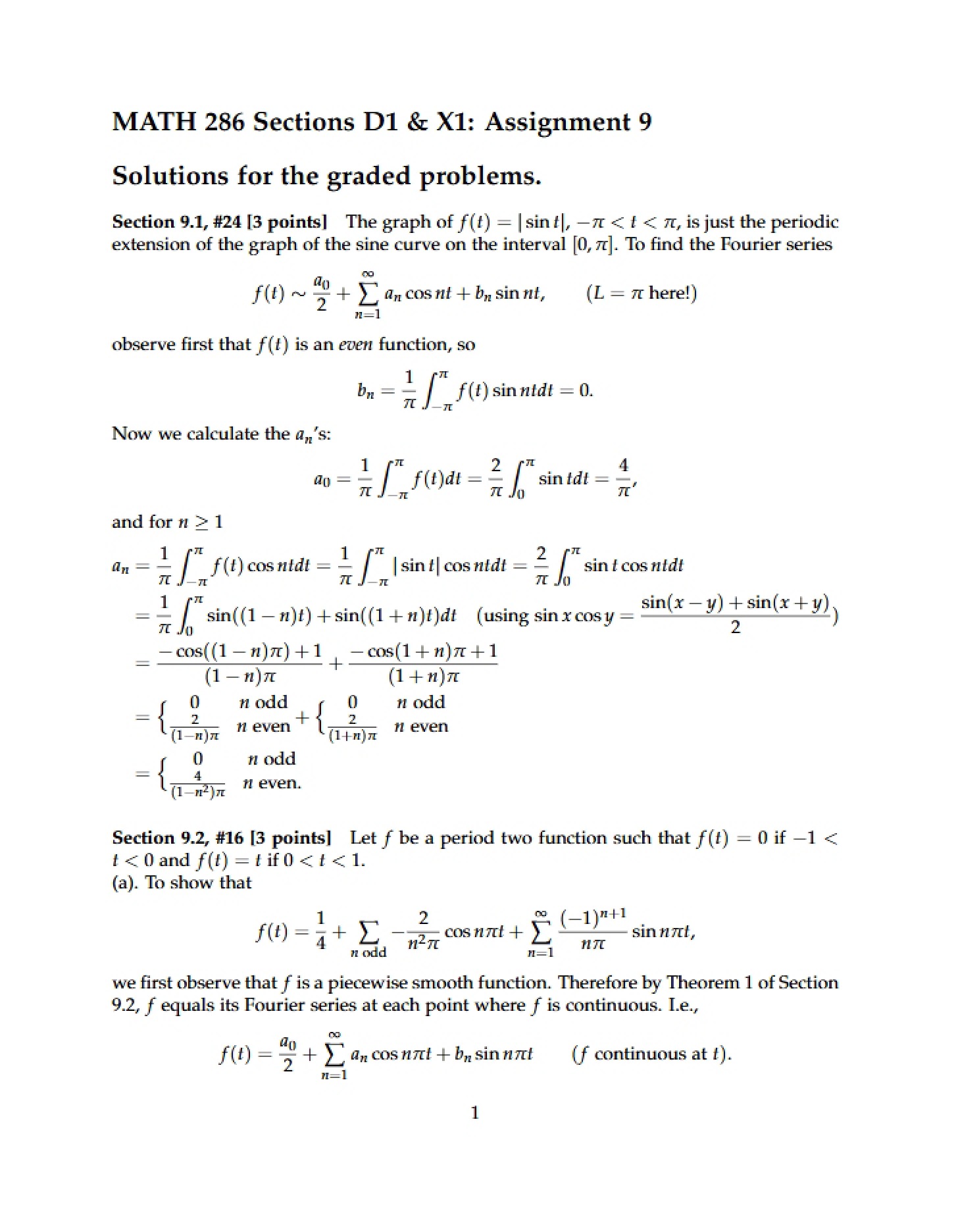
What This Document Is
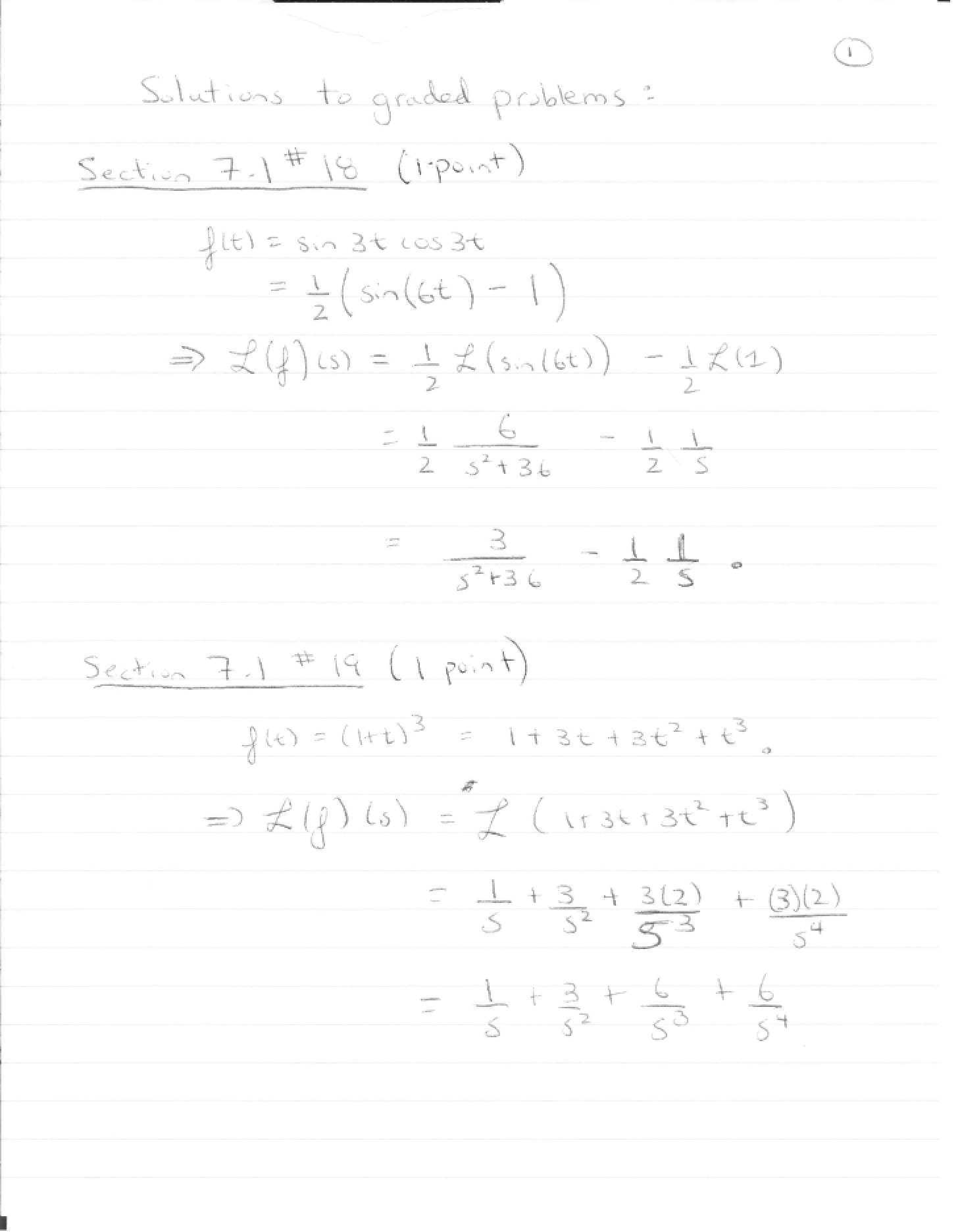
This document contains detailed, worked solutions for a set of assigned problems from the University of Illinois at Urbana-Champaign’s MATH 286: Intro to Differential Equations Plus course. It focuses on techniques for solving various types of differential equations, building upon concepts introduced in lectures and assigned readings. The material specifically addresses problems from Section 3.5 of the course syllabus.
Why This Document Matters
This resource is invaluable for students seeking to solidify their understanding of differential equations and refine their problem-solving skills. It’s particularly helpful when you’re working independently on assignments and want to check your approach, or when you’ve encountered difficulties and need a clear illustration of how to proceed. Reviewing these solutions can help identify common errors and reinforce best practices for tackling complex equations. Accessing the full solutions can significantly enhance your learning experience and prepare you for assessments.
Topics Covered
* Methods for finding particular solutions to non-homogeneous linear differential equations.
* Application of the characteristic polynomial to determine the form of the complementary function.
* Techniques for handling cases where forcing functions share roots with the homogeneous equation.
* Variation of parameters method for solving non-homogeneous equations.
* Detailed exploration of specific equation types, including those with polynomial and trigonometric forcing functions.
* Understanding and application of Theorem 1 related to particular solutions.
What This Document Provides
* Step-by-step reasoning behind the solution approaches for a variety of differential equation problems.
* Illustrations of how to apply theoretical concepts to practical calculations.
* Detailed explanations of how to determine the appropriate form of particular solutions.
* A comprehensive review of the Wronskian and its role in the variation of parameters method.
* A formal proof of Theorem 1, providing a deeper understanding of its underlying principles.