What This Document Is
This is a focused exploration of shell construction techniques within the broader field of architectural engineering and seismic design. Specifically, it delves into the principles governing the structural behavior of shell structures – thin, curved forms capable of spanning large distances. The material examines various shell geometries, their inherent strengths and weaknesses, and how they respond to different types of loads. It also features a case study analysis of significant architectural examples employing shell structures.
Why This Document Matters
This resource is invaluable for architecture and civil engineering students tackling advanced structural systems. It’s particularly relevant for those enrolled in courses covering building structures, concrete design, or seismic resistance. Professionals seeking a refresher on shell mechanics or inspiration from realized projects will also find it beneficial. Understanding shell structures is crucial for designing efficient, innovative, and aesthetically compelling buildings, especially in regions prone to seismic activity where lightweight, strong structures are paramount. This material will help you build a foundational understanding before tackling complex calculations and design applications.
Common Limitations or Challenges
This document focuses on the theoretical underpinnings and illustrative examples of shell construction. It does *not* provide a comprehensive guide to construction detailing, material specifications, or code compliance. It also doesn’t offer step-by-step design procedures or software tutorials. The case studies presented are intended to demonstrate principles, not to serve as complete construction blueprints. Practical application requires further study and professional guidance.
What This Document Provides
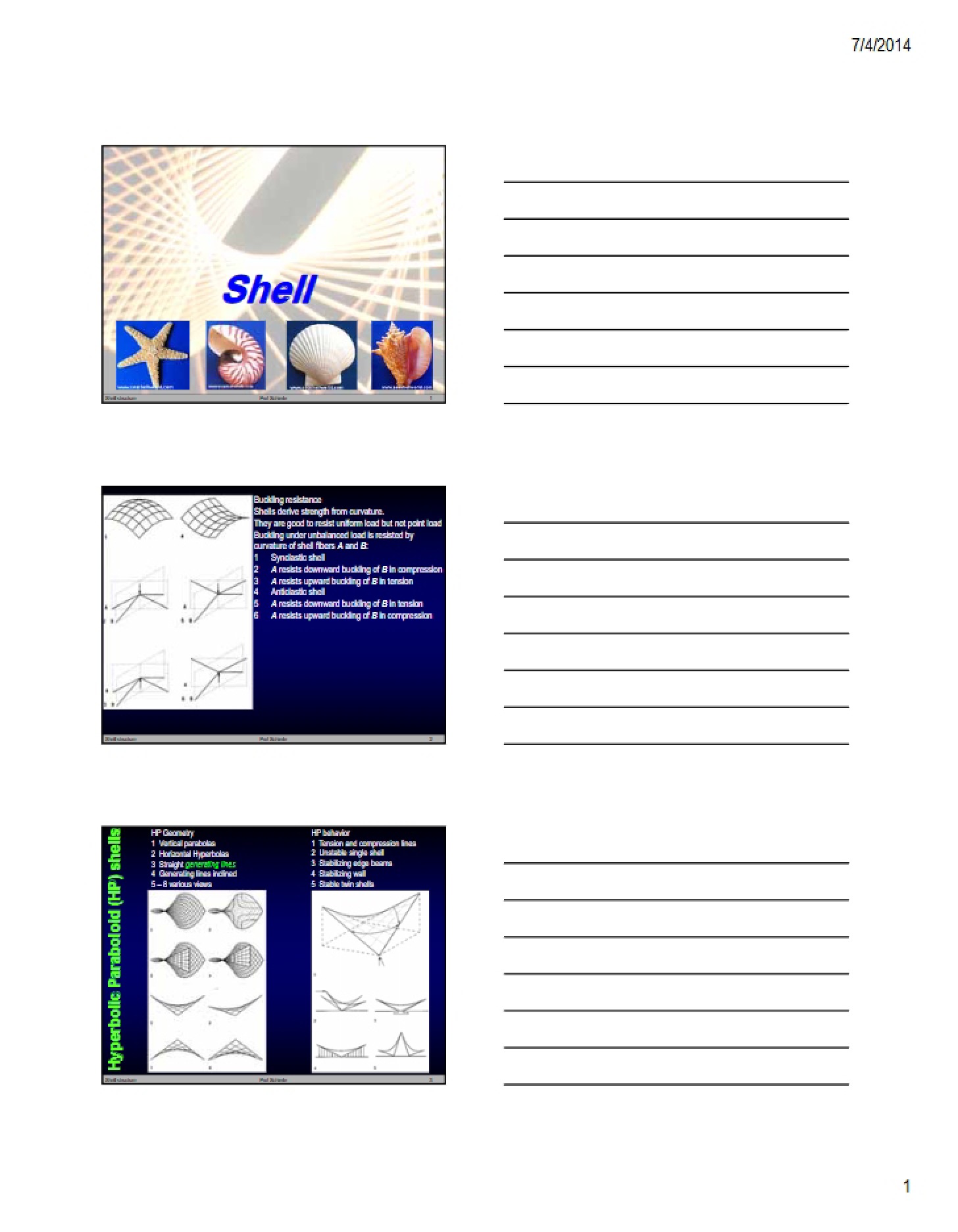
* An overview of buckling resistance in shell structures, differentiating between synclastic and anticlastic forms.
* A classification of various shell geometries, including hyperbolic paraboloids (HP) and rotational shells.
* Discussions on the structural behavior of different shell compositions (square, triangular, etc.).
* An examination of funicular and spherical dome structures, including load distribution and stress analysis.
* Detailed case studies of iconic shell structures, analyzing their design and engineering features.
* Illustrative examples demonstrating load calculations and stress assessments within shell structures.