What This Document Is
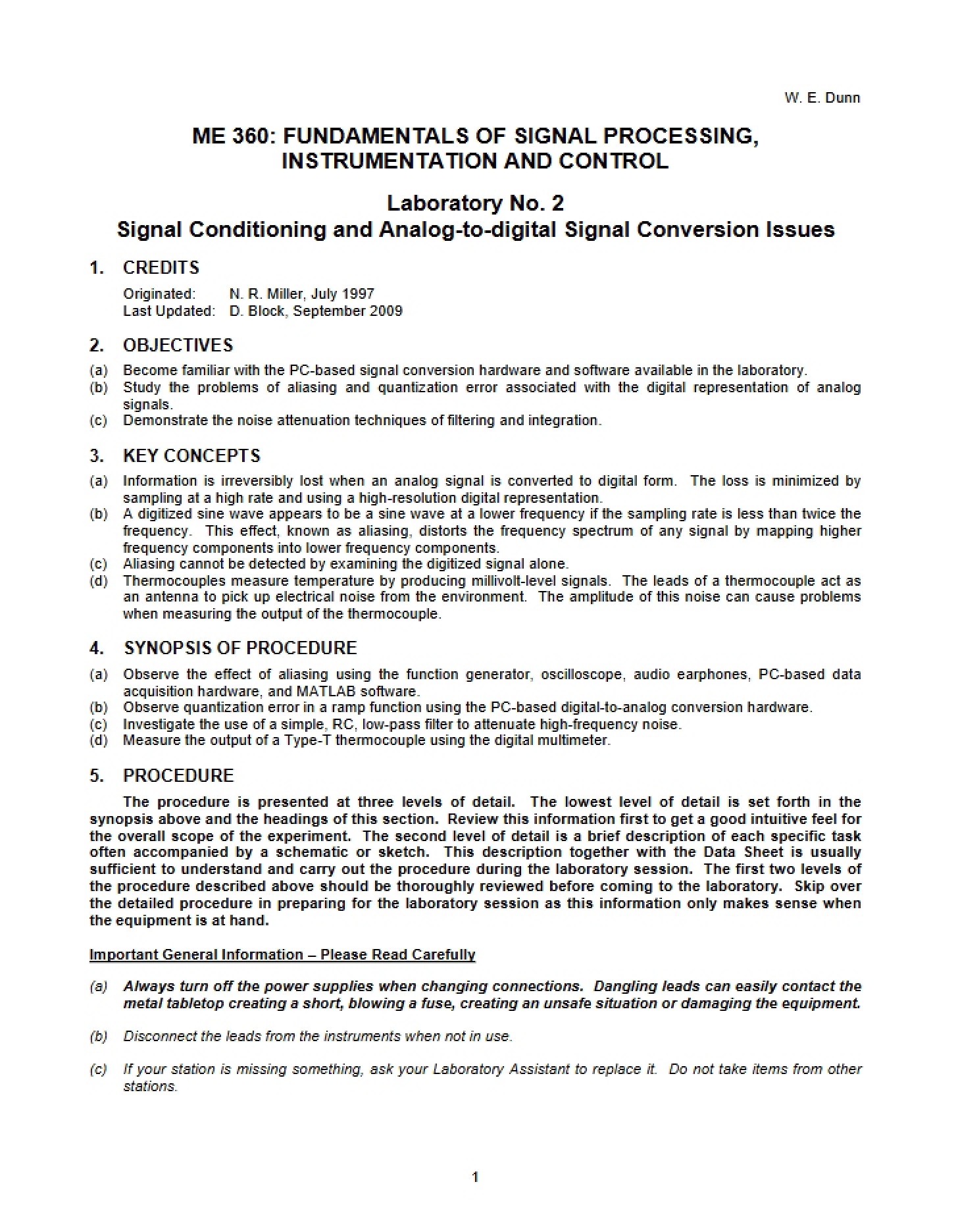
This document details a laboratory experiment focused on the principles of control systems, specifically applied to the speed regulation of a DC electric motor. It’s designed as a hands-on learning experience, combining simulation using specialized software with practical implementation on physical hardware. The core subject matter revolves around proportional-integral (PI) control strategies and their impact on system performance. It builds upon foundational knowledge of system dynamics and linear systems.
Why This Document Matters
This resource is ideal for students enrolled in signal processing, instrumentation, or control systems courses – particularly those with a mechanical engineering focus. It’s most valuable when you’re tasked with understanding how to design and implement feedback control loops, analyze system responses, and bridge the gap between theoretical concepts and real-world applications. Students preparing for lab sessions or seeking a deeper understanding of motor control will find this particularly useful. It’s also beneficial for anyone looking to gain practical experience with industry-standard simulation tools.
Common Limitations or Challenges
This document focuses specifically on the application of PI control to a DC motor system. It does *not* cover all aspects of control theory, such as advanced control techniques (e.g., model predictive control) or detailed motor modeling. While it mentions the use of simulation software, it doesn’t provide a comprehensive tutorial on the software itself – prior familiarity is assumed. Furthermore, it concentrates on a specific laboratory setup and may require adaptation for different hardware configurations. It does not provide pre-calculated results or step-by-step solutions.
What This Document Provides
* A clear articulation of the experiment’s objectives and the underlying control concepts.
* Discussion of key system characteristics relevant to control design, such as steady-state gain and time constants.
* An overview of the experimental procedure, encompassing both simulation and physical implementation.
* Insight into the benefits and drawbacks of different control strategies (P and PI control).
* Exploration of the impact of control parameters on system performance, including responsiveness and error reduction.
* Consideration of the differences between simulated and actual system behavior.
* Discussion of potential challenges related to discrete-time implementation of control algorithms.