What This Document Is
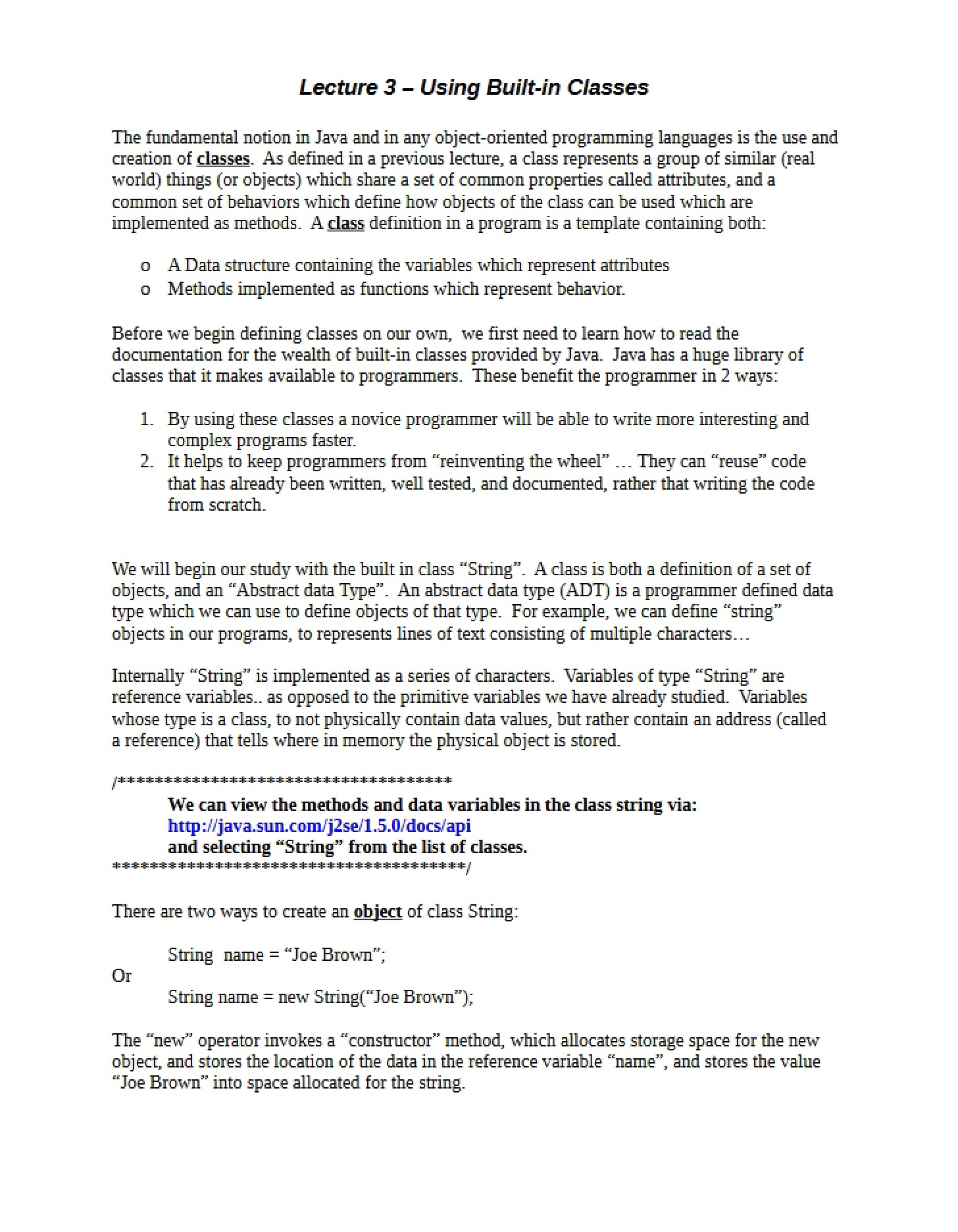
This resource is a focused exploration of fundamental concepts within object-oriented programming, specifically centered around the creation and utilization of classes in Java. It delves into the core principles that underpin how programmers model real-world entities and behaviors within their code. The material builds upon previously introduced Java API usage and transitions into the foundational theory behind defining custom data structures.
Why This Document Matters
This is essential reading for students in an introductory computer science course who are beginning to move beyond using pre-built tools and towards building their own. Anyone struggling to grasp the “why” behind object-oriented design, or needing a solid foundation before tackling more complex programming tasks, will find this particularly helpful. It’s best used as a companion to hands-on coding exercises, providing the theoretical context needed to understand *how* and *why* certain programming structures are used. It’s ideal for review during problem-solving or when preparing to design larger programs.
Common Limitations or Challenges
This material focuses on the conceptual underpinnings of class creation. It does *not* provide a comprehensive guide to Java syntax, nor does it offer detailed, step-by-step coding tutorials. It won’t walk you through building a complete application, but rather equips you with the knowledge to approach such a task with a strong understanding of the underlying principles. Practical implementation and debugging are outside the scope of this resource.
What This Document Provides
* A review of key terminology related to object-oriented programming, including classes, objects, methods, and messages.
* An explanation of the core principles that enable class creation, such as data abstraction and information hiding.
* Discussion of the relationship between real-world problems and their representation in code through abstract data types.
* An overview of how classes serve as blueprints for creating multiple instances (objects) with shared characteristics and behaviors.
* Exploration of the benefits of controlling access to internal data within a class.