What This Document Is
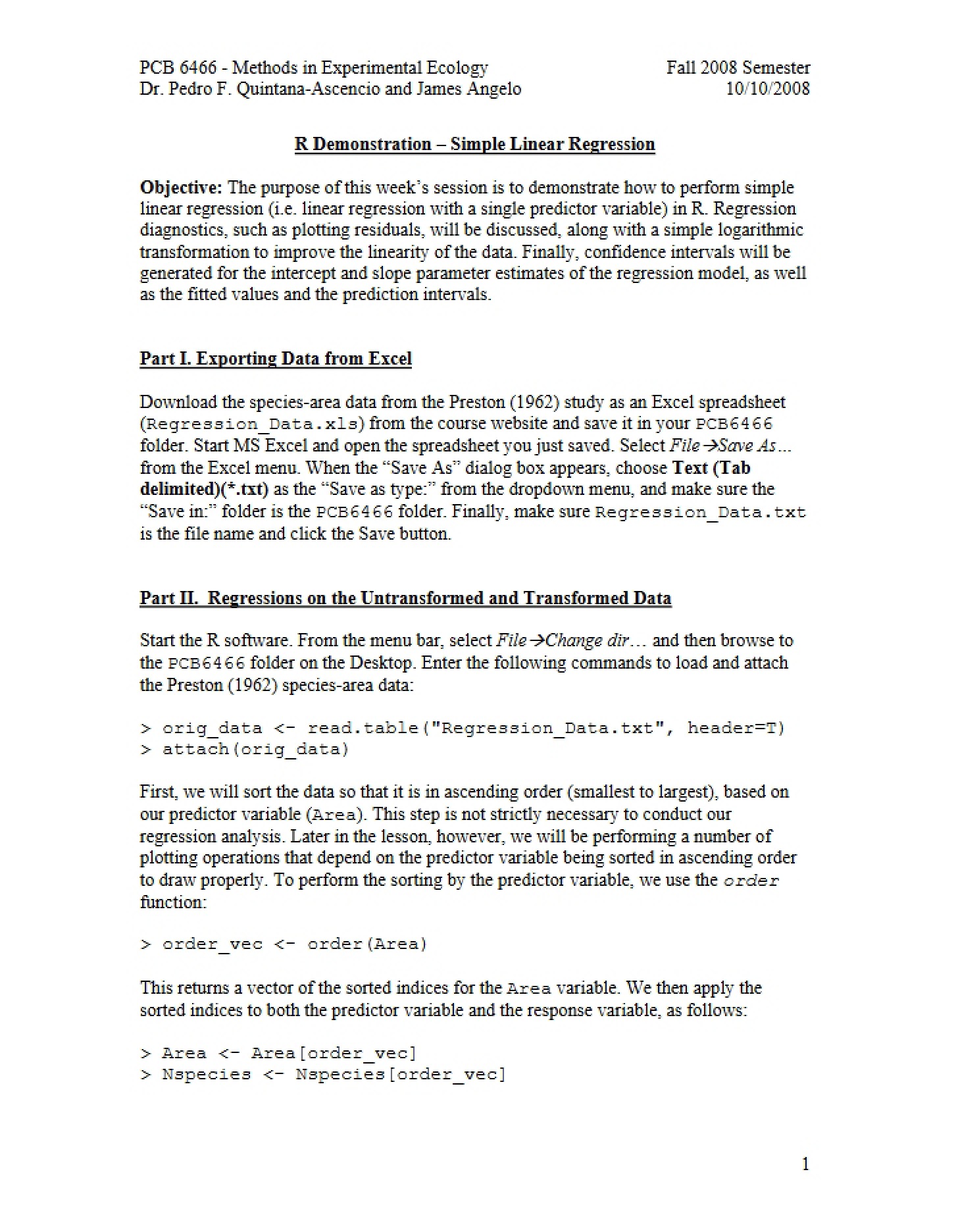
This resource is a detailed instructional guide focused on applying statistical modeling techniques within an ecological context. Specifically, it demonstrates the practical application of simple linear regression using the R programming environment. It’s designed for students learning to analyze ecological data and interpret the results of statistical tests. The guide walks through a real-world example, providing a framework for understanding how to implement these methods in your own research.
Why This Document Matters
This guide is invaluable for students enrolled in methods-based ecology courses, particularly those requiring proficiency in R. It’s most beneficial when you’re actively learning how to build and interpret linear regression models, and when you need a clear, step-by-step illustration of the process. Researchers seeking a refresher on implementing simple linear regression in R will also find this resource helpful. Understanding these techniques is fundamental to drawing meaningful conclusions from ecological datasets.
Topics Covered
* Data import and preparation for statistical analysis
* Performing simple linear regression in R
* Interpreting regression output, including coefficients and p-values
* Assessing model fit and identifying potential issues
* Utilizing data transformations to improve model performance
* Generating confidence intervals for regression parameters and predictions
* Regression diagnostics and residual analysis
What This Document Provides
* A practical example using species-area data to illustrate regression concepts.
* Guidance on loading and managing data within the R environment.
* Explanations of key statistical concepts related to simple linear regression.
* Insights into evaluating the significance of regression coefficients.
* A foundation for understanding the assumptions underlying linear regression.
* A starting point for applying these techniques to your own ecological research projects.