What This Document Is
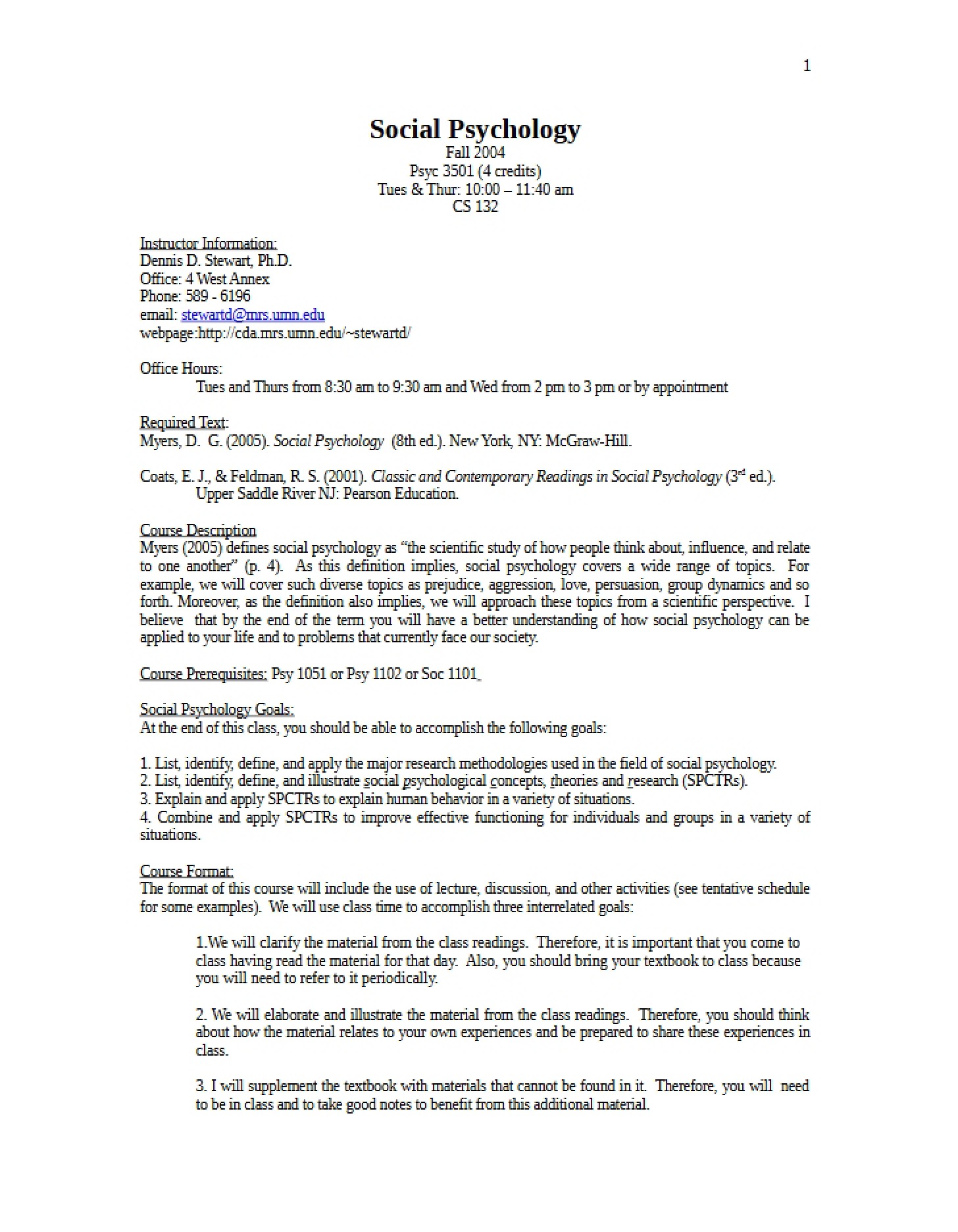
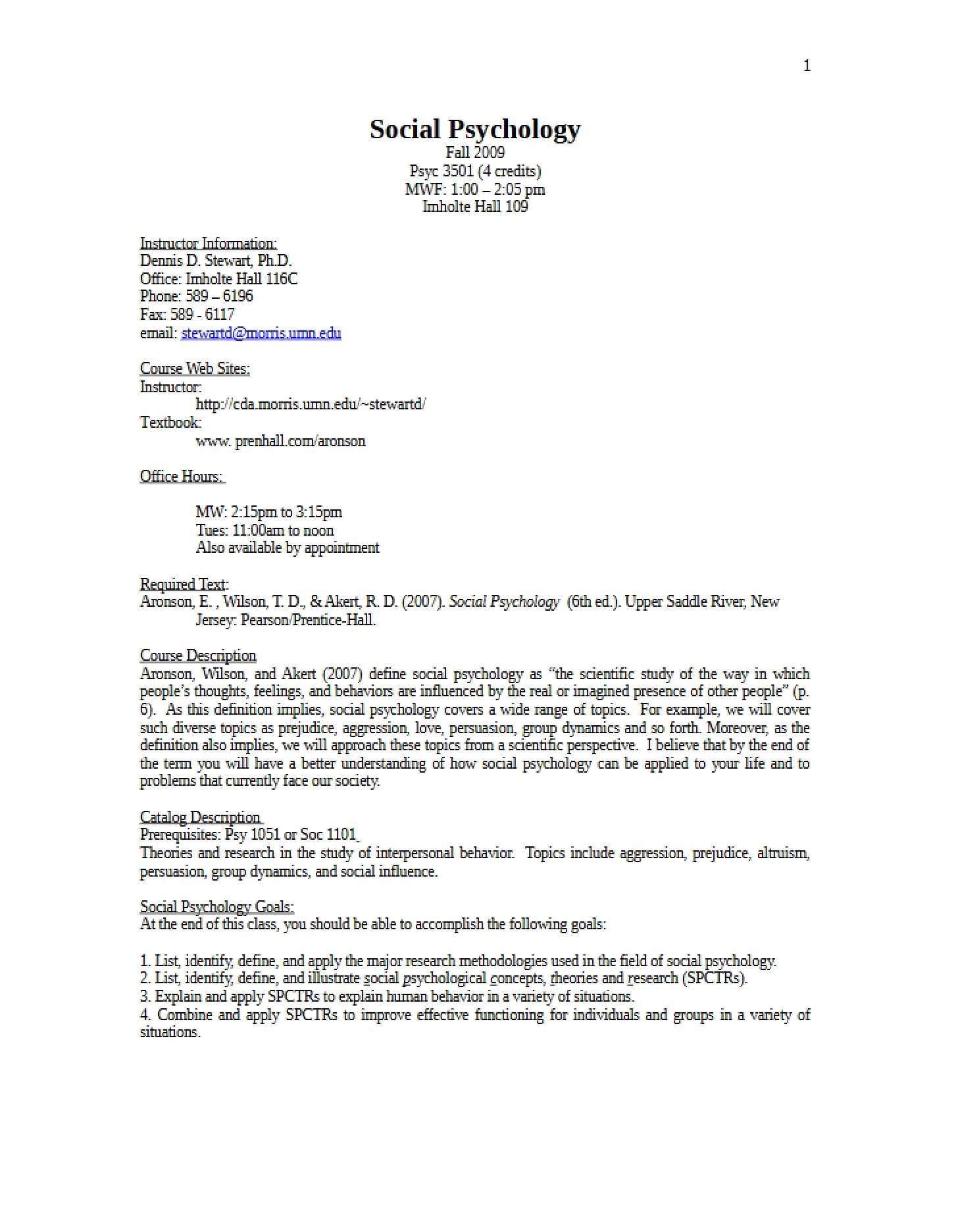
This is a course syllabus and overview for Social Psychology (PSYC 3501) at the University of Minnesota Twin Cities, as offered in Spring 2011. It details the expectations, structure, and core topics explored within the course. It serves as a foundational guide for students intending to enroll in or currently taking this upper-level psychology course. The document outlines the instructor’s contact information, required materials, and a broad overview of the field of social psychology as it will be approached within the course.
Why This Document Matters
This resource is essential for prospective students deciding if this course aligns with their academic interests and goals. Current students will find it invaluable for understanding course policies, grading criteria, and the overall learning objectives. It’s particularly useful during course registration and the initial weeks of the semester to ensure a clear understanding of expectations and required preparation. Students interested in understanding the academic rigor and scope of a university-level social psychology course will also benefit from reviewing this material.
Common Limitations or Challenges
This document provides a high-level overview and does *not* contain the specific lecture content, detailed explanations of theories, research findings, or assignments. It does not include the actual course readings or supplemental materials. It also doesn’t offer personalized guidance or address individual student questions – it’s a static overview of the course structure. Access to the full syllabus is required to understand the complete course schedule, grading breakdown, and specific policies.
What This Document Provides
* Instructor contact information and office hours.
* Required textbook details and information regarding additional readings.
* A foundational definition of social psychology and its scope.
* A list of core topics to be covered, including areas like prejudice, aggression, and group dynamics.
* Clearly defined learning objectives for successful course completion.
* Information regarding classroom conduct expectations and university policies.
* An outline of the course format, including lecture, discussion, and activities.
* Details regarding the integration of readings, lectures, and personal experiences.