What This Document Is
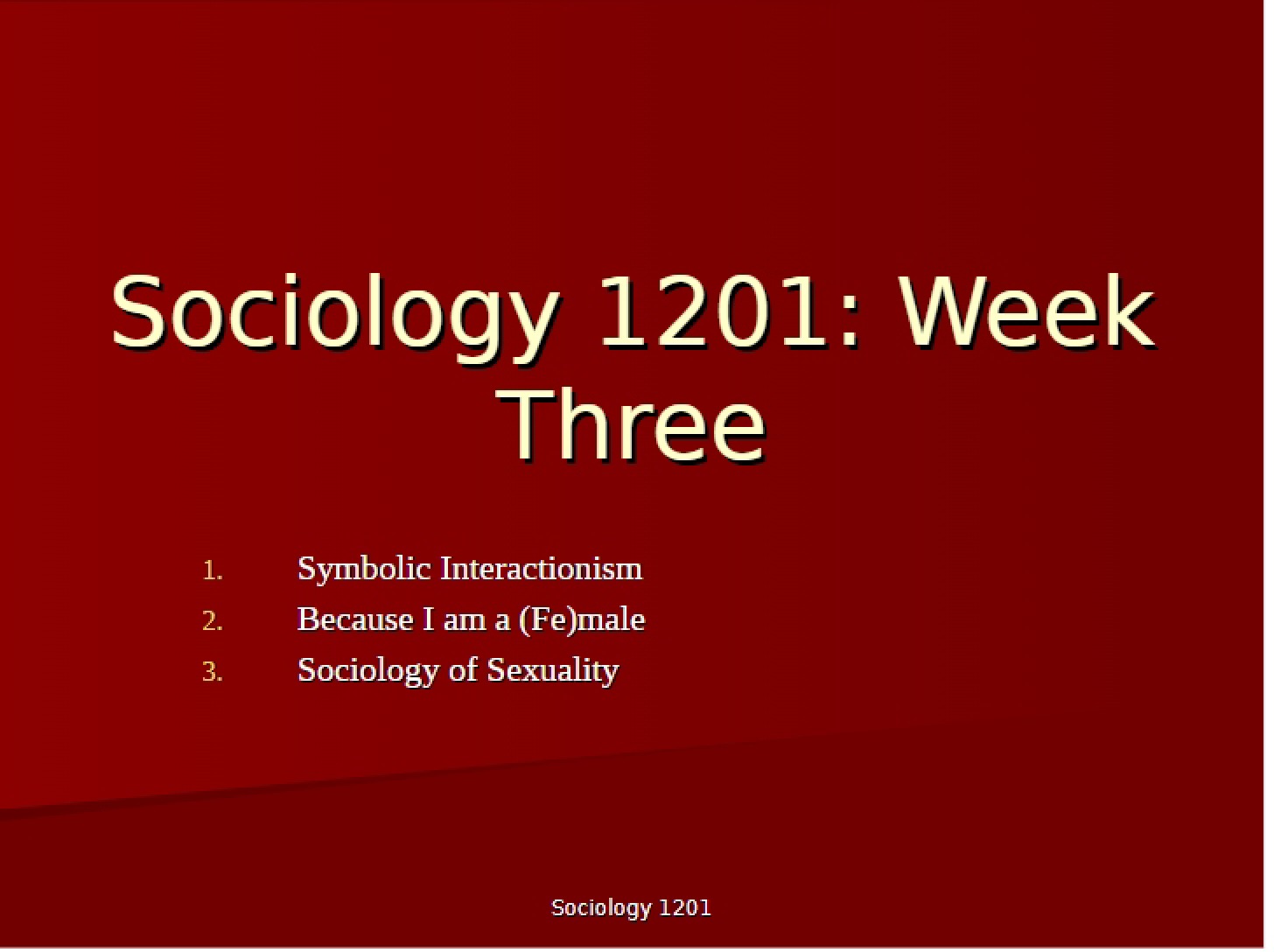
This resource is a set of lecture notes from Sociology 1201 at the University of Minnesota Twin Cities, focusing on core sociological perspectives applied to the study of families and sexuality. It delves into foundational theories – specifically Symbolic Interactionism – and contrasts it with Conflict Theory, offering a comparative lens for understanding social dynamics within familial structures. The material explores how individuals develop a sense of self, the role of social groups, and the construction of meaning in relation to concepts like gender and sexuality.
Why This Document Matters
This material is invaluable for students enrolled in introductory sociology courses, particularly those with a focus on family studies, gender studies, or sexuality. It’s most helpful when preparing for class discussions, formulating research questions, or beginning to synthesize complex sociological concepts. Students grappling with understanding how social forces shape individual behavior and societal norms will find this a strong foundation. It’s particularly useful when needing to grasp theoretical frameworks before applying them to real-world scenarios.
Common Limitations or Challenges
This document presents theoretical overviews and key concepts. It does *not* offer detailed case studies, empirical research findings, or specific answers to assignment questions. It’s designed to provide a conceptual understanding, not a comprehensive solution to all course material. It also doesn’t include practical application exercises or detailed historical analyses of specific social movements. Access to the full resource is required for in-depth exploration and complete understanding.
What This Document Provides
* An overview of Symbolic Interactionism as a sociological perspective.
* Discussion of key thinkers like Charles Horton Cooley and George Herbert Mead and their contributions to understanding the self.
* Exploration of core sociological concepts like culture, norms, and socialization.
* A foundational understanding of the distinction between sex and gender.
* An introduction to Conflict Theory and its application to family dynamics.
* Considerations of how societal changes impact families.
* An overview of how sociologists approach the study of sexuality.