What This Document Is
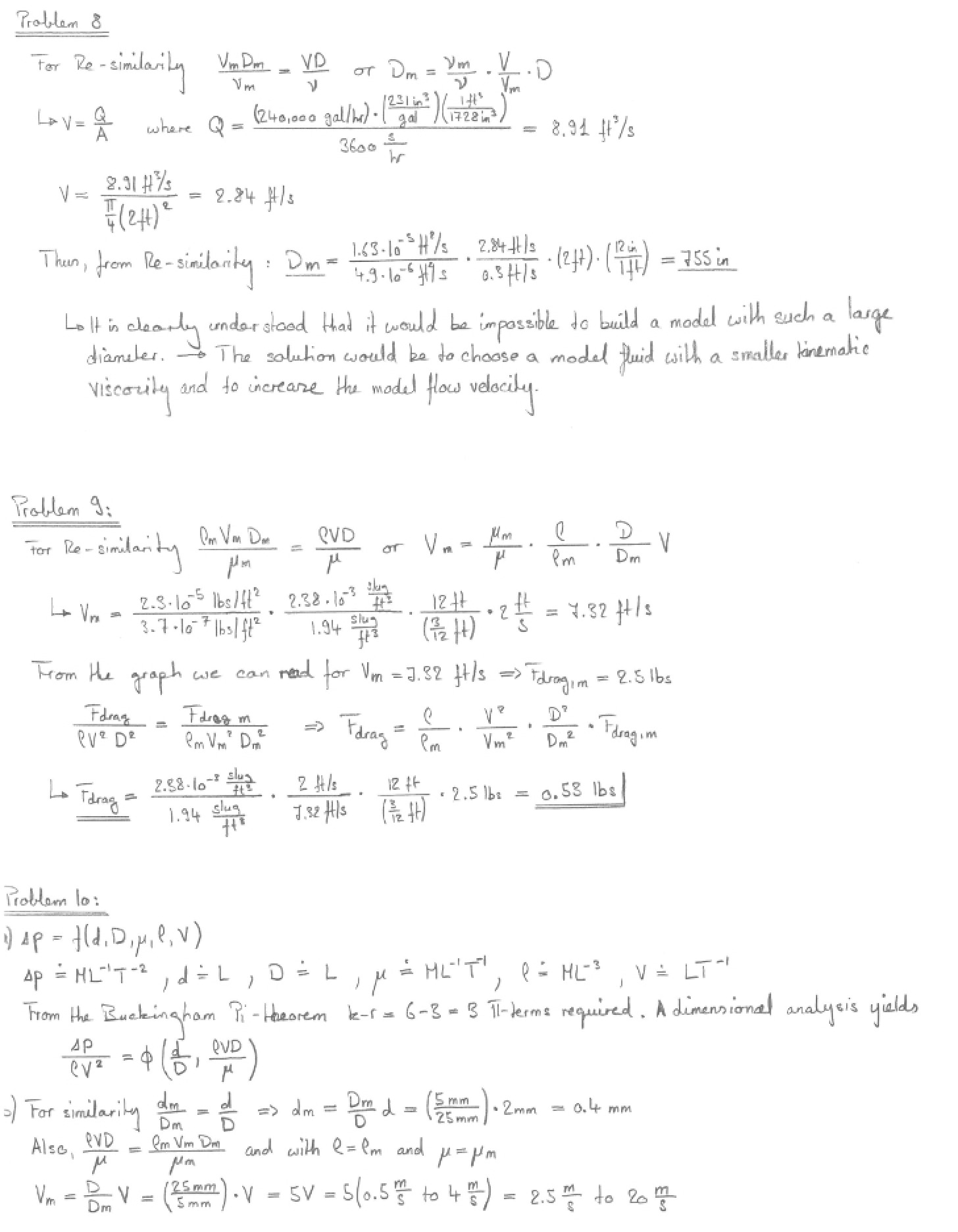
This study guide provides detailed worked solutions for a homework assignment in MAE 331: Fluid Mechanics, offered at West Virginia University. It focuses on applying core fluid mechanics principles to solve practical problems, likely covering topics from Chapter Four of the course textbook. The material is presented in a step-by-step manner, intended to reinforce understanding of the concepts through application. Expect a focus on mathematical derivations and problem-solving techniques relevant to fluid flow.
Why This Document Matters
This resource is invaluable for students currently enrolled in a similar fluid mechanics course, particularly those who are working through assigned homework problems. It’s especially helpful if you’re seeking to check your work, identify areas where your understanding might be incomplete, or learn alternative approaches to problem-solving. Utilizing this guide alongside your course notes and textbook can significantly improve your grasp of the subject matter and boost your confidence in tackling future assignments and exams. It’s best used *after* you’ve made a genuine attempt to solve the problems yourself.
Common Limitations or Challenges
This guide focuses specifically on the solutions to a single homework assignment. It does *not* provide a comprehensive review of all fluid mechanics concepts, nor does it offer foundational explanations of the underlying principles. It assumes a base level of understanding of the course material. Furthermore, while the solutions are detailed, they won’t necessarily explain *why* certain approaches were chosen over others – that’s where attending lectures and reviewing course materials is crucial. It will not substitute for actively participating in class or seeking help from your professor or TA.
What This Document Provides
* Detailed solutions addressing multiple problems related to fluid flow concepts.
* Application of theoretical principles to practical scenarios.
* Illustrative examples demonstrating problem-solving methodologies.
* Analysis of fluid behavior under various conditions.
* Worked examples likely involving velocity fields, pressure gradients, and streamline analysis.
* Coverage of concepts related to steady flow and its implications.
* Potential exploration of relationships between flow parameters and geometric configurations.