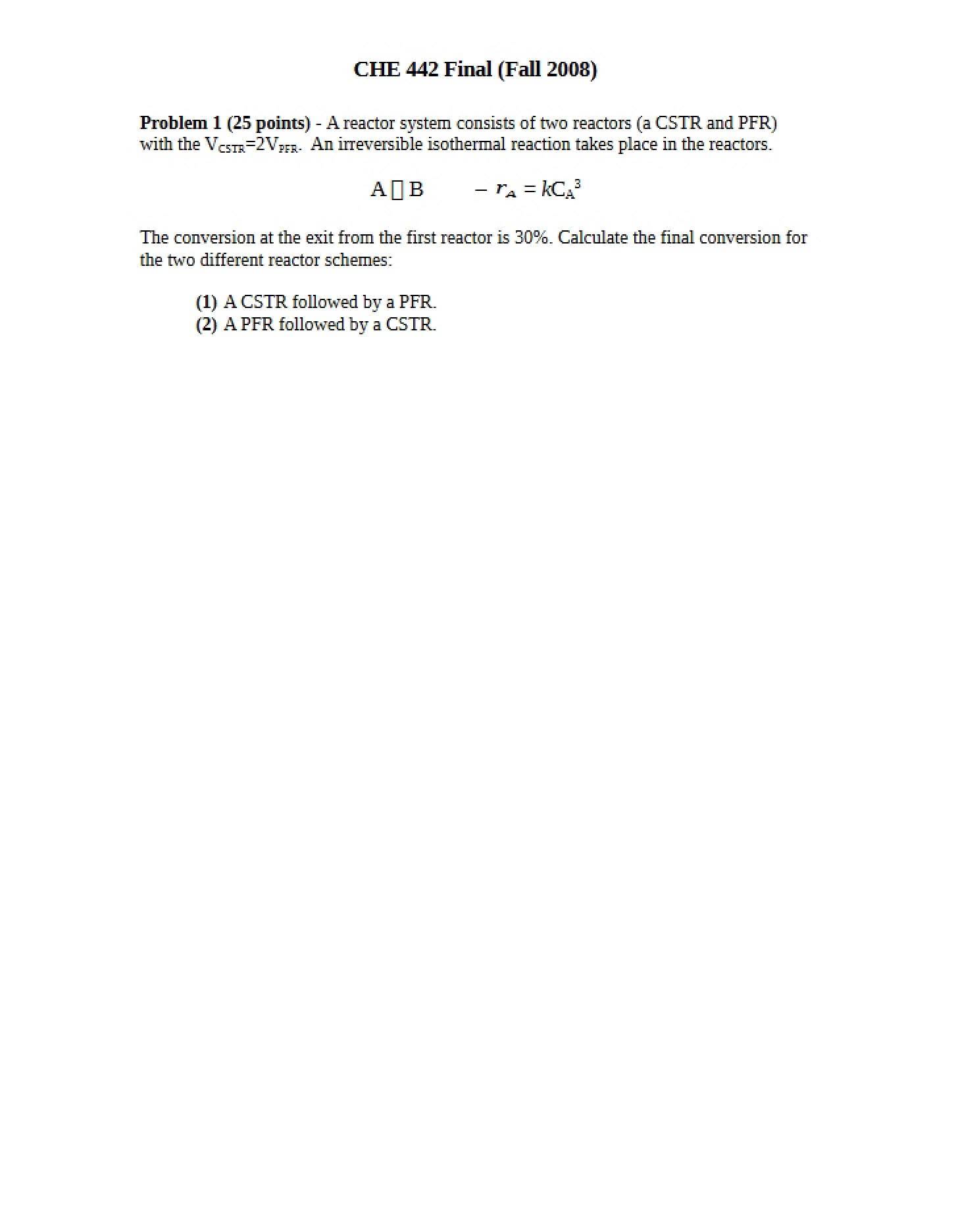
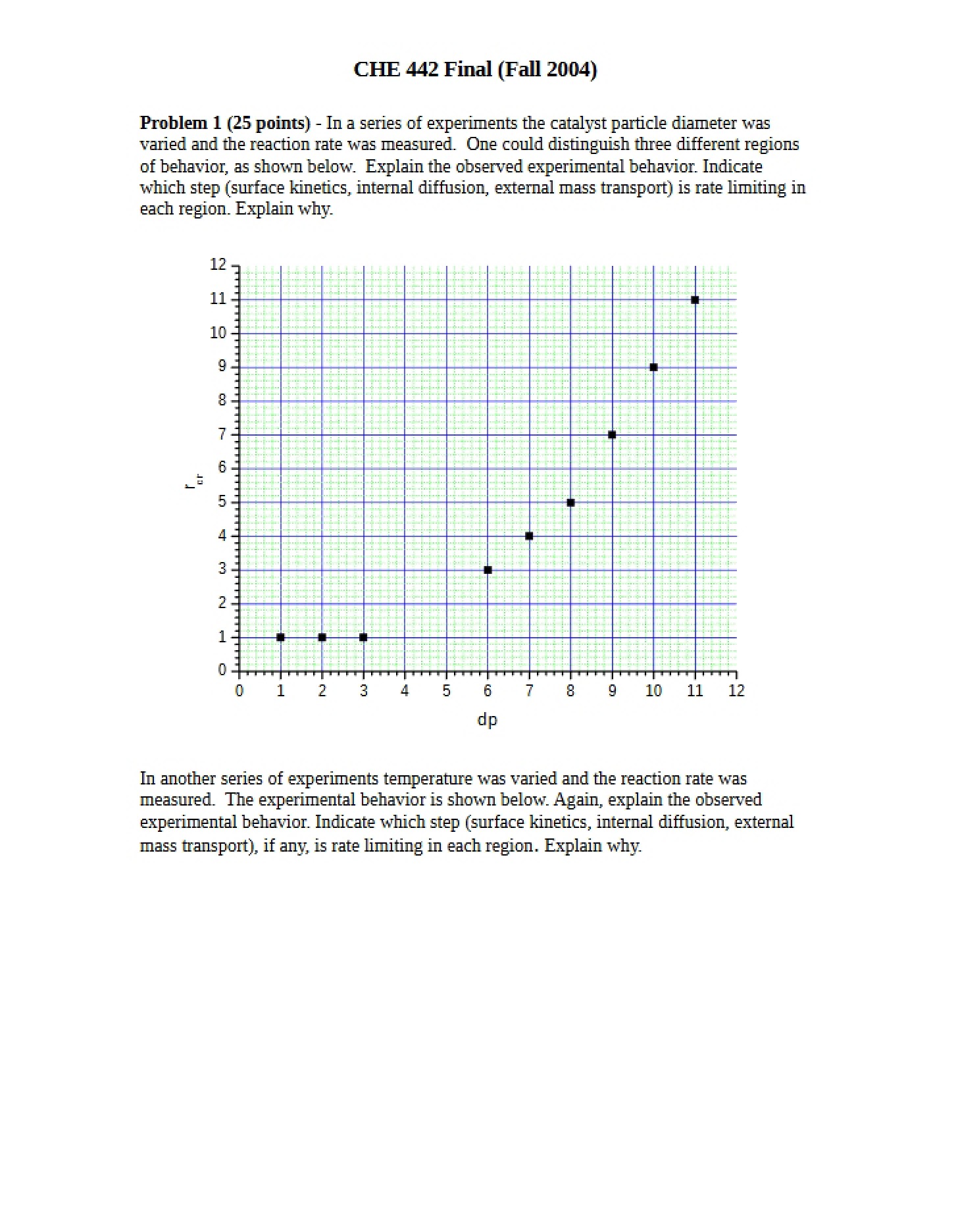
What This Document Is
This document contains worked solutions from a final examination for Chemical Reactor Analysis (ChE 442) at the University of Southern California, originally administered in 2008. It’s a collection of detailed responses to problems covering a broad range of reactor design and analysis concepts. The material focuses on applying theoretical principles to practical reactor scenarios.
Why This Document Matters
This resource is invaluable for students currently enrolled in, or who have recently completed, a chemical reactor analysis course. It’s particularly helpful when reviewing past exam questions to solidify understanding and identify areas needing further study. Aspiring chemical engineers preparing for professional exams will also find it beneficial to review the problem-solving approaches demonstrated. Use this as a study aid *after* attempting the original exam questions or similar practice problems – working through the problems independently first is crucial for effective learning.
Common Limitations or Challenges
This document presents solutions as they were recorded in 2008. It does *not* include explanations of fundamental concepts or derivations of core equations. It assumes a solid foundation in reactor theory and mathematical principles. Furthermore, it doesn’t offer alternative solution methods or detailed commentary on the reasoning behind each step; it simply presents the completed solutions. It also doesn’t cover all possible reactor types or complexities.
What This Document Provides
* Detailed solutions to a variety of chemical reactor problems.
* Applications of reactor analysis principles to different reactor configurations.
* Illustrative examples of problem-solving techniques relevant to reactor design.
* Worked examples involving rate laws, conversion calculations, and reactor sizing considerations.
* Solutions addressing both ideal and non-ideal reactor behavior.
* Examples dealing with multiple reactions and complex kinetics.
* Illustrations of how to approach problems involving different reactor types (e.g., PFR, CSTR).