What This Document Is
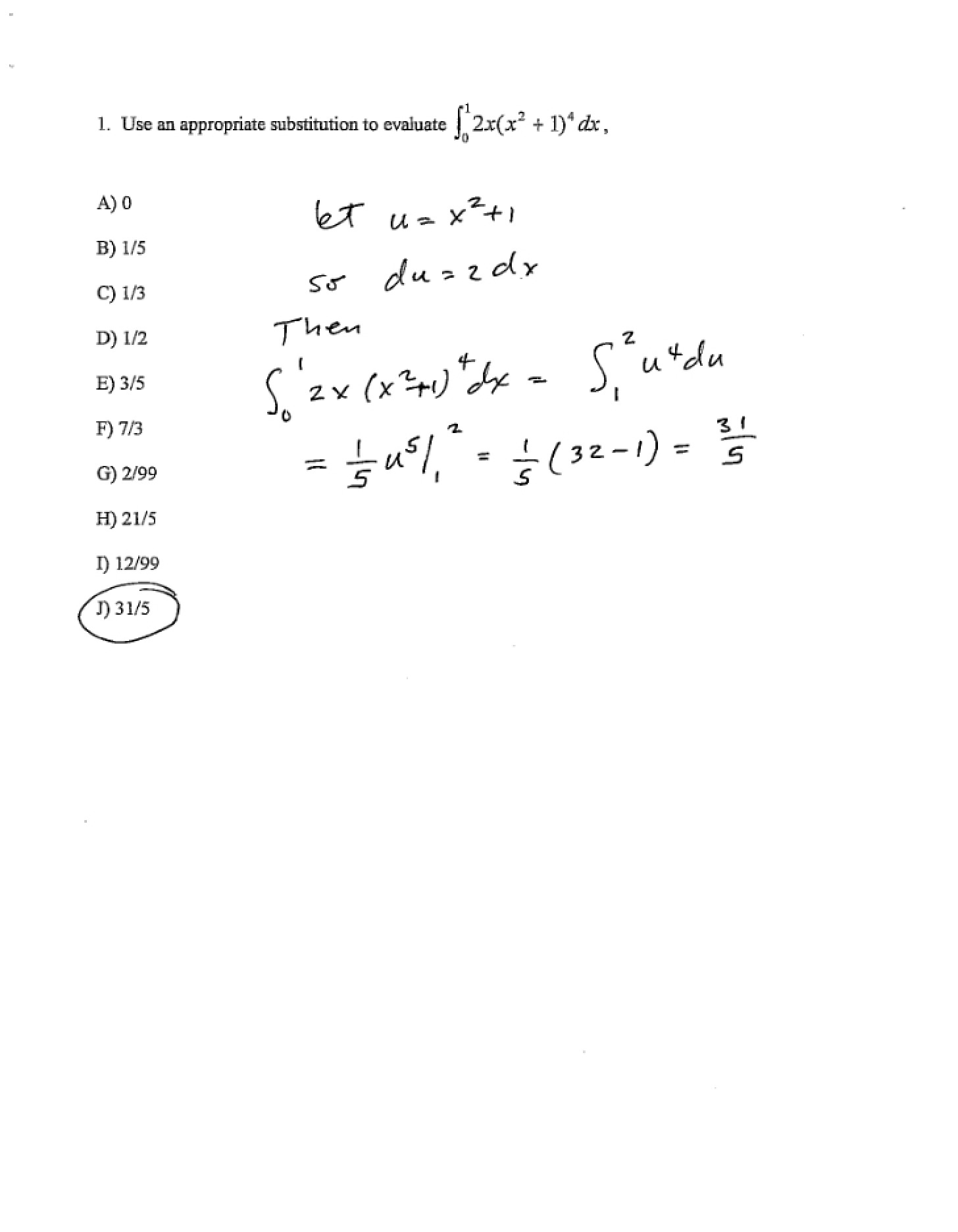
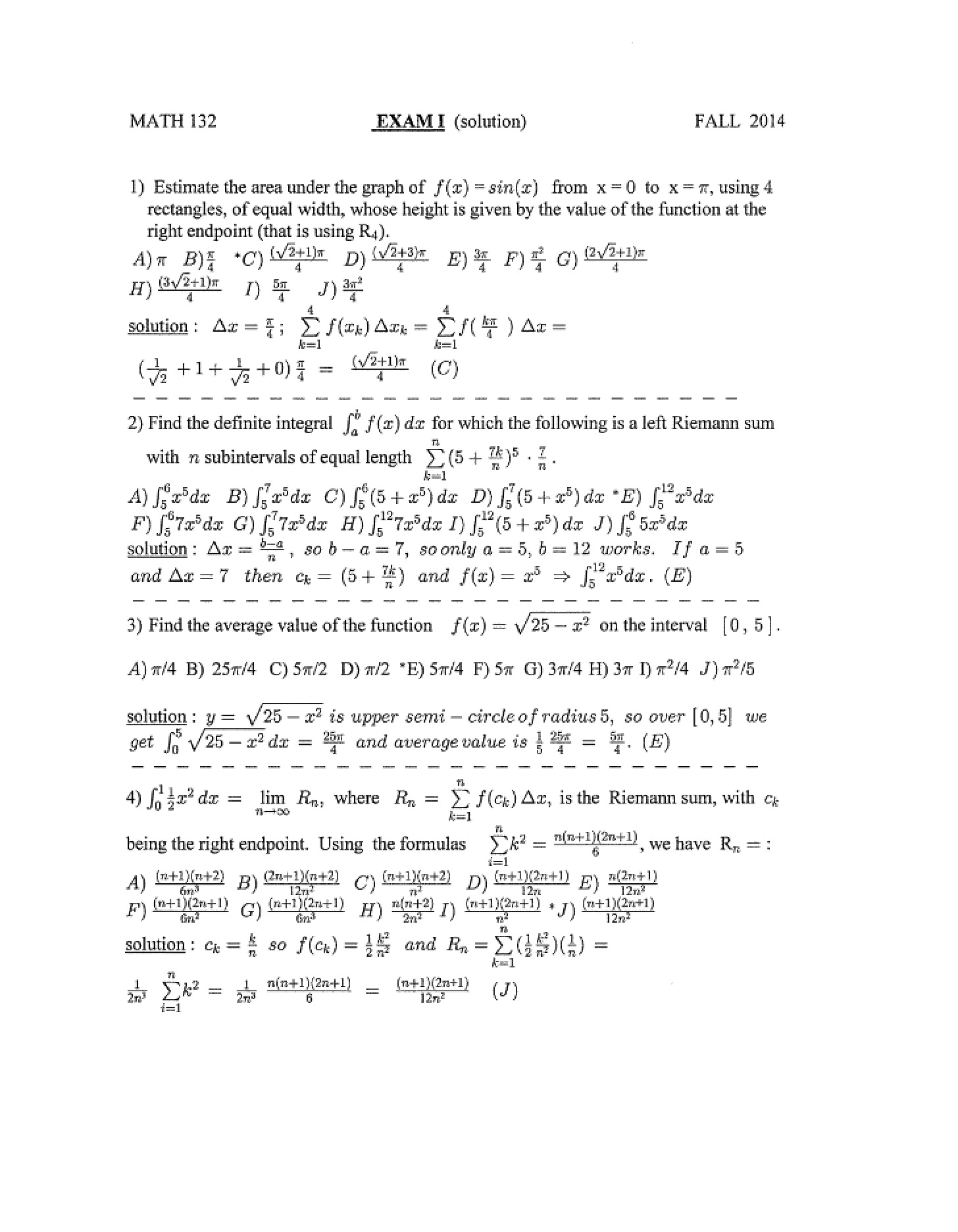
This document contains worked solutions for a Calculus II (MATH 132) exam administered at Washington University in St. Louis during the Fall 2004 semester. It represents a first attempt at the third examination for the course. The solutions detail the approaches and methodologies used to address a variety of calculus problems. It’s a resource focused on demonstrating the application of core concepts learned within the course.
Why This Document Matters
This resource is invaluable for students currently enrolled in or recently completed a similar Calculus II course. It’s particularly helpful for those seeking to review exam-level problems and understand the expected format and depth of solutions. Studying completed exams can help identify personal strengths and weaknesses, and improve problem-solving skills. It’s best used *after* attempting similar problems independently, as a way to check your work and grasp alternative solution pathways. It can also be beneficial for instructors looking for examples of exam questions and detailed solutions.
Common Limitations or Challenges
This document focuses solely on the solutions to a specific exam from a past semester. It does not include explanations of fundamental concepts, derivations of formulas, or step-by-step tutorials on how to approach the problems initially. It assumes a foundational understanding of Calculus II principles. Furthermore, the exam content may not perfectly align with the specific topics covered in all Calculus II courses. It's a snapshot of one instructor’s assessment, and shouldn’t be considered a comprehensive review of all possible exam questions.
What This Document Provides
* Detailed solutions to a range of Calculus II problems.
* Applications of integral calculus to real-world scenarios (e.g., wave speed calculations).
* Solutions involving techniques for evaluating improper integrals.
* Examples of surface area of revolution calculations.
* Worked problems related to Fourier series and harmonic distortion.
* Solutions involving parametric equations and curvature calculations.
* Problems involving related rates and optimization.
* Solutions to problems involving scalar projections.