What This Document Is
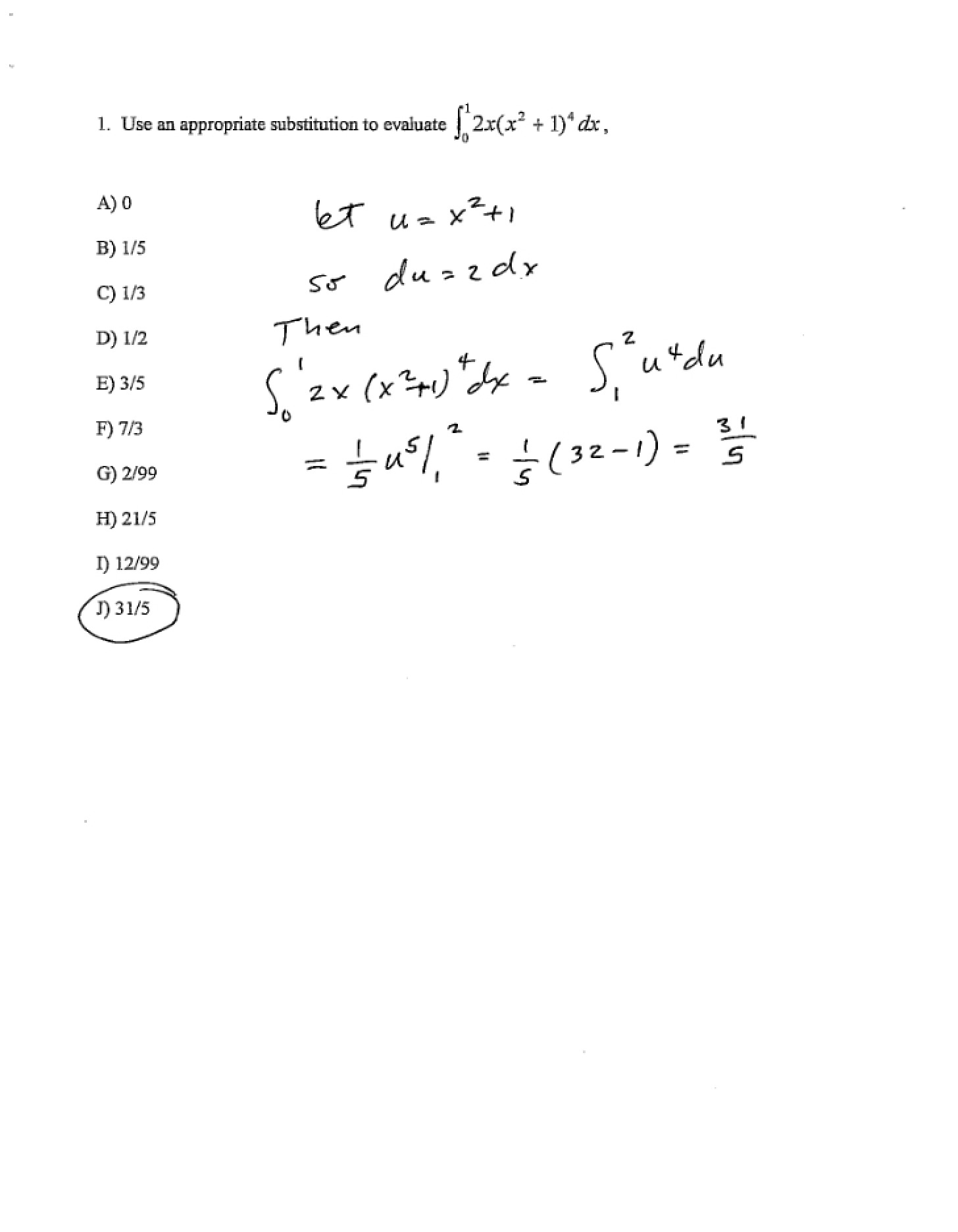
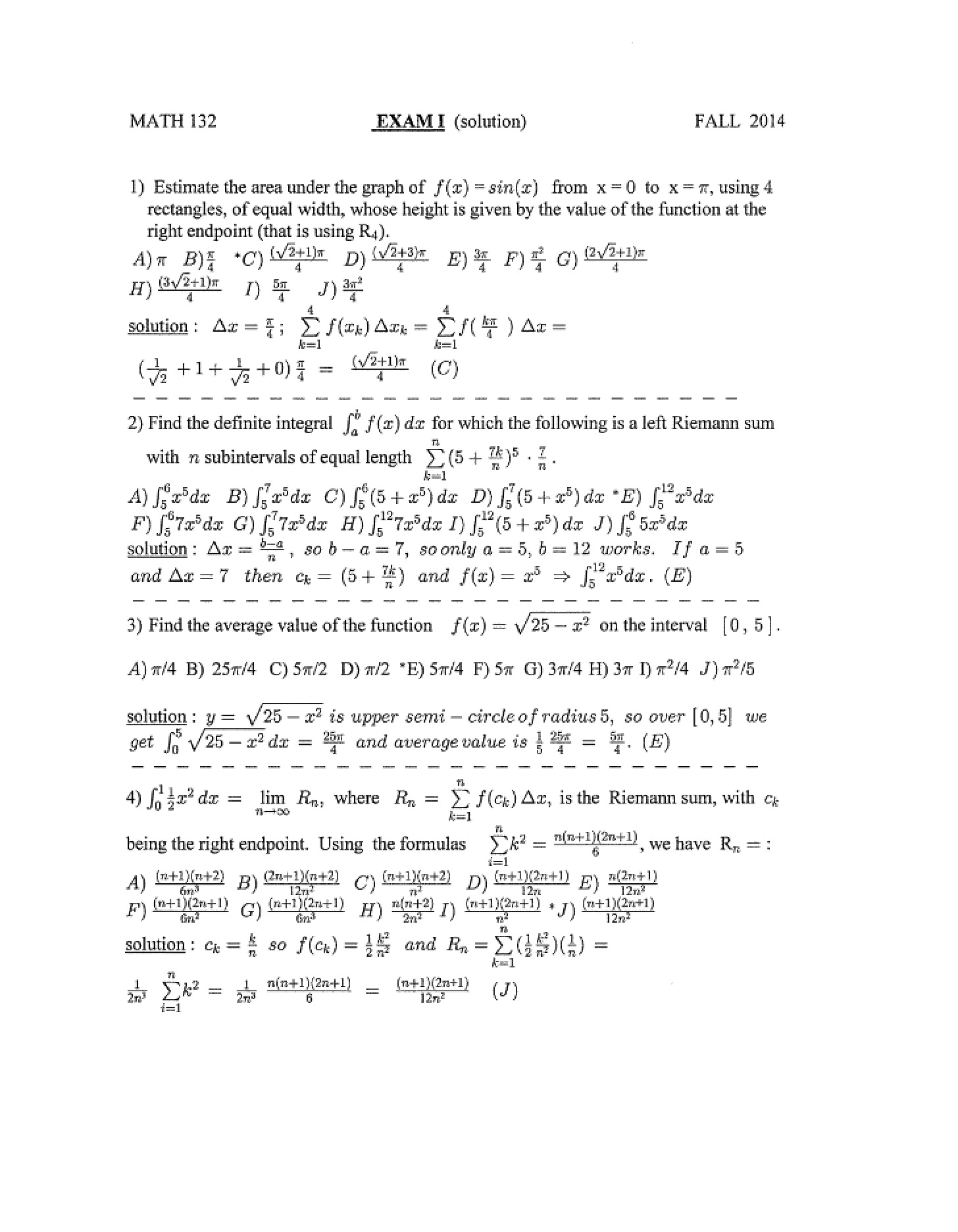
This document contains detailed worked solutions for an exam administered in a Calculus II course (MATH 132) at Washington University in St. Louis, specifically the Fall 2001 Exam One. It’s a comprehensive record of the instructor’s expected approach to solving a variety of problems central to the course’s early material. The document focuses on demonstrating the complete solution process for each question on the exam.
Why This Document Matters
This resource is invaluable for students who want to thoroughly review their understanding of key Calculus II concepts after taking a similar exam. It’s particularly helpful for identifying areas where your approach might differ from the instructor’s expectations, and for understanding the nuances of problem-solving techniques. Students preparing for future exams, quizzes, or simply seeking to solidify their grasp of integration techniques, differentiation, and applications will find this a useful study aid. It’s best used *after* you’ve attempted the exam yourself, to compare your work and pinpoint areas for improvement.
Common Limitations or Challenges
This document presents completed solutions; it does not offer step-by-step explanations of the underlying concepts. It assumes a foundational understanding of Calculus II principles. It also doesn’t include the original exam questions themselves – only the solutions. Therefore, it’s most effective when used in conjunction with a copy of the original exam (if available) or a similar problem set. It won’t teach you the material from scratch.
What This Document Provides
* Detailed solutions to a range of Calculus II problems, covering topics such as indefinite and definite integration.
* Worked examples demonstrating the application of integration techniques.
* Solutions involving trigonometric functions and substitutions.
* Solutions to problems involving derivatives of composite functions.
* Illustrations of how to approach population growth rate problems using integral calculus.
* Solutions to problems testing understanding of function analysis, including local maxima/minima and concavity.
* Solutions to problems involving logarithmic integration.