What This Document Is
This document consists of worked solutions for a practice final exam in General Chemistry (CHEM 105) at the University of Southern California. It’s designed to help students assess their understanding of core concepts covered throughout the course and prepare for the high-stakes final examination. The material focuses on applying chemical principles to solve quantitative problems and demonstrate conceptual mastery.
Why This Document Matters
This resource is invaluable for any student enrolled in USC’s CHEM 105 who is looking to solidify their grasp of the course material. It’s particularly useful as a self-study tool in the days leading up to the final exam. Working through these solutions (once you have attempted the practice final yourself!) can reveal areas where your understanding is strong and pinpoint topics requiring further review. It’s best used *after* you’ve made a good-faith effort to complete the practice exam independently, as simply looking at solutions without prior effort won’t be as beneficial.
Common Limitations or Challenges
This document *does not* contain explanations of fundamental concepts. It assumes you have already been exposed to the material in lectures, readings, and homework assignments. It also doesn’t provide alternative solution methods; it presents one approach to each problem. Furthermore, it focuses solely on the specific problems included in the practice final and doesn’t cover the entire scope of CHEM 105 content exhaustively. It is a practice tool, not a replacement for comprehensive study.
What This Document Provides
* Detailed solutions to a variety of quantitative problems covering key areas of general chemistry.
* Applications of concepts related to thermochemistry and energy calculations.
* Worked examples demonstrating how to determine electron configurations and understand atomic structure.
* Problem-solving strategies for gas laws and stoichiometry calculations.
* Solutions involving acid-base chemistry and titration calculations.
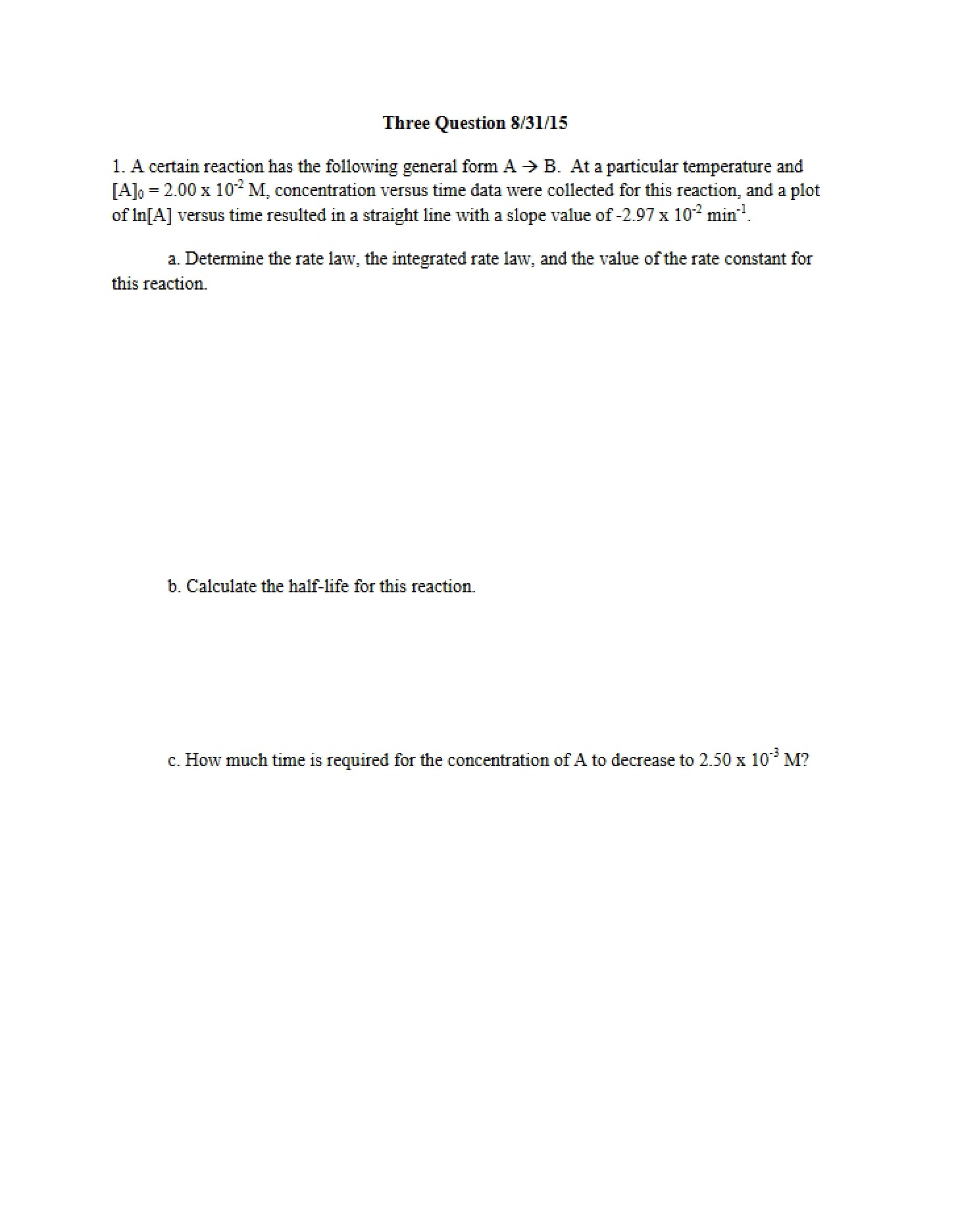
* Guidance on applying principles of chemical kinetics and effusion rates.
* Practice with relating chemical formulas to elemental composition and molar mass.
* Solutions to problems involving the application of the ideal gas law.