What This Document Is
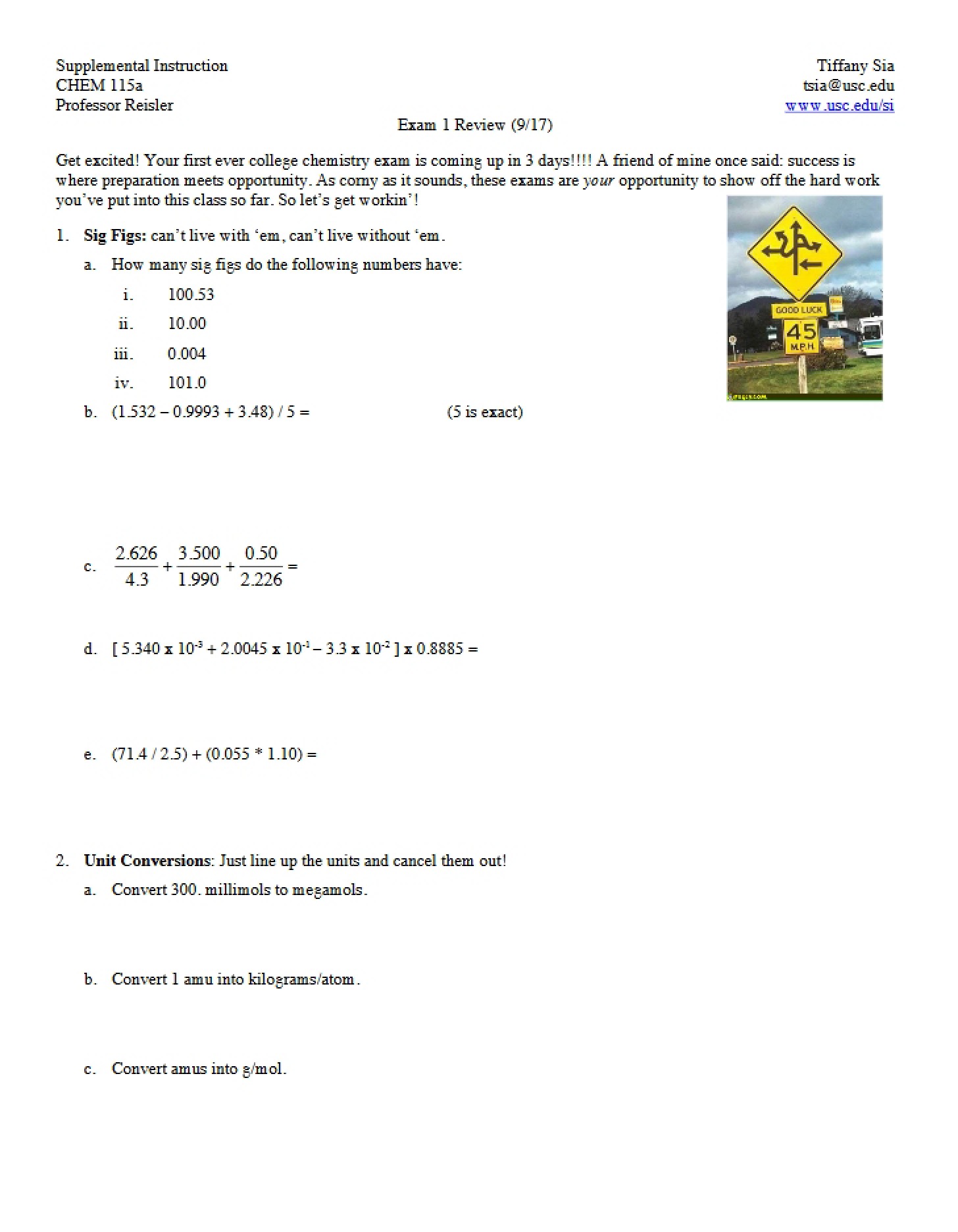
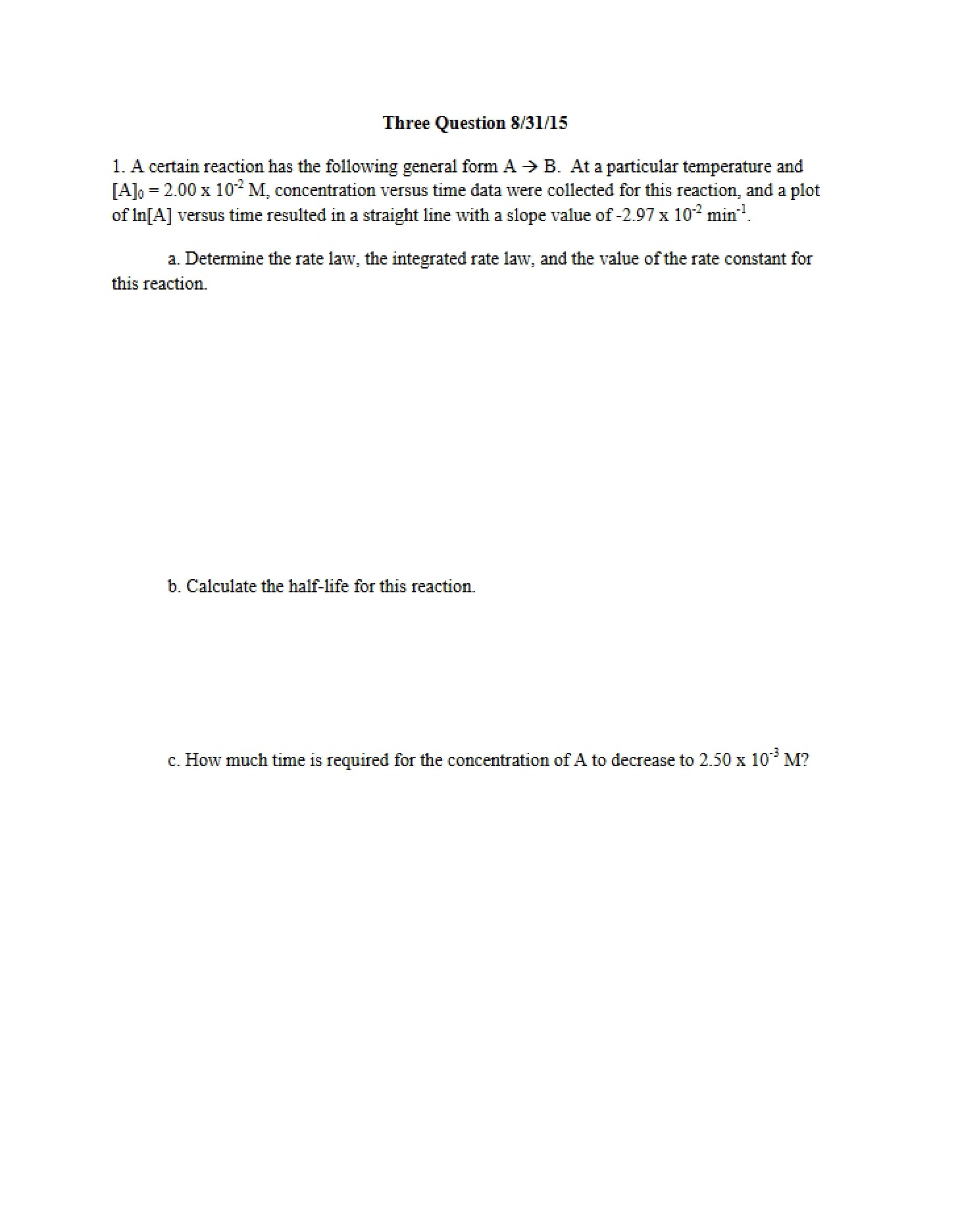
This resource is a focused study guide designed to reinforce foundational concepts covered in the first week of a General Chemistry (CHEM 105) course at the University of Southern California. It’s structured as a set of problems and exercises intended to help students solidify their understanding of key principles related to matter, measurement, and scientific notation. The guide aims to bridge the gap between lecture material and practical application, offering opportunities for self-assessment.
Why This Document Matters
This study guide is particularly valuable for students who are looking to proactively test their comprehension of introductory chemistry topics. It’s ideal for use *after* attending lectures and reviewing assigned readings, serving as a powerful tool for identifying areas where further study is needed. Students preparing for quizzes or exams covering these initial concepts will find it especially helpful. It’s designed to build confidence and ensure a strong foundation for more advanced topics later in the course. Those who benefit most will be actively engaged in working through problems and applying chemical principles.
Common Limitations or Challenges
This guide does *not* provide a comprehensive re-teaching of the core lecture material. It assumes a basic familiarity with the concepts presented in class. It also doesn’t offer detailed explanations of *how* to arrive at solutions; rather, it presents scenarios and prompts for application of learned principles. It is not a substitute for attending lectures, completing assigned readings, or seeking clarification from your instructor. It focuses specifically on the material typically covered in the first week of the course and does not extend to later topics.
What This Document Provides
* Exercises focused on classifying matter (pure substances vs. mixtures, homogeneous vs. heterogeneous).
* Practice with interpreting and utilizing scientific prefixes and their corresponding powers of ten.
* Problems involving unit conversions and dimensional analysis, including conversions to picometers.
* Application of density calculations.
* A review of the rules governing significant figures in measurements.
* Practice determining the number of significant figures in given values.
* Calculations requiring adherence to significant figure rules for addition, subtraction, multiplication, and division.
* Exercises in reporting values with appropriate precision.