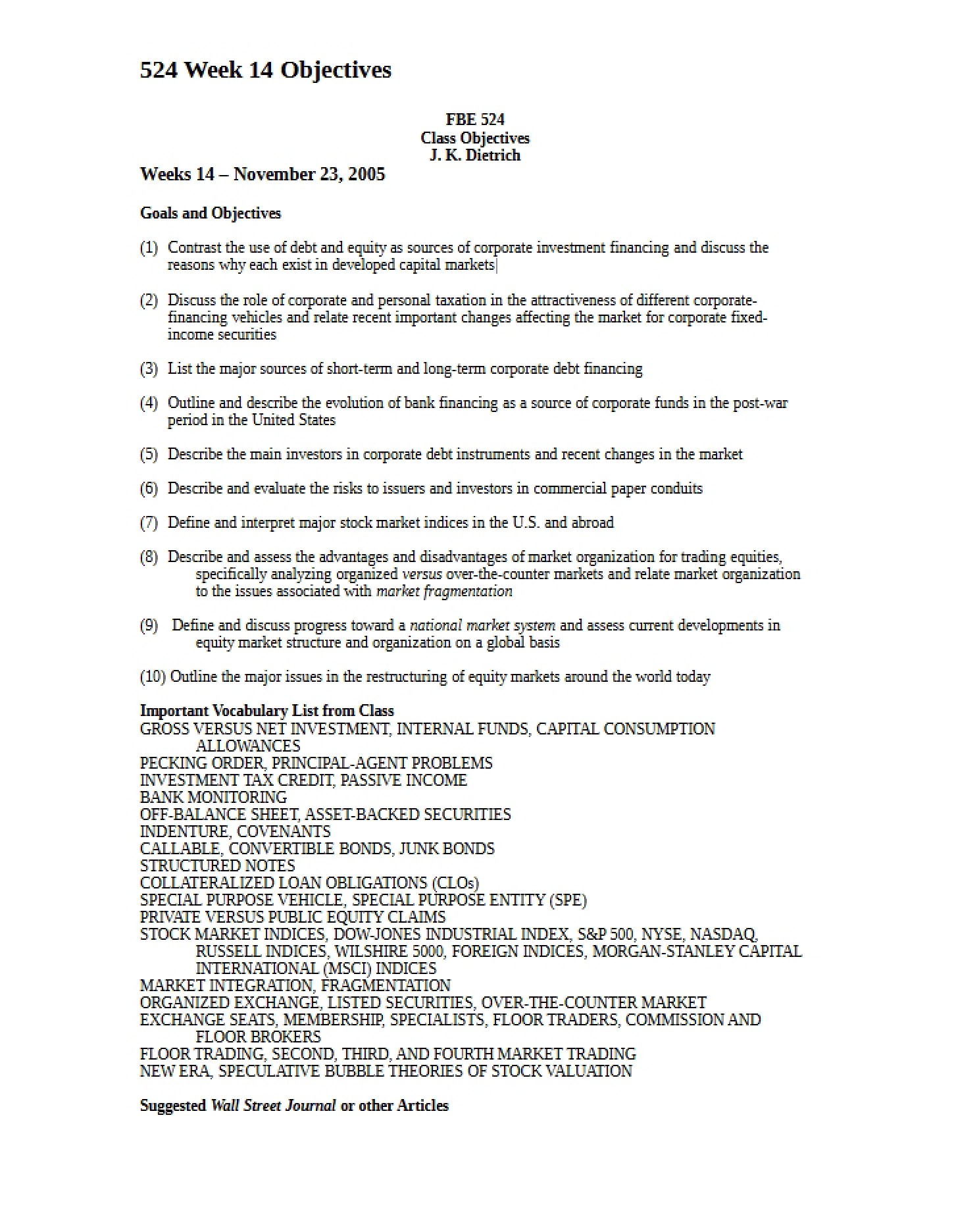
What This Document Is
This document contains detailed solutions to a past midterm examination for FBE 524: Money and Capital Markets, offered at the University of Southern California. It’s designed as a learning resource to help students understand the expected depth and application of knowledge assessed in the course. The material focuses on core concepts within the field of financial markets and institutions.
Why This Document Matters
This resource is invaluable for students currently enrolled in or preparing for FBE 524. It’s particularly useful for those seeking to solidify their understanding of complex topics related to banking, financial regulation, and the evolution of financial markets. Reviewing worked examples – though not directly provided here – can illuminate the nuances of applying theoretical frameworks to practical scenarios. It’s best utilized *after* attempting the original exam or similar practice questions, to identify areas where your understanding may need strengthening.
Common Limitations or Challenges
Please note that this document focuses specifically on the 2005 midterm. While the core principles of money and capital markets remain consistent, specific regulations, data, and market conditions will have evolved since then. This resource does not offer new or updated information beyond the scope of that particular assessment. It also doesn’t provide the original exam questions themselves – access to those is separate.
What This Document Provides
* Detailed explanations relating to the technical, legal, and regulatory definitions of commercial banking.
* Analysis of the factors influencing a firm’s decision to operate as a commercial bank versus other financial service providers.
* Discussion of the regulatory treatment of bank holding companies, including comparisons to other holding companies.
* Examination of the impact of the Gramm-Leach-Bliley (GLB) Act on financial institutions.
* Insights into trends observed in household asset allocation, specifically concerning the share held by banks.
* Exploration of the factors driving shifts in household savings patterns and the growth of alternative financial instruments.