What This Document Is
This resource is a focused set of instructional materials designed to accompany a Physiological Psychology course. Specifically, it delves into the complexities of spinal cord ailments, exploring the relationship between the physical structure of the spinal cord and the functional consequences of various types of damage. It’s intended to provide a detailed overview of how disruptions to the spinal cord manifest in observable symptoms and impact bodily functions.
Why This Document Matters
This material will be particularly valuable for students in PSYC 372 at the University of Idaho seeking a deeper understanding of the neurobiological basis of behavior. It’s ideal for use while studying the somatic nervous system, neurological disorders, and the impact of injury on motor control, sensation, and autonomic functions. Students preparing for exams or working on assignments related to the spinal cord will find this a helpful reference point to solidify their knowledge.
Topics Covered
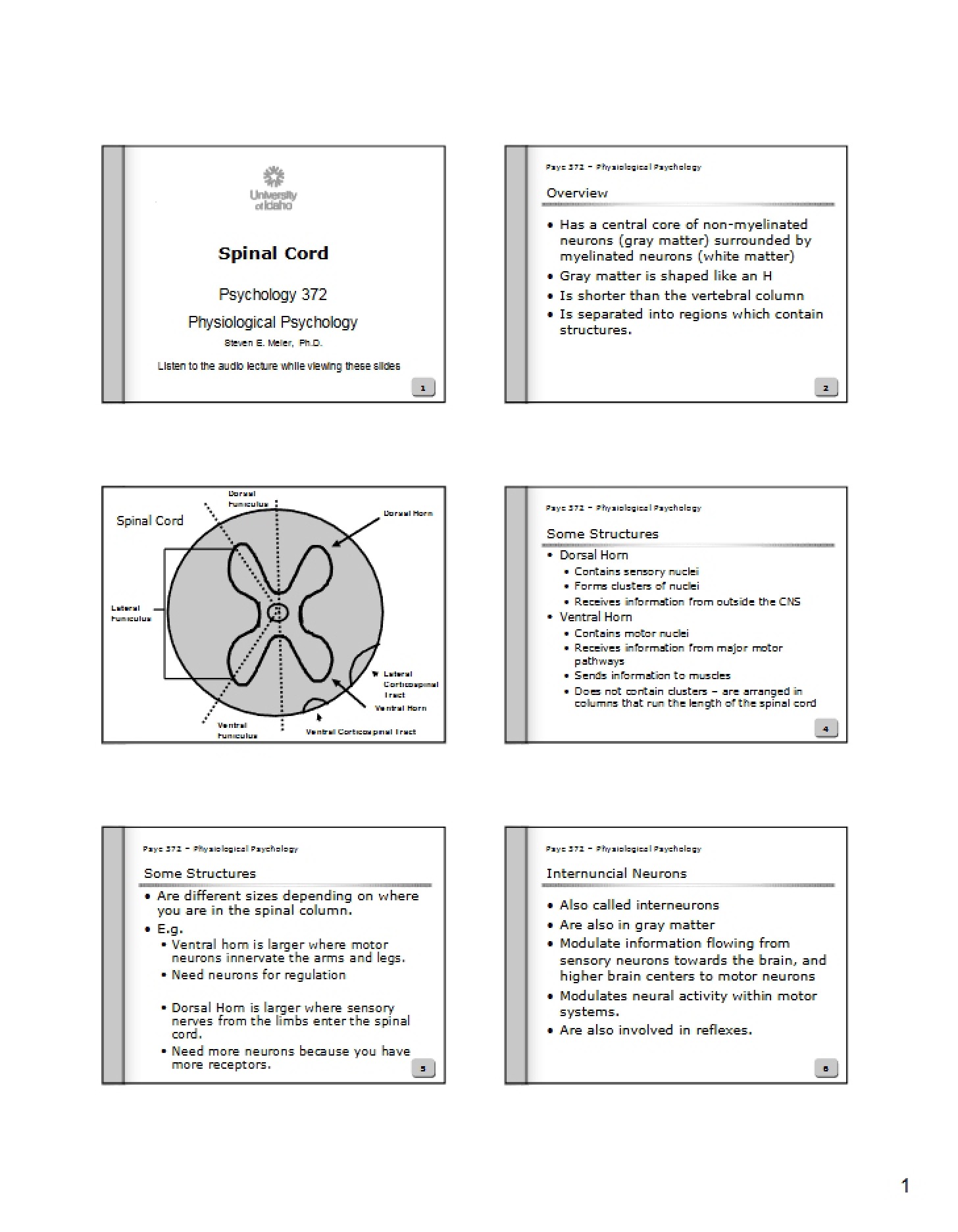
* Spinal Cord Anatomy & Function (as it relates to injury)
* Complete vs. Partial Spinal Cord Transections
* Regional Spinal Cord Injuries: Cervical, Thoracic, Lumbar, and Sacral
* Correlation between Injury Location and Functional Deficits
* Impact of Spinal Cord Damage on Motor Control & Sensation
* Autonomic Nervous System Dysfunction following Spinal Cord Injury
* Secondary Considerations: Sexual Function, Blood Pressure Regulation, Temperature Control
* Long-Term Prognosis & Potential for Recovery
What This Document Provides
* A focused exploration of the consequences of spinal cord injuries.
* An overview of how specific injury locations relate to specific functional impairments.
* Discussion of the challenges faced by individuals with spinal cord ailments.
* A framework for understanding the complexities of neurological recovery and ongoing support.
* A resource to supplement lecture material and enhance comprehension of this critical topic.